NASA Artemis II crew prepares for historic lunar far side flyby on April 7
NASA Artemis II, launched April 2, is set for a far side Moon flyby on April 7, despite an intermittent Orion toilet issue, officials said.
Jason Kwon ·
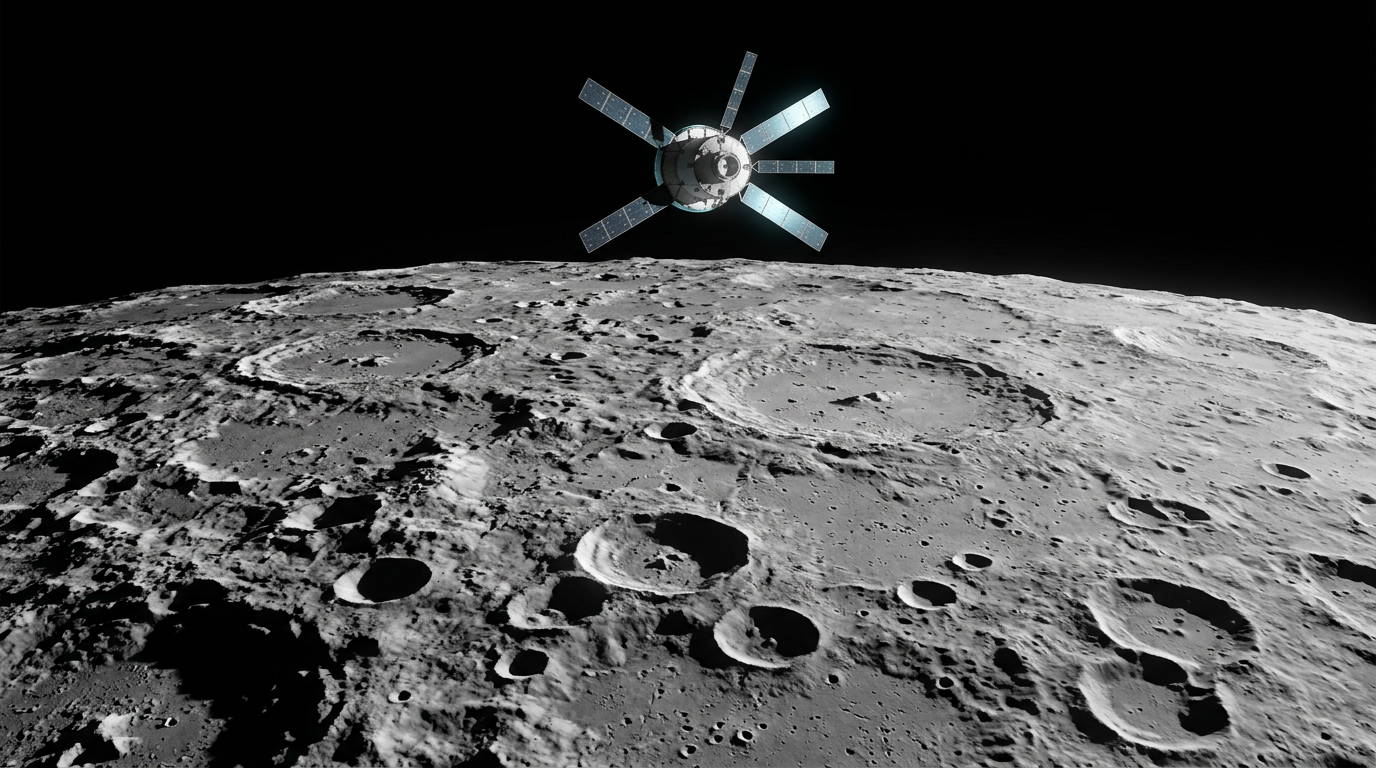
NASA’s Artemis II mission , which began on Wednesday, April 2, 2026, is on track to reach the far side of the Moon on Monday, April 7, 2026, according to officials. The agency has described the flight as the deepest human venture into space so far. The crew includes four astronauts: three Americans and one Canadian.
Officials said the mission is expected to set a new benchmark for the farthest distance achieved in human spaceflight. As Orion continues toward the Moon, mission teams are closely tracking navigation performance and onboard crew systems to ensure the spacecraft can execute the planned lunar passage and safely continue its trajectory after leaving the lunar environment.
The schedule has also drawn added attention because it aligns with an upcoming total solar eclipse, which officials said is increasing public and institutional focus on space-related activity. NASA has emphasized that the Artemis II flight is a key near-term milestone for the Artemis program, with the lunar flyby intended to validate performance in the Moon’s vicinity and support the program’s immediate objectives.
NASA said the mission has faced a notable but manageable challenge involving the Orion capsule’s toilet system. Since liftoff, the toilet has worked only intermittently, and engineers suspect an ice blockage in a line. As a workaround, the crew has been using backup urine collection bags, while the toilet remains available for solid waste.
Officials said the situation underscores the practical difficulty of sanitation in space, noting that similar issues have appeared on earlier missions. NASA added that it remains satisfied with the overall progress of Artemis II despite the ongoing toilet problem, and that teams continue to monitor the system as part of broader oversight of crew health and spacecraft operations.
Alongside routine spacecraft duties, the astronauts have been conducting geological observations and photographing lunar terrain. NASA confirmed the crew has already documented features including the Orientale Basin as Orion proceeds toward the Moon. Orion is expected to enter the Moon’s gravitational sphere of influence during the overnight period from Sunday to Monday, officials said.
A planned six-hour flyby will take the spacecraft to about 4,000 miles from the lunar surface, offering what NASA described as a distinctive view of the full Moon. The agency said the pass is also expected to provide sightlines to areas not thoroughly observed by Apollo missions, including polar regions and the far side. NASA said mission teams will continue monitoring performance as Orion approaches the Moon and then departs, with the flyby serving as a major checkpoint for Artemis II.