UK Arts A-Level Enrollment Hits Historic Low at 4.7%
Arts and design A-level enrollment in the UK has reached a record low of 4.7% of total entries, reflecting a sustained decline since 2010 due to government…
Atlas Newsdesk ·
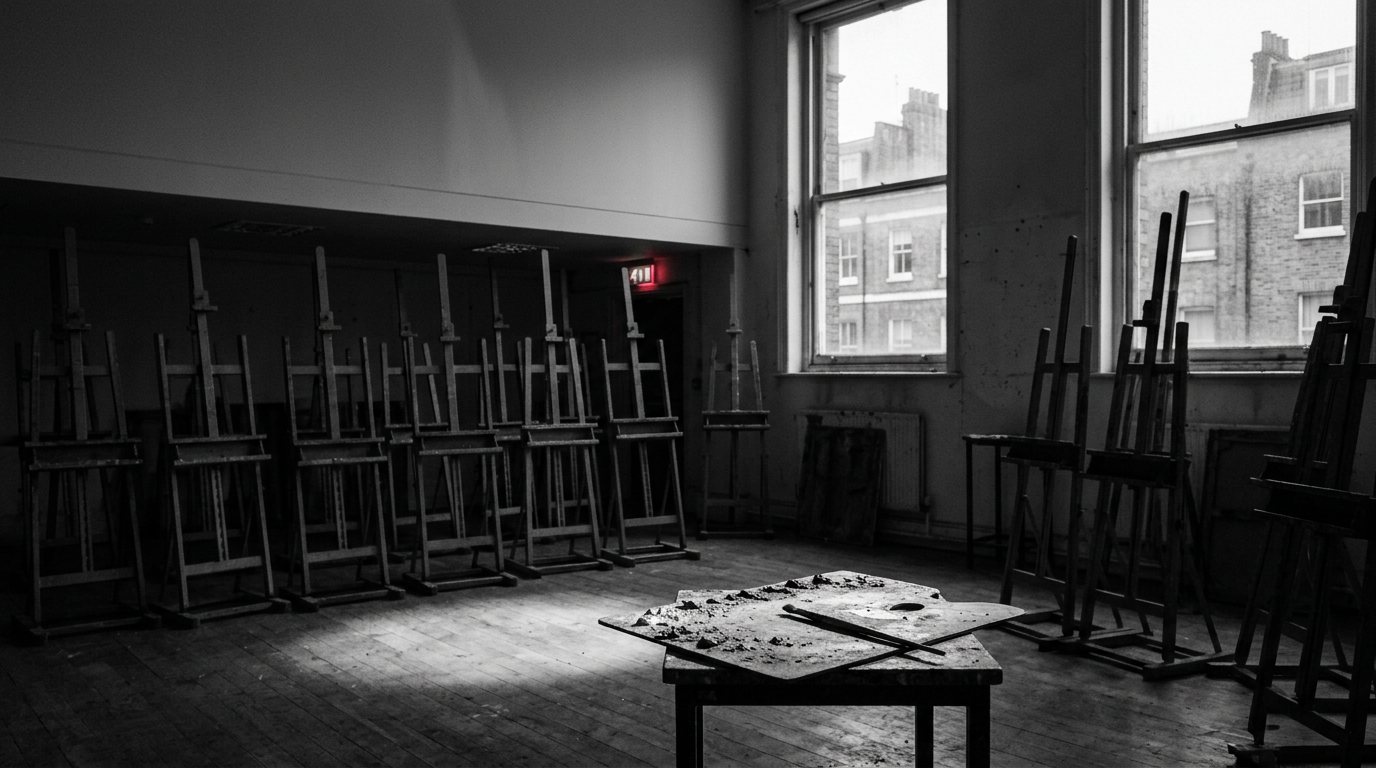
Enrollment in arts and design A-level programs across the United Kingdom has fallen to an unprecedented low, now representing just 4.7% of all total entries. This statistic marks a continued reduction in participation across various artistic fields within secondary education. The overall number of A-level submissions for arts subjects has decreased by more than a third since 2010, currently making up only 10% of all A-level entries.
Similarly, at the GCSE level, the proportion of students choosing arts subjects has nearly halved over the same period. This figure has now stabilized at 7% of overall entries. Education experts and analysts largely attribute this substantial drop in arts engagement to existing government policies that influence school performance measurements.
Policy Impacts on Creative Disciplines
Key policies, including the English Baccalaureate (EBacc) and Progress 8 frameworks, are widely identified as driving this trend. These initiatives were specifically structured to emphasize and reward strong academic performance in traditional subjects such as mathematics, English, and the sciences. The resulting prioritization within school curricula led to a diminished focus and effective marginalization of arts education within state-funded secondary schools throughout the nation.
This shift in student enrollment patterns is seen as a direct consequence of these policy decisions, moving educational attention away from creative fields. Observations from various educational bodies indicate that schools, facing pressure to meet performance targets established by these frameworks, have increasingly redirected both resources and instructional time towards subjects that hold more weight in the assessment systems. This strategic allocation of resources is a direct response to the incentives created by the performance metrics.
Government Response and Future Outlook
In response to growing concerns regarding the sustained decline in arts education, the current government has indicated plans to reform the existing performance measurement systems. The stated of these potential reforms is to broaden the educational scope beyond the currently prioritized core subjects, thereby creating additional space and emphasis for arts and humanities within the curriculum.
Policymakers are now tasked with balancing these structural adjustments against the evolving demands of the modern labor market. There is an increasing recognition of the demand for skills such as creative thinking, problem-solving, and critical analysis. These competencies are frequently cultivated through engagement with artistic and design disciplines, and they are becoming progressively vital as automation continues to reshape various industries globally.
The long-term stability and potential recovery of arts education within the UK will largely depend on the successful implementation and overall effectiveness of these proposed curriculum changes. The reforms aim to ensure that a broader range of skills, including those fostered by the arts, are valued and encouraged throughout the education system.