Supreme Court Clears Path for White House Ballroom Expansion
The U.S. Supreme Court issued an interim order, permitting the White House ballroom expansion to continue amid a legal dispute over executive authority.
Atlas Newsdesk ·
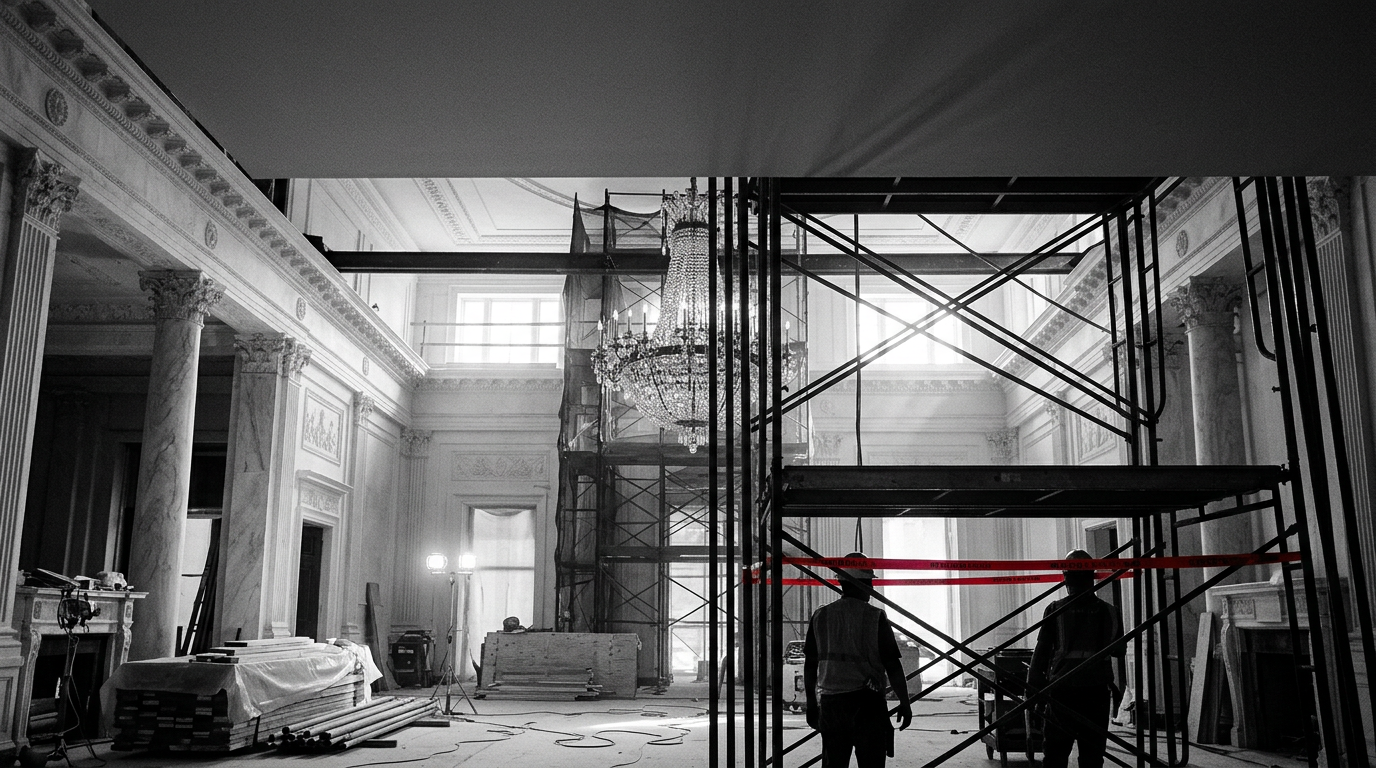
The United States Supreme Court issued an interim order on Friday, allowing the White House ballroom expansion project to move forward. Chief Justice John Roberts granted a stay that effectively reversed a previous lower court injunction. This injunction had temporarily halted construction while an emergency appeal was under judicial review, focusing on the scope of presidential powers over federal property renovations.
Legal Dispute Over Executive Authority
The central legal contention in this case revolves around the extent of the executive branch's authority to undertake renovations on federal property without explicit congressional approval. Earlier rulings from lower courts had determined that the project, which includes an 8,400-square-meter ballroom and a multi-story underground bunker, required legislative oversight.
However, the current administration contends that the President possesses full authority over such federal building renovations.
Officials have cited national security concerns as a justification for the project and have also noted that approximately 65 percent of the construction has already been completed. The extensive building effort has reportedly involved continuous 20-hour daily work shifts to advance the project.
Project Details and Funding Concerns
The estimated cost for the expansion is approximately $400 million. This substantial undertaking has garnered significant opposition from various preservation organizations, including the Trust for Historic Preservation. While administration officials assert that the entire project is financed through private donations, critics have raised questions regarding the potential use of taxpayer funds for the construction.
The administration has consistently defended its approach, emphasizing both the advanced stage of the construction and the underlying rationale for the renovation. The Supreme Court's intervention ensures that work can continue without interruption during the ongoing legal process, providing the justices with time to thoroughly consider the administration's emergency petition and the broader legal arguments.
Potential Precedent for Federal Projects
This provisional decision from the nation's highest court indicates that the fundamental legal question concerning executive authority versus congressional oversight for federal projects remains active and unresolved. Historically, significant renovations to federal properties typically involve a complex interplay between executive branch agencies and legislative appropriation committees.
This specific case holds the potential to establish new legal precedents or reinforce existing ones regarding presidential powers over federal infrastructure development, particularly for projects of this considerable scale and expense.
A final ruling is anticipated to provide clearer boundaries for executive discretion in managing national assets. Such a decision could influence future federal construction initiatives across the United States for many years, impacting how similar large-scale projects are undertaken and approved.