Ohio Steel Giant Refits Furnace for Decades of Production
Cleveland-Cliffs filed new Ohio EPA permits to reline Middletown’s blast furnace, extending coke-based steelmaking for 15–18 years.
Atlas Newsdesk ·
Core development
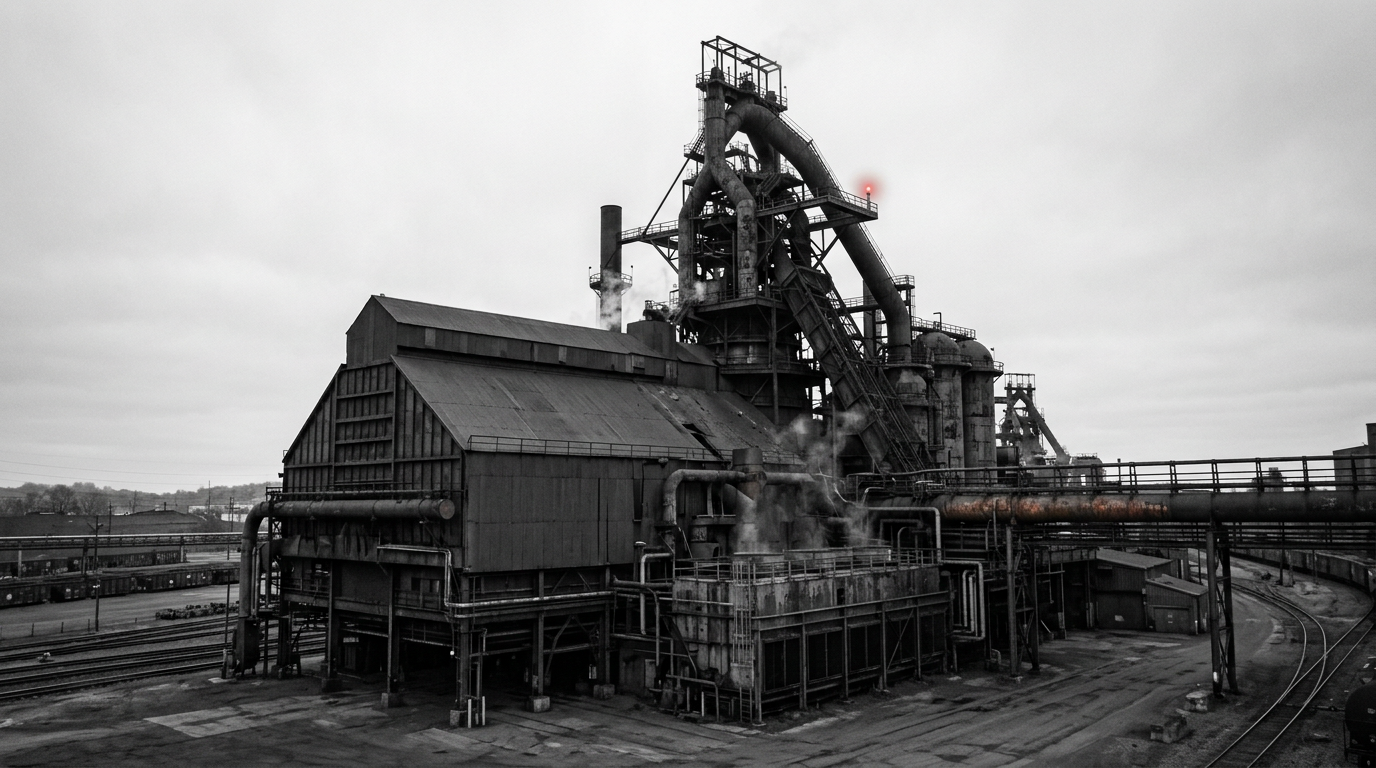
Cleveland-Cliffs has started a multi-million dollar effort to reline the blast furnace at its Middletown Works in Ohio, a move designed to keep the unit running for another 15 to 18 years. The plan is described in newly submitted permitting documents to the Ohio Environmental Protection Agency.
The filings indicate the site will continue operating with its current, fossil-fuel-based approach. That means the plant will keep relying on coke as a key input, with implications for emissions and local air quality in Middletown.
What the plant does, and what changes now
Middletown Works uses hundreds of thousands of tons of coke each year to make about 3 million tons of raw steel. The relining project is aimed at extending the life of the existing blast-furnace system rather than replacing it with a different production route.
This marks a shift from a previously discussed transition plan: a $500 million grant that had been intended to replace coke-burning equipment with a hydrogen-powered furnace was terminated. The hydrogen alternative was expected to materially cut greenhouse-gas output, but the current project keeps the legacy configuration in place.
Emissions profile and local health claims
Continuing to run the furnace as-is also maintains the facility’s current pollution footprint. A 2024 report by Industrious Labs lists the Middletown facility among Ohio’s top 10 emitters for nitrogen oxides, sulfur dioxide, and carbon monoxide.
Industrious Labs also published projections tied to the extended operation of the steel mill and its coke supplier, SunCoke Energy. Those estimates suggest 810 to 1,476 premature deaths and 132,300 missed school days over the next 18 years, alongside annual health-cost estimates of $1.3 billion to $2.3 billion; these figures are attributed to the group and are not confirmed by the permitting filings themselves.
Why it matters for markets and policy
For Cleveland-Cliffs, the relining supports long-duration production continuity at a major U.S. steel asset, which can matter for supply reliability and cost planning in a cyclical industry. For regulators and local stakeholders, the decision keeps attention on the trade-offs between industrial output and air-quality outcomes.
Globally, the development underscores a broader tension in heavy industry: maintaining blast-furnace capacity versus accelerating lower-emissions pathways such as hydrogen-based steelmaking. The terminated grant and the new permitting path highlight how financing and policy decisions can reshape decarbonization timelines.
Risks, unknowns, and what is not yet clear
The permitting documents referenced in the filings do not, on their own, resolve how emissions levels may change during or after the relining, nor do they provide a public-health impact assessment in the source material provided here. The health and cost estimates cited come from a single advocacy report, and the underlying assumptions are not detailed in the provided text.
What is clear is the direction of travel: the Middletown facility is preparing for a longer operating horizon using its existing coke-based blast-furnace model, after the hydrogen-furnace funding plan ended.