Workers Came Back to Downtown DC. The Money Didn’t Fully Follow
Downtown DC office attendance rose in 2025, but weaker employment, tourism & hotel demand signal a fragile recovery, not a durable one.
Sophie McAlister ·
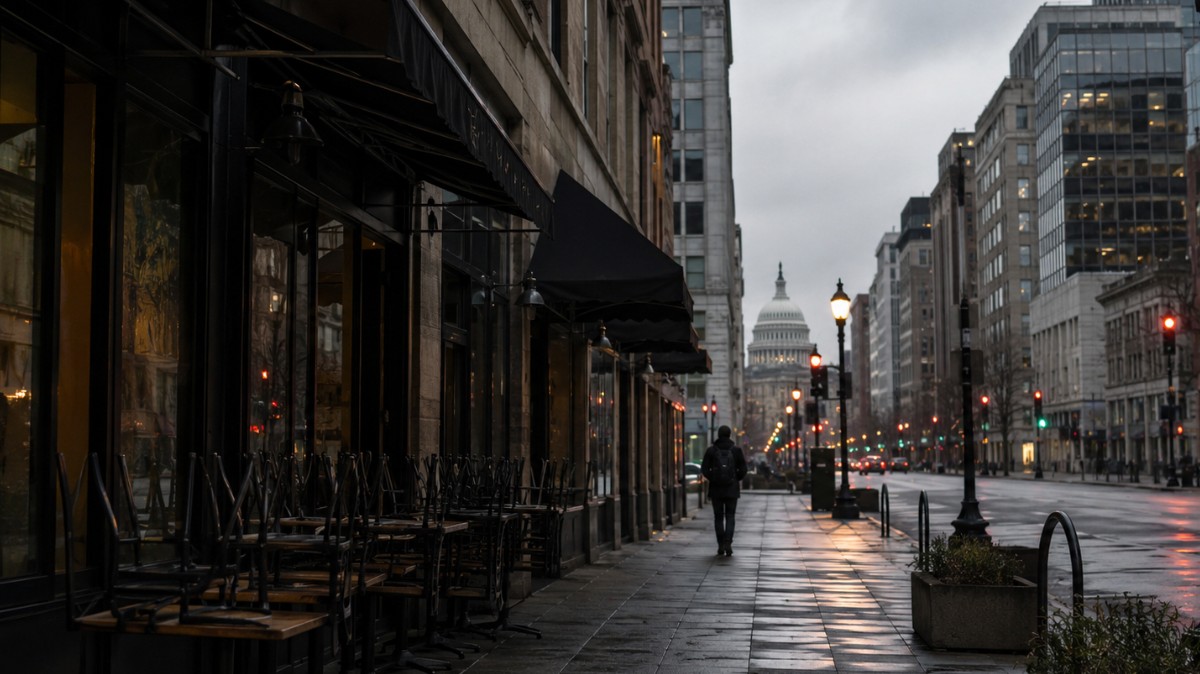
Downtown DC had more workers, visitors and cultural activity in 2025, but the city’s central business district remained economically exposed. The DowntownDC Business Improvement District said overall foot traffic rose 2.5% for the year, while office attendance from March through December reached 48% of pre-pandemic levels, up from 44% in the same period of 2024. That improvement followed the federal return-to-office push, but the same report showed downtown employment fell by nearly 6,000 jobs and hotel occupancy slipped to 68% from 73% a year earlier. The result is a recovery that looks better on sidewalks than it does on income statements.
July’s 51% Ceiling
The strongest office month came in July, when attendance reached 51% of pre-pandemic activity, the highest monthly reading in the BID’s data. That gave restaurants, coffee shops and service businesses more weekday demand than they had during the depths of hybrid work. But the rebound faded later in the year, with the BID reporting softer visitor foot traffic after an August surge in federal law enforcement and slower commuter growth after federal layoffs took effect in October. For downtown businesses built around lunch crowds, happy hours and convention traffic, the difference between a partial return and a full recovery is the difference between stability and strain.
A Federal-Centered Economy
Downtown Washington entered the pandemic with an unusually office-heavy economy, and that structure still shapes the recovery. Mayor Muriel Bowser said in 2023 that almost 90% of downtown space was office space, while the city’s Comeback Plan set goals of adding 15,000 downtown residents and 35,000 jobs in high-demand sectors over five years. The Downtown Action Plan later framed the challenge as a five-year effort to make the city center less dependent on traditional office use and more attractive to residents, businesses and visitors. Those goals matter because the BID’s 2025 report shows how quickly federal workforce reductions can hit a district whose customer base has long depended on government employment.
Restaurants Carry Downtown’s Stress
Food and beverage businesses are the clearest test of whether downtown’s recovery is broad enough to support daily commerce. The BID said food and beverage establishments now account for more than half of all downtown retail space, up from 46% in 2019, with coffee shops increasing their space by 33% and casual dining restaurants by 14% since then. Downtown recorded a net gain of six restaurant openings in 2025, and the 36 retail closings were the lowest total since 2017. But retail vacancy remained near 25% for a second year, more than double pre-pandemic levels, which means the restaurant sector is gaining share inside a still-weakened retail market.
Universities Fill Empty Floors
One of downtown’s more durable bright spots came from higher education, not traditional office leasing. Universities expanded downtown by more than 660,000 square feet in 2025, converting older commercial space into classrooms, offices and event venues. That shift helps solve two problems at once: it absorbs obsolete office inventory and brings students, faculty and guests into areas that need more all-day activity. Cultural demand also improved, with attendance at downtown arts, entertainment and sports venues rising 9% from the prior year, giving the district another source of traffic beyond the workweek.
Hotels Lose Their Lift
Tourism moved in the opposite direction. Downtown hotel occupancy fell to 68% in 2025 from 73% in 2024, staying well below the 79% pre-Covid average recorded from 2010 to 2018. Attendance at National Mall museums dropped 13% and stood nearly 50% below the pre-pandemic 10-year average, while Destination DC forecast international visitation to the city falling by more than 5%, to 2.1 million from 2.2 million. The BID tied the weakness in part to the National Guard mobilization and federal immigration enforcement, which it said likely reduced both regional and out-of-market visits.
The 15,000-Resident Test
The next phase of downtown’s recovery depends on whether Washington can turn office gains into a more balanced urban economy. The BID said downtown remains far behind the goal of adding 15,000 residents by 2033, with current projections reaching only about 40% of that target, even as the 186-unit Accolade conversion opened at 1425 New York Avenue NW with 57 furnished hotel rooms. That shortfall is the risk: without more residents, downtown businesses remain too dependent on federal workers, tourists and event crowds that can shift quickly. Return-to-office helped bring people back, but the 2025 data show downtown still needs housing, universities, culture and private-sector job growth to make the recovery less fragile.