Spain Holds Ceuta and Melilla Despite Morocco Claims
Spain holds Ceuta and Melilla under Spanish rule as Morocco contests sovereignty; last week about 50,000 migrants tried to enter Ceuta.
Atlas Newsdesk ·
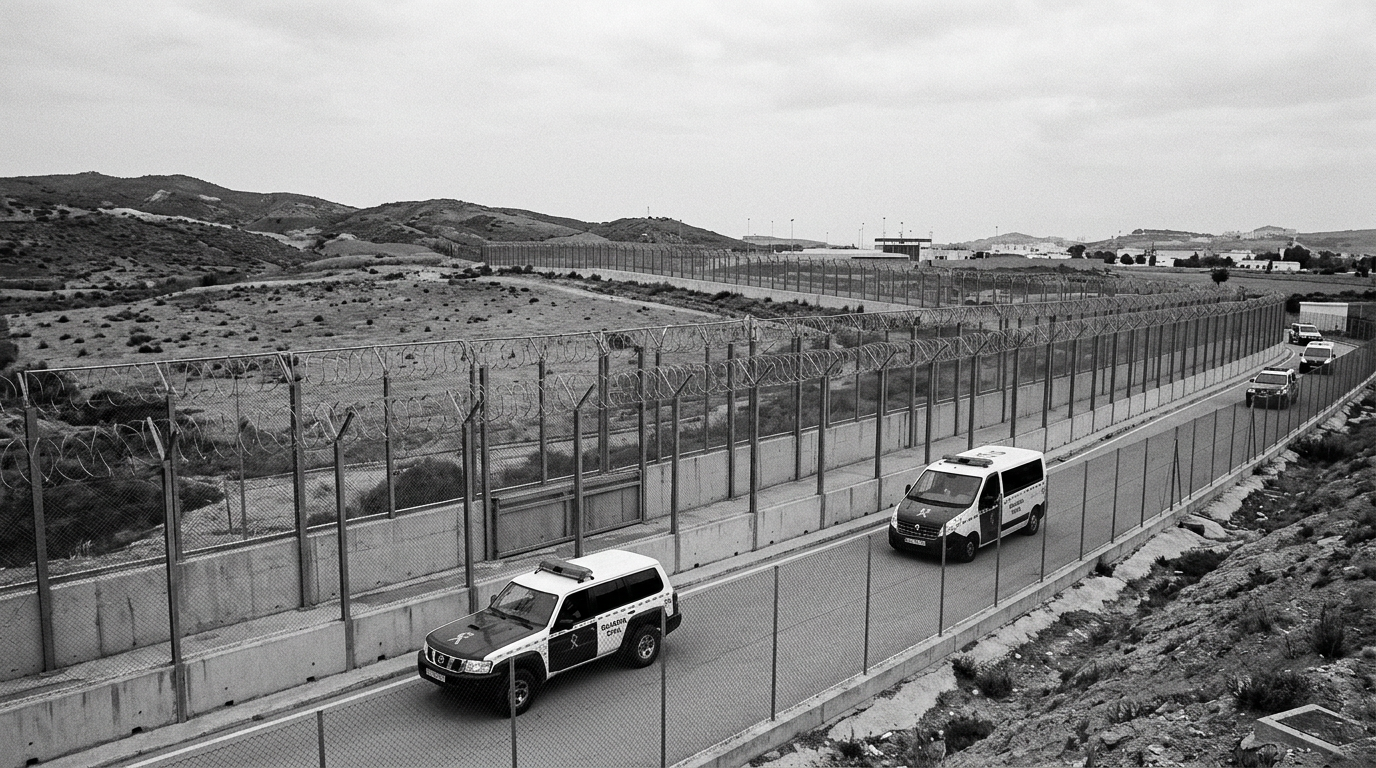
Spain continues to administer the North African enclaves of Ceuta and Melilla, along with several nearby offshore islets, despite Morocco’s longstanding claim that the territories should be returned. The areas are notable because they form the only European Union land borders on the African continent, placing them at the center of recurring diplomatic strain between Madrid and Rabat.
Officials and analysts describe the dispute as a durable feature of Spain–Morocco relations, shaped by history, questions of sovereignty, and periodic migration pressure at the perimeter fences. While Morocco argues the enclaves are part of its national geography, Spain maintains that their status is settled under Spanish administration, and the European Union recognizes them as part of its external frontier .
Historical foundations of Spanish control
Spain’s hold over Ceuta and Melilla dates back centuries. The territories were acquired in the 15th and 16th centuries , creating a historical basis that Spanish authorities and commentators often cite when addressing sovereignty questions.
In the case of Ceuta, it was incorporated into Spanish territory in 1580 . Melilla’s capture dates earlier, with Spain conquering it in 1497 , which the source material notes was before the formation of the modern Moroccan state.
Morocco’s claims and recurring diplomatic friction
Morocco has formally disputed Spanish control since 1956 , after gaining independence from France. Moroccan authorities have framed the enclaves as vestiges of colonial-era arrangements that, in their view, should be reversed.
The dispute has repeatedly contributed to diplomatic friction. The relationship can become especially tense when migration flows rise, because attempted crossings at the border fences quickly become a political and security issue for both governments.
Migration pressure and the latest spike in tensions
Last week, tensions sharpened after an incident in which about 50,000 migrants attempted to enter Ceuta, according to the source material. The attempted crossings underlined how rapidly the border can become a flashpoint, with implications for public order, bilateral coordination, and the handling of migrants at an EU external boundary.
Such episodes, analysts say, can magnify broader disputes that otherwise unfold over long time horizons. Even when the sovereignty debate remains unresolved, day-to-day pressures at the frontier can pull the issue back into the diplomatic spotlight.
How each side frames the sovereignty question
Analysts cited in the source material say Spain views Ceuta and Melilla as symbols connected to national identity and a longer imperial past. Morocco, in contrast, is described as having pursued a gradual approach to what it considers territorial recovery over time.
Despite the competing narratives, the legal and administrative reality remains unchanged in the near term: the territories continue to be governed by Spain, and their status is treated within the EU as part of the bloc’s external border architecture. The timeline and mechanism for any change remain uncertain, given the entrenched positions described by both sides.