Middle East Conflict Intensifies, Airspace Restricted
Middle East conflict escalates with U.S. and Israeli strikes on Iran, leading to widespread airspace closures and maritime disruptions.
Lauren Collins ·
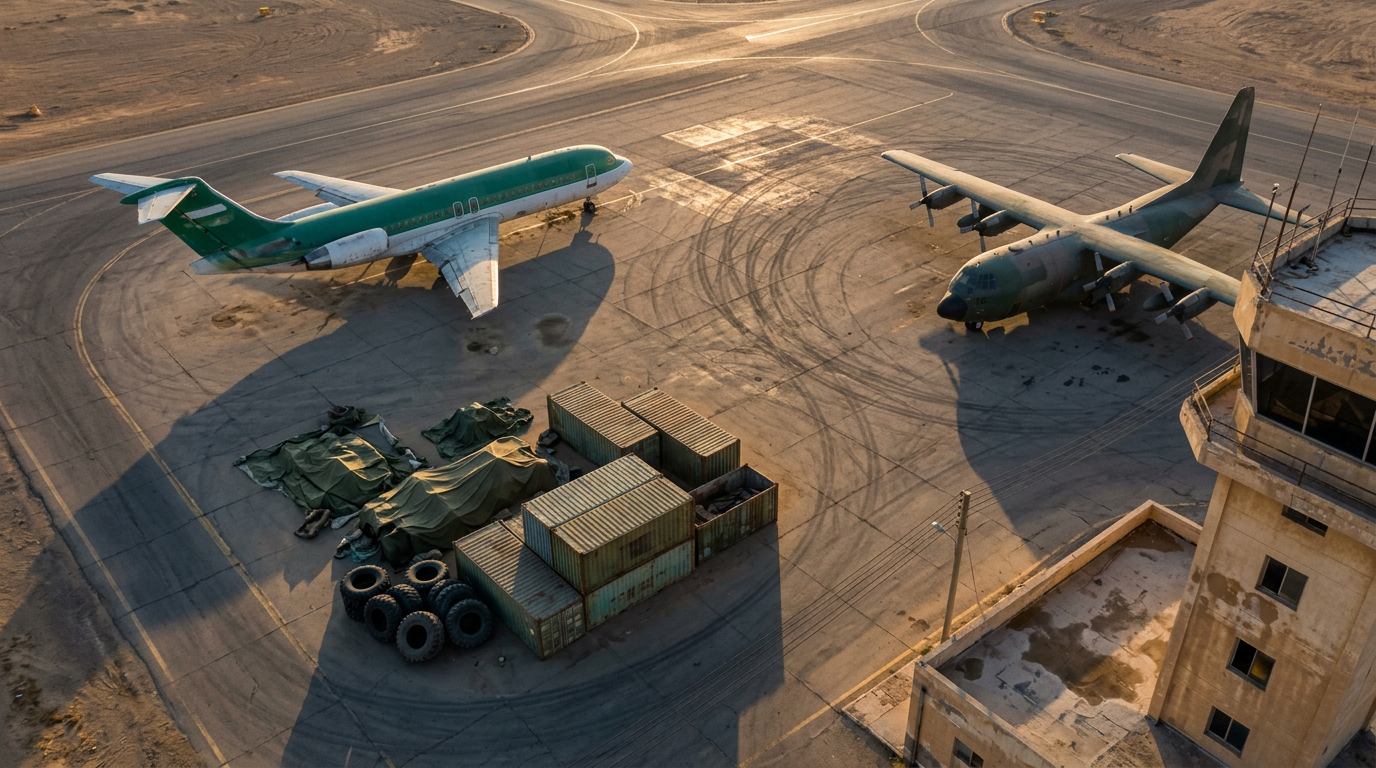
Military engagements between the United States, Israel, and Iran have intensified, leading to significant regional disruptions. These actions have prompted widespread airspace closures across the Middle East, affecting international aviation and maritime operations. The situation remains highly volatile, with reports of retaliatory strikes and heightened military activity.
Escalating Military Actions
Recent developments include joint military operations by the United States and Israel targeting Iranian assets. These strikes have been met with responses from Iran, including an alleged attack on a U.S.-operated naval facility located in Bahrain. The U.S. military also reported the destruction of an Iranian warship in the Indian Ocean, reportedly by torpedo.
Separately, six U.S. F-15 fighter jets were reportedly downed by Kuwaiti air defense systems in what was described as a mistaken engagement. These incidents underscore the complex and rapidly evolving nature of the conflict.
Diplomatic and Logistical Repercussions
U.S. President Donald Trump has publicly criticized Spain for its decision to deny the use of its military bases during the operations against Iran. President Trump also commented on the reaction of UK Prime Minister Keir Starmer to the recent strikes, indicating broader international political ramifications.
U.S. Secretary of Defense Pete Hegseth confirmed that the U.S. military is investigating claims of a strike on a school within Iran. Concurrently, Secretary of State Marco Rubio acknowledged a drone attack in the vicinity of the U.S. consulate in Dubai, highlighting the expanding geographical scope of the conflict.
Regional Impact and Trade Concerns
The escalating tensions have led to a notable reduction in shipping traffic through the Strait of Hormuz, a critical global chokepoint for oil transit. This decrease signals potential disruptions to international maritime trade and energy supplies. The closure of regional airspace has also severely impacted commercial flights, causing delays and rerouting for numerous international carriers.
Statements from the Trump administration regarding its involvement in Iran have been characterized by mixed messaging, contributing to uncertainty about future policy directions. The ongoing exchanges of military strikes between the involved parties suggest a prolonged period of instability in the region.
Historical Context of Regional Tensions
S. and Iran, and Israel and Iran. S. military forces in the Gulf. The Strait of Hormuz has frequently been a focal point for these tensions due to its strategic importance for global energy markets. Previous incidents involving maritime security and aerial engagements have often led to diplomatic efforts to de-escalate, though the current situation appears to be moving towards broader military confrontation.
The involvement of multiple regional actors and international powers further complicates the pathway to resolution.
Implications
Country Impact: The conflict has led to airspace closures across the Middle East, impacting international travel and potentially straining diplomatic relations between the U.S. and allies like Spain. Regional stability is significantly undermined.
Industry Impact: The reduction in shipping through the Strait of Hormuz poses a direct threat to global energy markets and maritime trade. Aviation industries face disruptions due to extensive airspace restrictions.
Market Impact: Increased geopolitical risk in the Middle East typically leads to higher oil prices and increased volatility in global equity markets. Investors may seek safe-haven assets amid the uncertainty.