NY18:13
    LDN23:13
    HKG06:13
    TYO07:13
    Gold4,506+0.19%
    Bitcoin76,637+1.10%
    Gold4,506+0.2%
    Bitcoin76,637+1.1%
    Global Affairs

    Iran's Nuclear Plant Damaged After Incident

    Bushehr nuclear plant damage was reported after Saturday missile attacks, with one guard killed and renewed IAEA calls for restraint.

    Published5 Apr 2026, 16:31:35
    Iran's Nuclear Plant Damaged After Incident
    A360
    Key Takeaways✦ Atlas AI
    01

    Bushehr plant attacked four times.

    02

    IAEA warns of catastrophic consequences.

    03

    Radiological release threatens region.

    Atlas AI

    Atlas AI

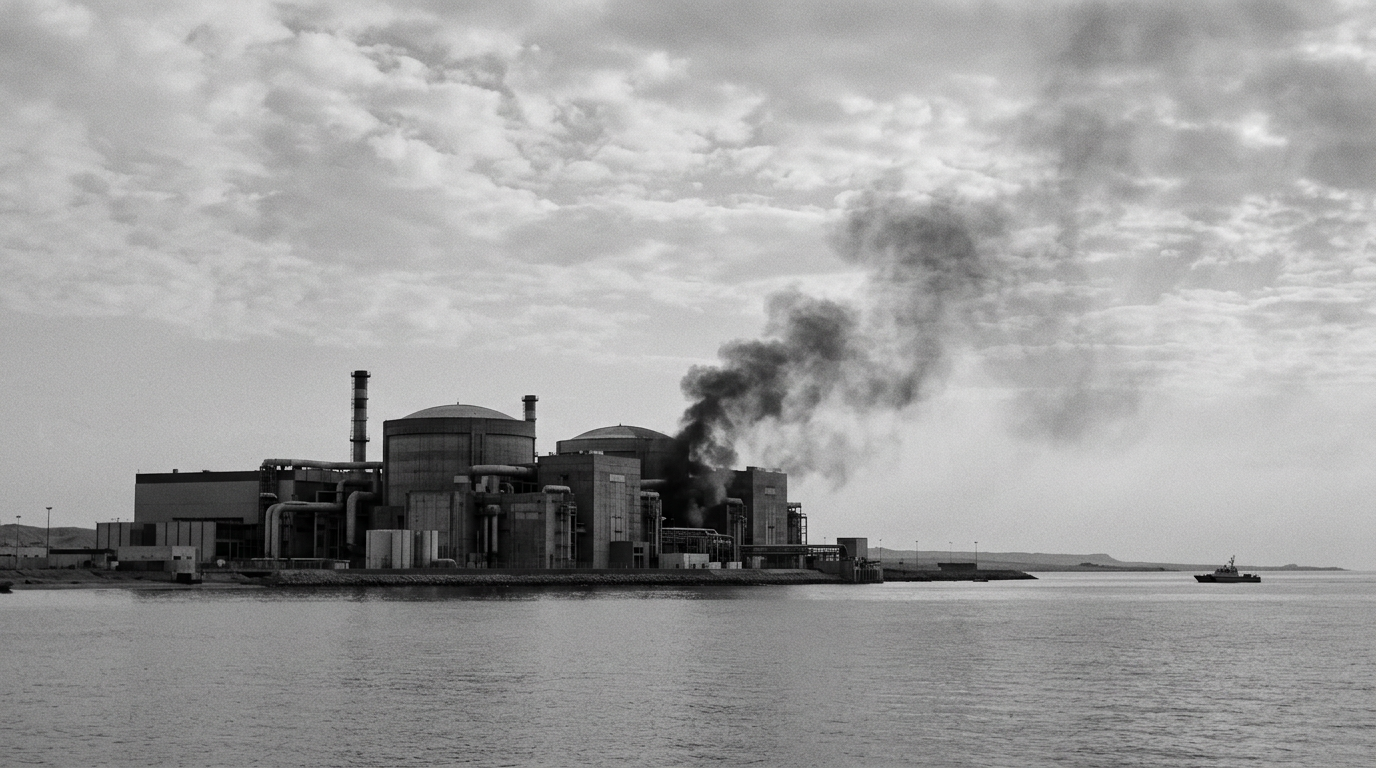
    Iran’s Bushehr nuclear power plant, described by Iranian authorities as the country’s only operational nuclear facility, has been damaged in missile attacks, intensifying concerns about nuclear safety in the region. The Atomic Energy Organization of Iran (AEOI) said the latest incident happened on Saturday and resulted in damage to a side building and the death of one security guard.


    Iranian officials said this was the fourth reported attack on the Bushehr plant since a conflict involving Israel and the United States and Iran began on February 28. Iranian Foreign Minister Abbas Araghchi condemned the strikes, saying the United States and Israel showed a lack of concern for nuclear safety.


    ATLAS SIGNALNuclear SecurityHighNow
    48d

    Escalating Regional Instability Affects Global Nuclear Facility Operations

    Russia's decision to further evacuate personnel from Iran's Bushehr nuclear power plant underscores how regional conflicts can directly impact the operation and security of critical nuclear infrastructure, raising international concerns about nuclear safety and the potential for broader geopolitical ramifications. This highlights the vulnerability of such facilities to geopolitical events.

    2 stories
    View Issue

    The International Atomic Energy Agency (IAEA) has repeatedly warned against targeting the Bushehr plant. The agency has said an attack could trigger a catastrophic release of radioactivity with consequences extending beyond Iran’s borders, underscoring the cross-border nature of nuclear risk in a densely connected region.


    Following the most recent incident, IAEA Director-General Rafael Grossi renewed calls for maximum restraint. The IAEA’s position, as stated in its warnings, is that nuclear facilities should not be attacked because of the potential for severe radiological outcomes.


    Experts cited in the account said the most dangerous scenarios would involve a direct hit on the reactor or on spent fuel storage. They warned that such damage could disperse hazardous radiological particles, including Caesium-137, with contamination potentially affecting air, food, soil, and water for decades.


    Another risk highlighted by experts is damage to cooling systems. They said disruption to cooling could lead to a reactor meltdown and radioactive leaks, which could in turn require evacuations and food restrictions across several hundred kilometers, depending on conditions and the scale of any release.


    Experts also pointed to the Persian Gulf as a critical exposure pathway if contamination reached seawater. They said polluted Gulf waters could harm marine life and threaten desalination plants, which are central to drinking-water supplies in many Gulf countries, raising the stakes for public health and essential infrastructure beyond Iran.


    Share

    Related Articles

    About this story

    Atlas360 covers Global Affairs as part of a broader effort to give international readers fast, source-checked context on global affairs. Our newsroom monitors original reporting from wire services, accredited correspondents and verified eyewitness accounts, then re-summarises the most important facts in clear, plain-language English so that you can understand both what happened and why it matters.

    Every published article on Atlas360 is reviewed for accuracy, balance and timeliness before it reaches the homepage. When new information emerges — for example a correction from an official source, a casualty update, or a clarifying statement from a named spokesperson — we update the story in place and keep the original publication time so readers can track how a developing situation evolves.

    If you want to keep following Global Affairs, you can browse the related coverage at the foot of this page, subscribe to the Atlas360 newsletter for a daily roundup, or open the relevant topic page where every story we have published on the subject is listed in reverse chronological order. Reader signals from the community feed also shape which threads we keep reporting on.

    Atlas360

    Sign up for Atlas Daily

    The daily global news briefing you can trust.

    every weekday·Read it now

    or
    Sign in

    Already subscribed? Sign in and we won't show you this message again.