US Navy Blockades Iranian Ports in Hormuz
U.S. naval blockade began Monday at 14:00 GMT, targeting Iranian ports in the Strait of Hormuz after direct talks collapsed.
Lauren Collins ·
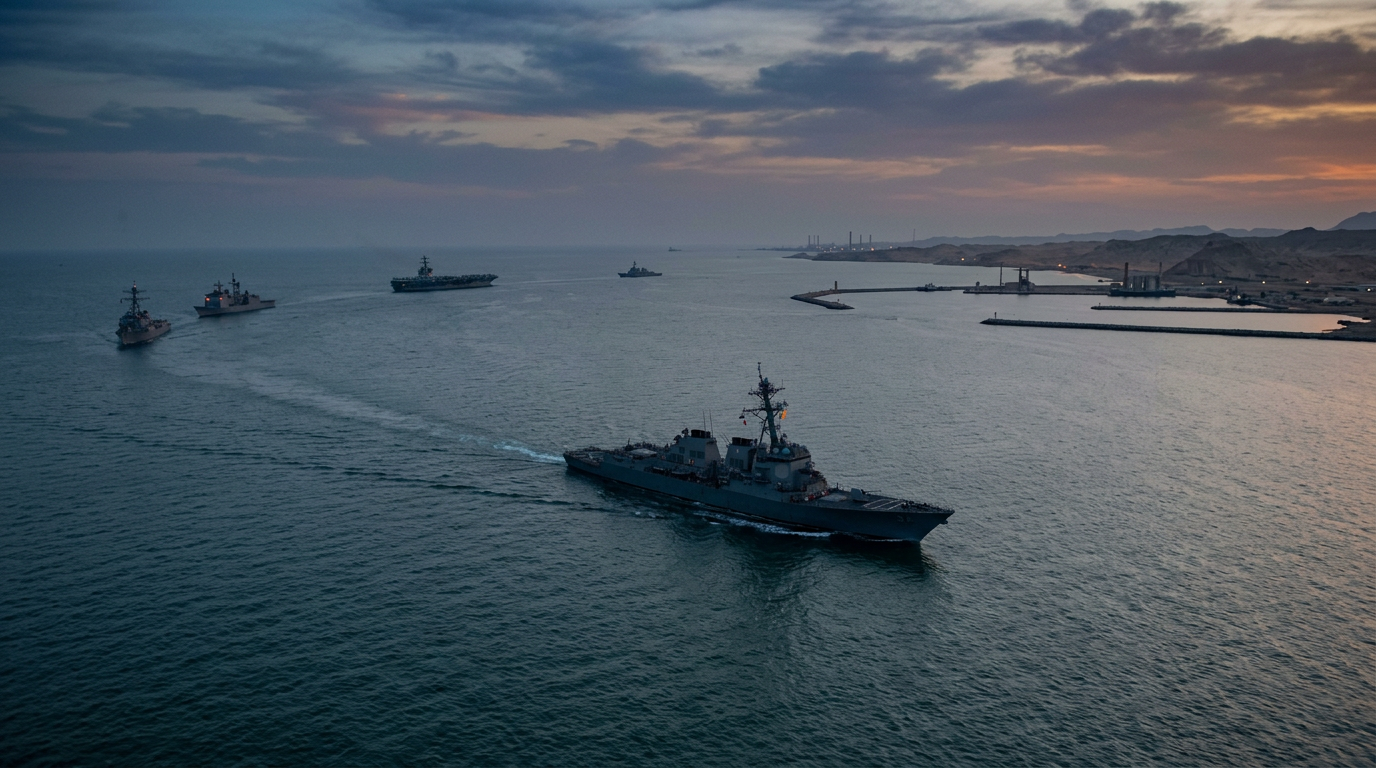
The United States began a naval blockade of Iranian ports in the Strait of Hormuz on Monday , after direct talks with Iran over the ongoing conflict ended without agreement. Officials said the operation started at 14:00 GMT and is intended to stop vessels from entering or leaving designated Iranian ports and coastal zones, including areas in the Arabian Gulf and the Gulf of Oman.
U.S. President Donald Trump announced the measure and said enforcement would apply equally to ships of any nation that interact with Iranian ports. At the same time, he said vessels transiting the region for non-Iranian destinations would be allowed to pass, indicating the action is focused on access to Iranian-controlled port activity rather than a blanket closure of regional sea lanes.
The move follows the breakdown of negotiations aimed at ending a conflict that began on February 28. The United States cited two central points of disagreement: U.S. officials said Iran was unwilling to abandon its nuclear ambitions, and they also pointed to Iran’s control over the Strait of Hormuz as a major issue in the talks.
In describing the operation, the U.S. Navy Commander’s handbook definition was referenced, which characterizes a blockade as a belligerent operation designed to prevent vessels and aircraft from reaching areas controlled by an adversary. Officials also said the United States plans to interdict vessels that have paid tolls to Iran, and to clear mines that the United States alleges Iran has laid in the strait.
U.S. officials said the objective is to cut off what they described as a significant revenue stream for the Iranian government and to increase pressure on Tehran to reach a settlement on American terms. The United States indicated that other countries could become involved, but the United Kingdom said it will not take part in the blockade while it works with partners to protect freedom of navigation.
Legal experts raised concerns that the blockade could conflict with maritime law and could also breach the existing ceasefire agreement. Those questions add uncertainty around how the operation will be viewed internationally and how it may be challenged diplomatically or legally, even as enforcement begins in a strategically important corridor for global shipping.