Cyclone Maila floods Fiji as storm tracks toward Australia
Cyclone Maila caused flooding in Fiji after hitting the Solomon Islands and is forecast to move toward Papua New Guinea and Australia early next week.
Ayla Demirhan ·
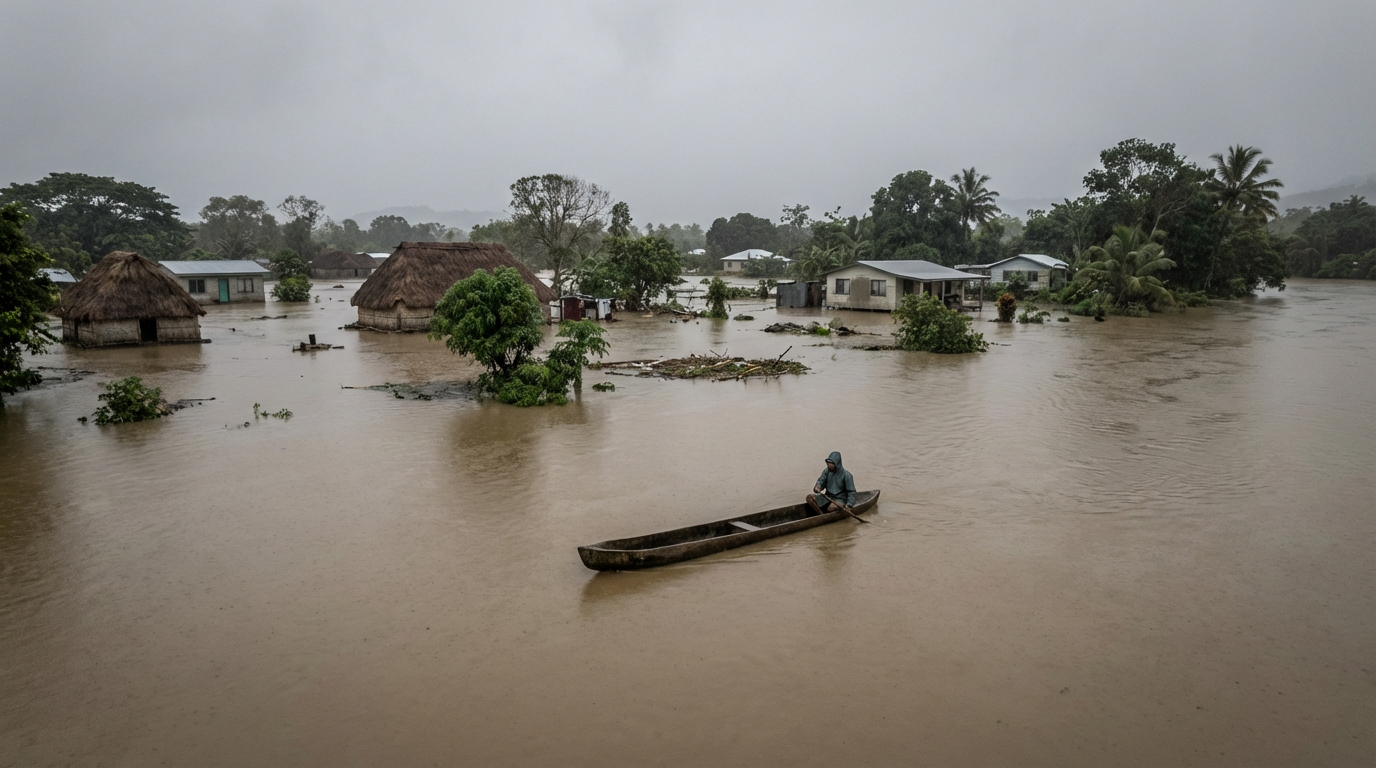
Severe Tropical Cyclone Maila has triggered widespread flooding in Fiji after impacting the Solomon Islands, with the system now forecast to continue moving south-west across the region. Officials and forecasters said the cyclone recorded peak sustained winds of 115 mph (185 km/h), with gusts reaching 160 mph, making it the strongest cyclone observed this far north in the Solomon Sea.
The storm’s projected path indicates it will affect Papua New Guinea before heading toward far north Queensland, Australia, early next week. Forecasters said heavy rain and strong winds are expected in south-eastern Papua New Guinea over the weekend as the system advances.
In the Solomon Islands, authorities said Cyclone Maila displaced approximately 120 people and affected nearly 73,000 individuals. Damage was reported to schools, clinics, and homes across Western, Choiseul, and Isabel provinces, according to officials. The government said humanitarian assistance is being prioritized for impacted communities.
In Fiji, the cyclone’s impacts have included widespread flooding, underscoring the vulnerability of low-lying areas and transport links during intense rainfall events. Officials have not provided additional figures in the available information on displacement or infrastructure damage in Fiji, leaving the full scale of losses and recovery needs unclear.
Elsewhere in the region, separate extreme weather events are also disrupting daily life and infrastructure. Vietnam is facing a prolonged heatwave, with temperatures exceeding 40C (104F) in central regions, which officials said is straining power supplies and raising fire risks.
In South Korea, torrential rain and strong winds have affected southern islands, prompting the suspension of ferries and the cancellation of about 250 flights, according to officials. Jeju island is also facing the possibility of a record for daily April rainfall, highlighting the intensity of the current weather system affecting the area.
Across the Pacific and Asia, the concurrent disruptions from cyclones, heat, and heavy rain are placing pressure on public services, transport networks, and emergency response capacity. For businesses and markets, the immediate focus is on operational continuity, including logistics and power reliability, while governments prioritize humanitarian support and safety measures.
Key uncertainties remain around the duration of flooding in Fiji, the extent of damage in Papua New Guinea as the cyclone approaches, and whether Jeju’s rainfall will set a new daily April record.