Watch Moon-Venus occultation, plus Beehive passes at dusk
A Moon-Venus occultation sweeps across the U.S. on June 17 in daylight, with city-by-city timing differences and strict Sun-safety cautions for observers.
Lauren Collins ·
A Moon-Venus occultation crosses the United States on June 17, with the Moon sliding in front of Venus for some locations and passing just north of it for others.
The close approach comes as the Moon travels eastward along the ecliptic, the solar system’s plane traced by the Moon and planets across the sky. Observing in daylight can be done, but it raises the stakes for safety when using binoculars or a telescope.
Daytime occultation: close pass for some, cover-up for others
Before the Venus event, the Moon makes an earlier planetary pass: it goes 3° north of Jupiter in Gemini at 3 A.M. EDT. That pairing occurs when the region is not visible, but it sets the stage for the Moon’s fast move into Cancer.
By the afternoon, the Moon passes 0.3° north of Venus at 4 P.M. EDT. Depending on where an observer stands, the geometry can shift from a near-miss to an occultation, when the Moon’s disk blocks the planet.
For viewers in the occultation path, Venus disappears behind the Moon’s leading dark edge. Along the East Coast, the disappearance is timed for 3:49 P.M. EDT.
Farther west, the event begins earlier by the clock. In Austin, Texas, Venus is slated to vanish at 2:24 P.M. CDT, while Denver’s start time is listed as 12:55 P.M. MDT.
Where timing comes from—and why it varies
Occultations are location-sensitive because the Moon is close enough that small shifts in viewpoint change what it covers. A city a few hundred miles away may see a different contact time, or may see Venus skirt the Moon instead of being hidden.
The International Occultation Timing Association has posted disappearance and reappearance times for many locations at www.lunar-occultations.com/iota/bstar/0617venus.htm. The listings use Universal Time, meaning observers must convert to local time zones to match what they will see outdoors.
For the public, the practical winners are people positioned where Venus meets the Moon’s dark limb, which provides higher contrast in daylight. Those outside the occultation track still get a close pairing, but without the dramatic “switch-off” effect.
Safety and what comes after sunset
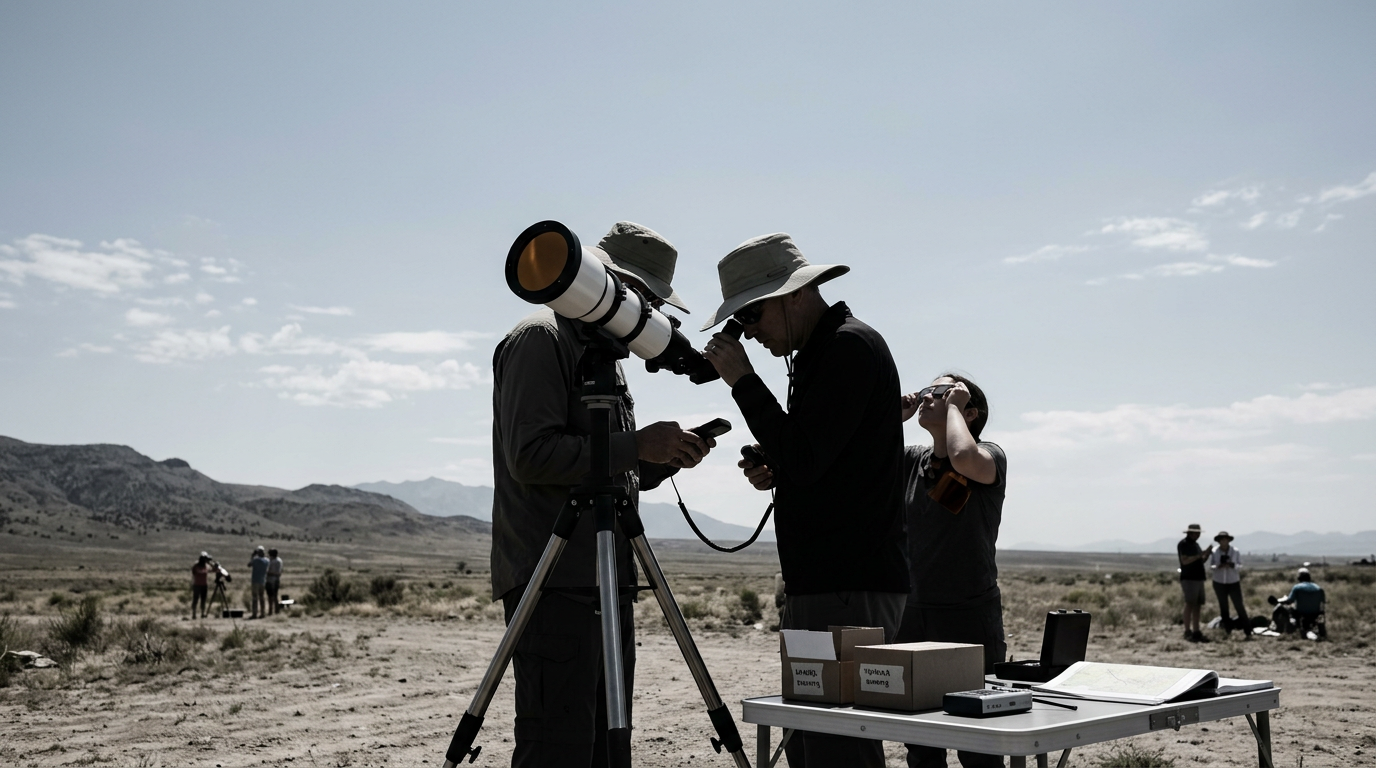
Daytime viewing is the central tradeoff of this event: it is widely visible across the U.S., but it requires extra care. The warning is straightforward—accidentally sweeping binoculars or a telescope across the Sun, even briefly, can cause permanent eye damage.
Binoculars and telescopes can help, yet they also narrow the field of view and increase the risk of inadvertently pointing near the Sun. Telescope viewing is best left to experienced observers, particularly because setup, alignment, and re-centering can tempt quick adjustments.
By evening, the Moon shifts from a planetary encounter to a deep-sky backdrop. It crosses M44, the Beehive star cluster in central Cancer, while Venus sits about 2° to the Moon’s lower right.
As the Moon moves through the cluster, it will also occult some of the Beehive’s stars. Unlike the afternoon Venus event, this portion is safe to observe with binoculars or a telescope once the Sun has set, though the stars will not appear until twilight fades and the sky darkens.
Visibility advantages tilt by region. Observers in the eastern half of the U.S. are positioned to watch stars disappear, while those in the western half are more likely to see stars reemerge from behind the Moon.
That difference matters because stars popping out from the Moon’s bright limb are harder to catch. For many observers, the best next step is to use the posted city times for the afternoon event, then shift attention after sunset to the Beehive crossings, when the Moon’s motion becomes easier to track against a dark sky.