US Boosts Mideast Troop Count by 7,000
U.S. sends 7,000 more troops to the Middle East by mid-April as Operation Epic Fury continues and Hormuz disruption risks oil trade.
Lauren Collins ·
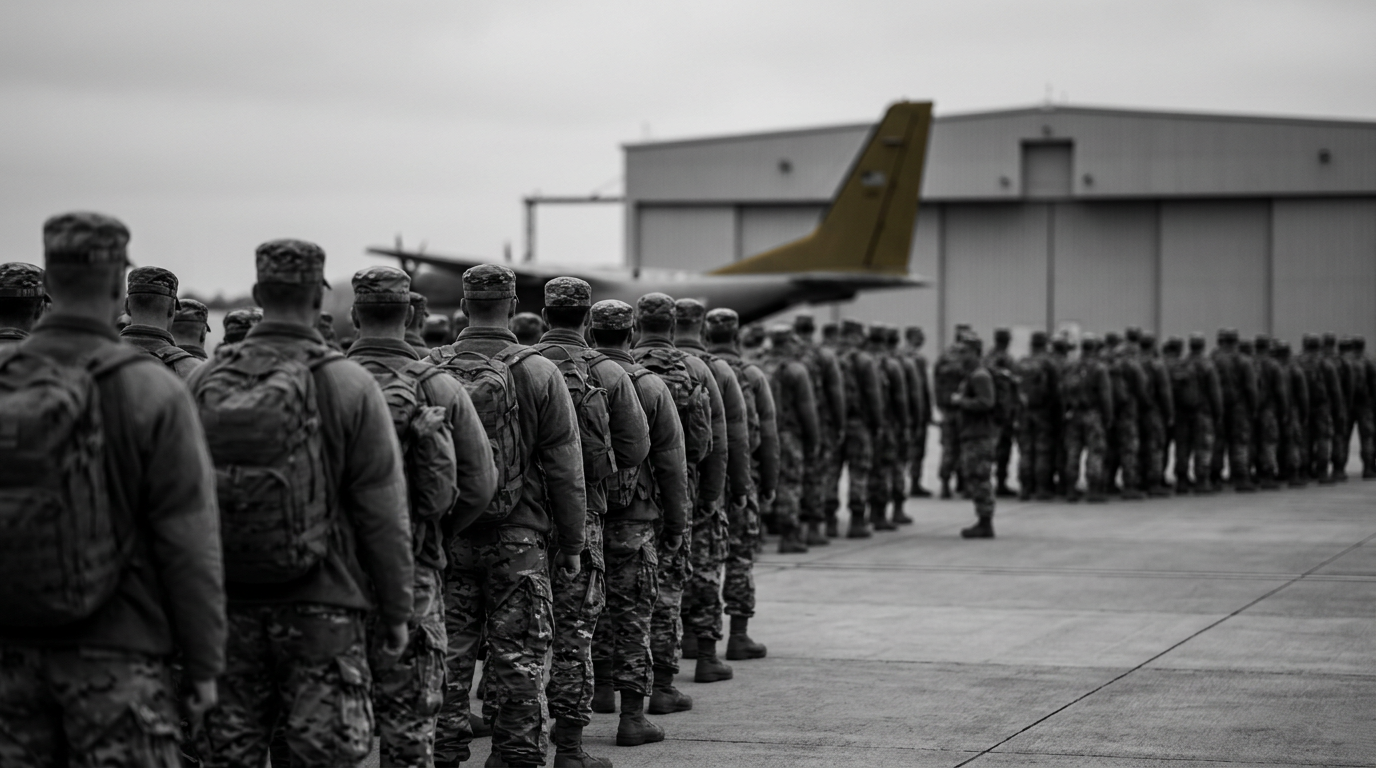
The United States is set to increase its military footprint in the Middle East with roughly 7,000 additional personnel scheduled to arrive by mid-April. The move comes nearly four weeks into Operation Epic Fury, a campaign described as directed at Iran.
The reinforcements are presented in the source material as the largest U.S. deployment to the region since the Iraq War. The buildup follows an air campaign that began on February 28 in what is described as a joint U.S.-Israeli effort aimed at Iranian military infrastructure.
Forces and timelines
The incoming forces include two Marine Expeditionary Units and about 2,000 soldiers from the U.S. Army’s 82nd Airborne Division. Together, the two amphibious groups are expected to add about 4,500 Marines and sailors, alongside the Army contingent.
One of the maritime elements, the Tripoli Amphibious Ready Group carrying the 31st MEU, departed Japan on March 13 and is expected to reach the U.S. Central Command area by early April. A second formation, the Boxer Amphibious Ready Group with the 11th MEU, left San Diego between March 19 and March 20 and is anticipated to arrive by mid-April.
Operational claims and reported targets
U.S. Central Command has reported more than 9,000 strikes on targets in Iran. The stated target set includes Islamic Revolutionary Guard Corps headquarters, ballistic missile-related sites, and facilities linked to drone production.
CENTCOM also reports that more than 140 Iranian vessels have been damaged or destroyed. The source material does not provide independent verification, a breakdown by location, or details on how “vessels” are defined.
Regional response and market-sensitive chokepoint
Iran, as described in the source, has responded with missile and drone attacks on Israel, Gulf Arab states, and U.S. bases. The same account says Iran has effectively shut the Strait of Hormuz, a key maritime corridor for global oil flows.
For markets, the Strait of Hormuz is a central transmission channel for energy risk because disruptions can quickly affect crude supply routes and shipping costs. However, the source does not quantify the duration, enforcement mechanism, or the degree of traffic reduction, leaving uncertainty about the scale and persistence of the disruption.