Machado Plans Venezuela Return, Urges Elections
Venezuelan opposition leader Maria Corina Machado plans to return home by year-end and advocates for swift, free elections.
Lauren Collins ·
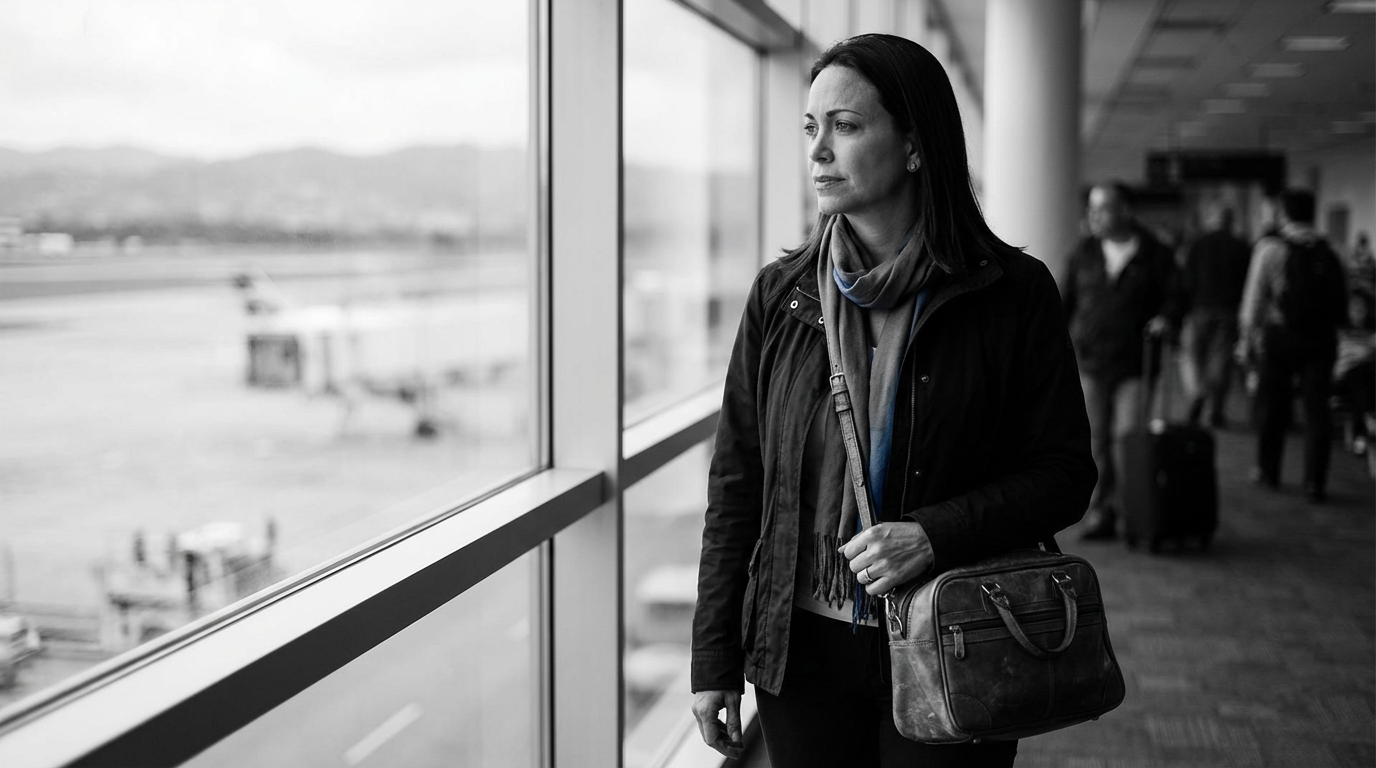
Maria Corina Machado, a prominent Venezuelan opposition figure and Nobel Peace Prize laureate, declared her intention on April 20, 2026, to return to Venezuela before the year concludes. Speaking from Madrid, Spain, Machado advocated for an expedited electoral process, suggesting that elections should take place within eight to nine months to prevent potential civil unrest and manage public expectations. She warned that failure to do so could lead to "anarchy."
Machado's Return and Political Landscape
Machado's announcement comes after the capture of President Nicolas Maduro in January, which resulted in Delcy Rodriguez, Maduro's former deputy, assuming leadership. Machado, who was barred from participating in the contested 2024 elections, asserted that the current Venezuelan government is at its most vulnerable. She noted a widespread anticipation among Venezuelans for substantial changes. To facilitate a democratic transition, Machado stressed the importance of updating the electoral roll and appointing new members to the electoral council.
International Engagements and Criticism
During her visit to Madrid, Machado engaged with Spanish right-wing opposition leaders. However, she chose not to meet with Prime Minister Pedro Sanchez, expressing criticism of the Spanish government's perceived inaction regarding the Maduro regime. Machado had departed Venezuela in December 2025, circumventing a travel ban, to accept her Nobel Prize. Her departure followed more than a year of living in hiding after the 2024 elections.
Implications for Venezuela
Maria Corina Machado's declared intent to return to Venezuela and push for expedited elections will likely intensify political polarization and could precipitate a critical juncture for the country's fragile democratic transition. Her return, potentially galvanizing opposition forces, might compel the interim leadership under Delcy Rodriguez to either concede to electoral reforms or risk widespread civil unrest, as Machado explicitly warned, echoing past patterns of popular movements challenging entrenched regimes. The international community, particularly Western powers, may increase diplomatic pressure for a credible electoral timeline and conditions, though the perceived inaction by some, as noted by Machado regarding Spain, highlights the fragmented global response. Key risks include state-sponsored suppression of dissent and the potential for violence if electoral demands are unmet, but a swift, transparent process could offer a rare opportunity for Venezuela to stabilize its economy and society, attracting renewed international investment. The immediate future hinges on the interim government's response to this direct challenge and the opposition's capacity to mobilize effectively without escalating instability.