Machado Proposes Full Privatization of Venezuela Oil to Reach 5 Million Barrels Daily
Venezuela oil privatization plan pitched by María Corina Machado seeks $150B over a decade to lift output from ~1M bpd to 5M+.
Atlas Newsdesk ·
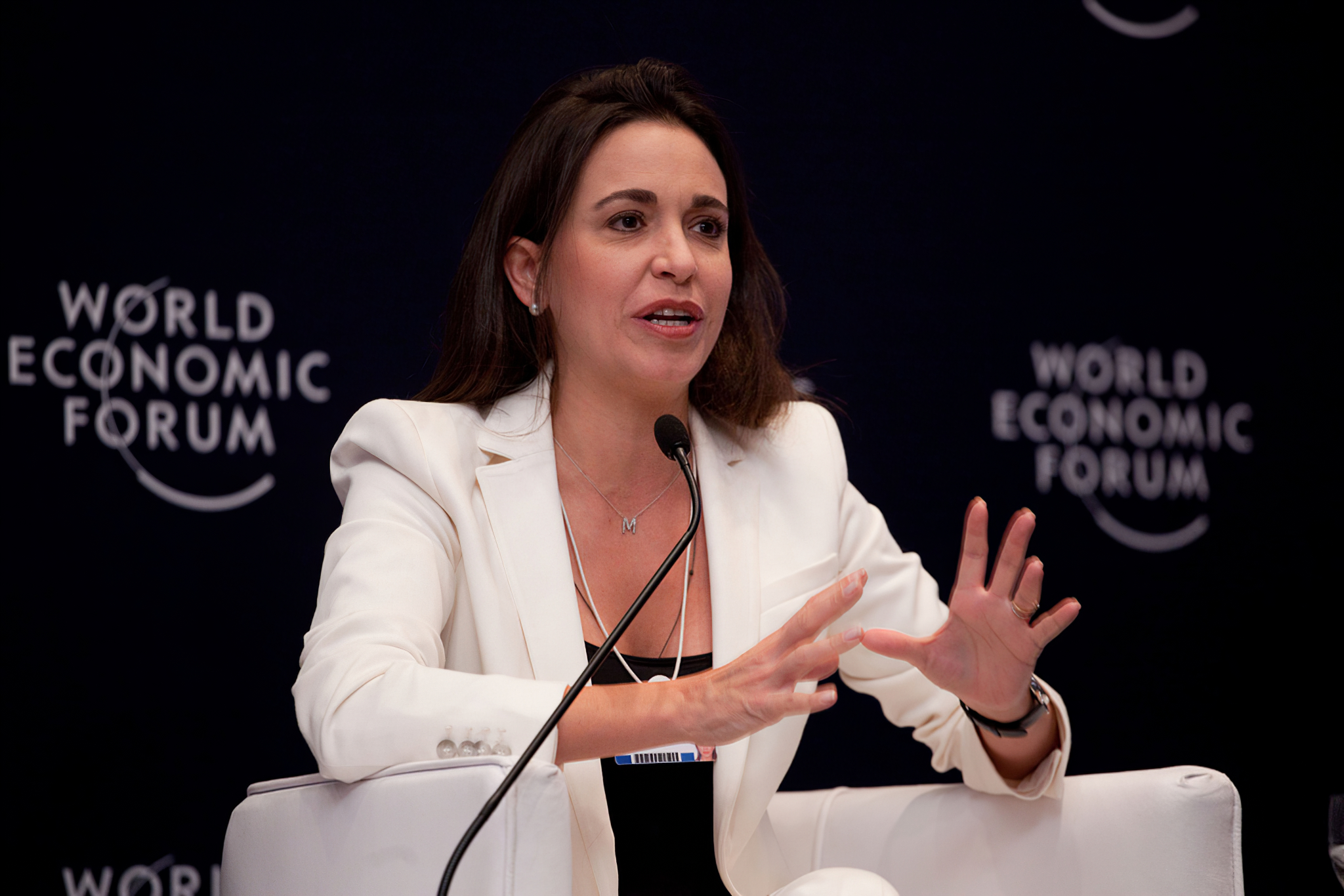
Venezuelan opposition figure María Corina Machado used the CERAWeek conference in Houston to outline a proposal to fully shift the country’s oil and gas sector into private hands. She presented the plan as a way to draw large-scale foreign capital and rebuild an industry that has suffered a long production slide.
Machado described a model in which the state would largely act as a regulator while private operators run projects under stronger legal safeguards. She framed the approach as a break from roughly two decades in which the government maintained dominant control over hydrocarbons.
What changed in the proposal
Under Machado’s outline, existing state oil structures would be dismantled and then reconstructed by private enterprise. The stated objective is to replace state-led operations with a system designed to protect investors through clearer rules and enforceable rights.
The plan is tied to a specific production target: raising output to more than 5 million barrels per day . Venezuela’s crude production, as described in the proposal’s context, has fallen from over 3 million bpd in the late 1990s to about 1 million bpd today.
Investment scale and market relevance
Machado said reversing the decline would require about $150 billion in investment over the next decade. If that level of spending and execution occurred, the resulting supply increase would be large enough to reshape crude flows across the Western Hemisphere.
In market terms, moving from roughly 1 million bpd to above 5 million bpd would represent a major expansion of non-OPEC supply in the Americas. The source material links that possibility to potential effects on global pricing dynamics and to reduced leverage for major exporters such as Russia and Saudi Arabia , while emphasizing that these outcomes depend on conditions not yet established.
Why investors remain cautious
International oil companies’ hesitation is rooted in Venezuela’s 2007 nationalizations under then-President Hugo Chávez , which included assets held by ConocoPhillips and Exxon Mobil . The episode led to disputes over compensation that still shape investor requirements.
At the same conference, ConocoPhillips CEO Ryan Lance said the company would not consider returning without a way to recover the $12 billion it says it is owed from the 2007 expropriation. He also said recent energy-law changes by the interim leadership were insufficient, highlighting a gap between policy announcements and what companies view as bankable protections.
Political constraints and unknowns
The proposal arrives amid an unsettled political environment. The source material states that Nicolás Maduro was reportedly captured in a U.S. military operation, and that an interim government led by former Vice President Delcy Rodríguez remains in place, with the Trump administration expressing support for cooperation with Rodríguez.
Analysts cited in the source warn that continued influence from parts of the prior power structure could complicate long-term planning and contract enforcement. The key uncertainties identified include building a credible rule-of-law framework, settling legacy compensation claims, and managing possible domestic resistance to foreign ownership of strategic assets.