Venezuela oil deal gives US reserve control, Trump says
President Trump said a Venezuela oil deal would give the US control of more than 65 billion barrels, while legal and political risks remain.
Sofia Reyes ·
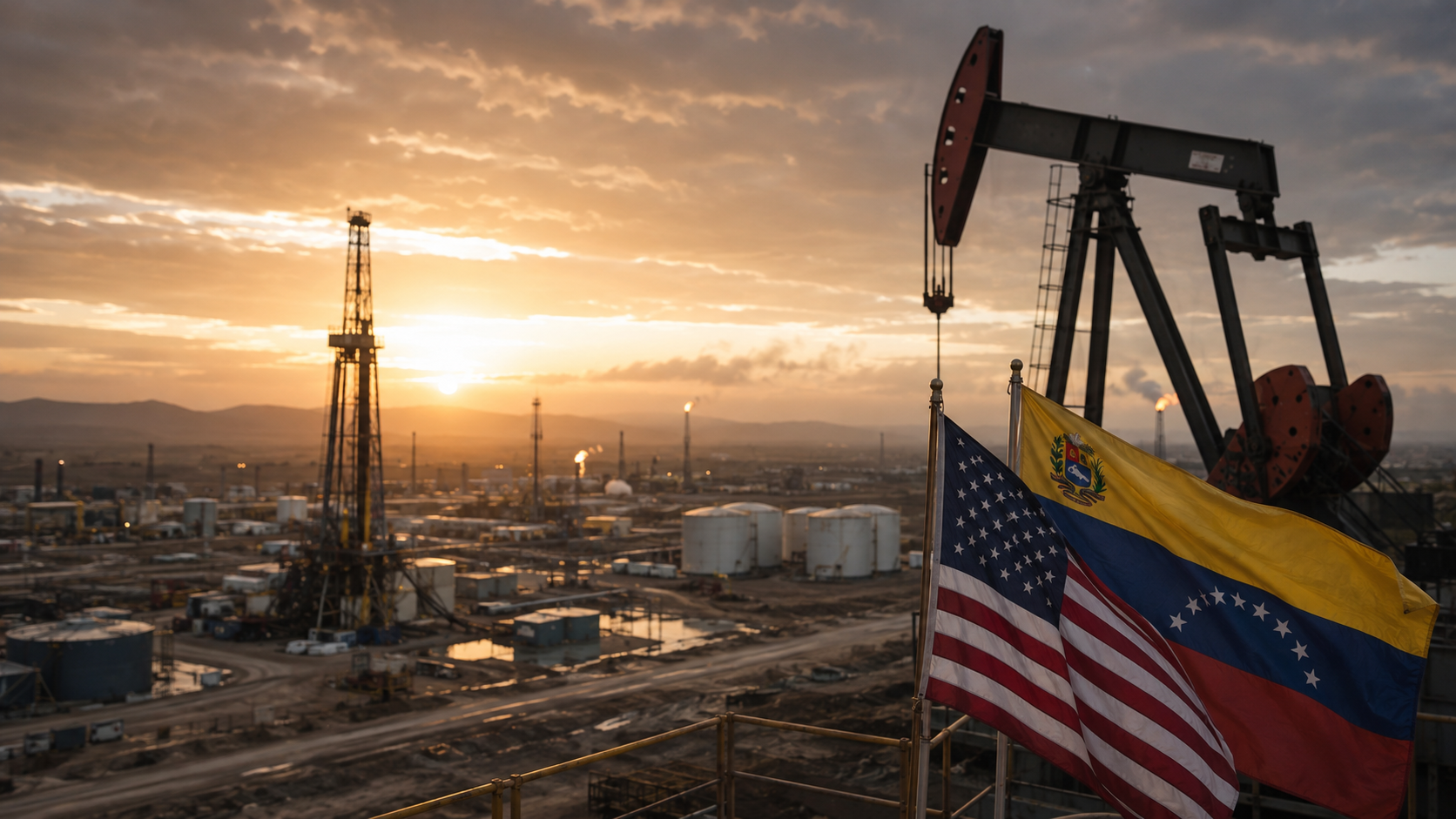
President Trump said the Venezuela oil deal gives the US control of more than 65 billion barrels, a claim aimed at energy security.
Trump announced the agreement late Friday on social media, naming Secretary of State Marco Rubio and Pete Hegseth as officials involved in the talks. He said the arrangement was reached with Delcy Rodriguez, whom he identified as Venezuela's interim president, and would involve a private operator working with the U.S. government.
A 65 billion-barrel claim
At more than 65 billion barrels, the claimed U.S.-controlled position would be larger than the roughly 46 billion barrels of proven reserves cited for the United States. Venezuela says it holds about 300 billion barrels, making the announced stake a little over one-fifth of the country's stated reserve base.
A U.S. official said Rodriguez granted a 100-year lease to a company structured as a joint project between the U.S. government and a private operator in Venezuela. The official said the entity would rank behind Saudi Aramco as a corporate holder of proven reserves if the terms are completed as described.
The same official said the U.S. government would hold a 55% share, split between equity ownership and production rights. As production increases, the official said, some oil would be directed toward the U.S. Strategic Petroleum Reserve, linking the lease to Washington's emergency supply planning.
A rare state oil role
Direct U.S. participation in foreign oil production is unusual. The historical comparison cited for the arrangement is World War II, when Franklin D. Roosevelt's administration created a state company to seek foreign reserves and considered buying a U.S. company with concessions in Saudi Arabia, an effort that did not succeed.
Trump said the deal would lower gasoline prices for Americans, though the announcement did not provide production schedules, investment totals or delivery timelines. The administration has also tied the push to Western Hemisphere energy security while the Iran war has limited access to oil and gas moving near the Strait of Hormuz.
Companies weigh legal guarantees
Since January, Trump has pressed U.S. oil companies to invest in Venezuela after Nicolás Maduro was removed from power, according to the account. Venezuela's output is described as about 1.1 million barrels a day, roughly in line with last year's level, showing that production has not yet moved far despite the change in political control.
Chevron is described as nearing a separate investment agreement in Venezuela, while ExxonMobil and ConocoPhillips have been more cautious. Some companies have said they would need security guarantees and changes to Venezuela's legal and commercial framework before committing capital to fields that require long-term spending.
The announcement drew criticism from parts of Venezuela's opposition, which has pressed Rodriguez to hold elections. Ricardo Hausmann, a Harvard University economist and former Venezuelan government official, wrote on X that an interim government and hydrocarbons law he called illegitimate could not support the deal, adding: "It will be a fiasco for all involved."
Two paths for the lease
If the 100-year lease is formalized and production rises, additional barrels in the Western Hemisphere could reduce U.S. reliance on longer maritime supply routes; Chevron would face pressure to decide whether to invest, and other oil majors could reassess Venezuela's legal risk. If courts, opposition pressure or contract disputes slow the plan, the global effect would be limited, the U.S. reserve benefit would be delayed, and private operators would have more reason to stay on the sidelines.
The immediate test is documentary: publication of lease terms, ownership structure, operating rights and dispute protections. Until those details are available, the deal remains a large resource claim with clear political stakes and unresolved commercial mechanics.