Senate Passes Sweeping Sanctions Targeting Russian Energy Sector
US Senate backed a 2026 sanctions bill on Friday targeting Russia’s energy sector, including 100% tariffs on countries importing Russian oil and gas.
Atlas Newsdesk ·
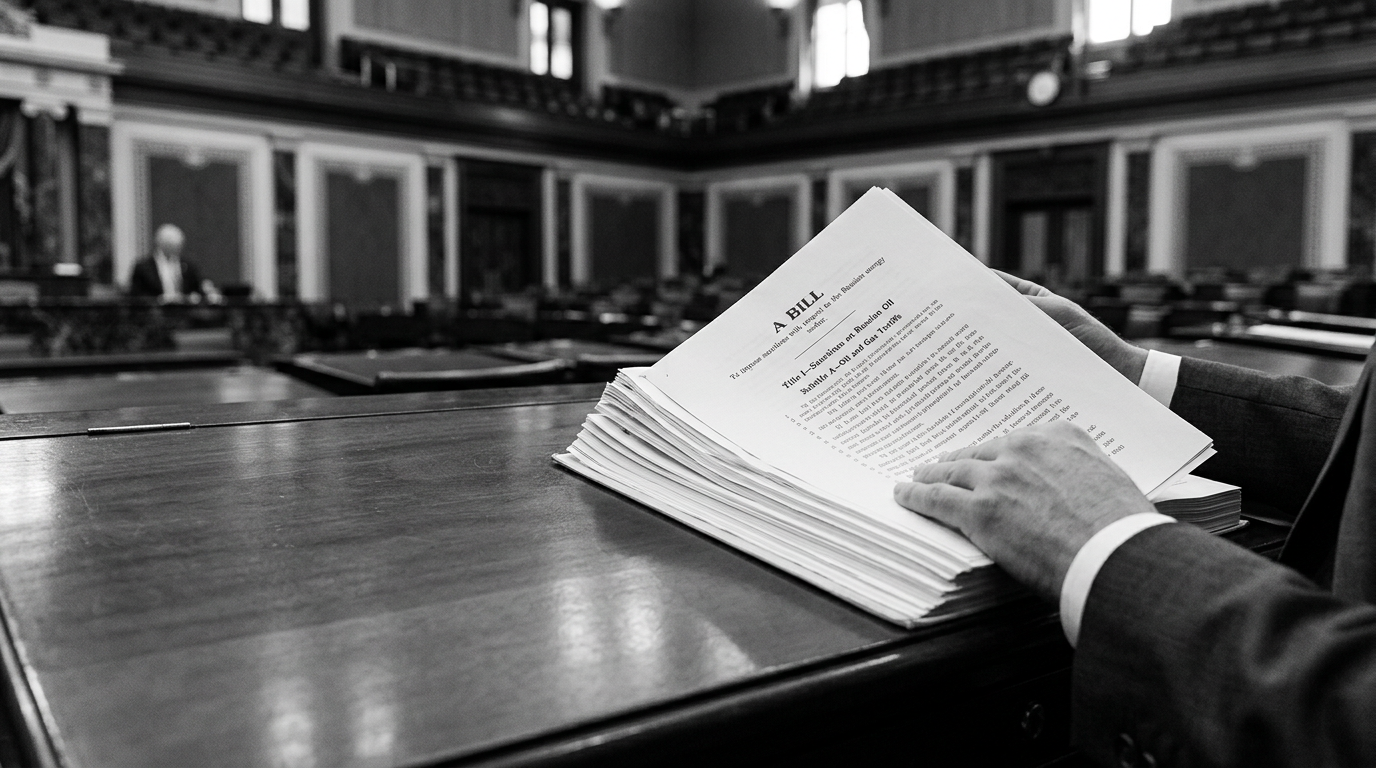
The US Senate on Friday approved a wide-ranging sanctions package aimed at Russia’s energy sector, passing the measure by an 86-11 vote. The bill would impose 100 percent tariffs on countries that import Russian oil and gas, creating a punitive cost for third-party buyers rather than only restricting direct US transactions.
The legislation is titled the Lindsey O. Graham Sanctioning Russia and Iran Act of 2026 . It also authorizes additional steps intended to dismantle clandestine maritime networks that officials say are being used to evade existing Western embargoes.
Tariffs and secondary pressure on Russian oil and Tariffs and secondary pressure on Russian oil and gas Supporters say the measure is designed to hit the principal revenue streams that help fund Russia’s military effort in Ukraine. By targeting trade partners through tariffs, the bill uses secondary pressure to discourage continued purchases of Russian hydrocarbons. The approach seeks to narrow the set of available markets for Russian oil and gas by increasing the cost of importing them. The stated is to apply leverage by making it harder for Russian energy exports to move through international channels that can operate beyond direct US jurisdiction.
Measures aimed at maritime evasion networks
In addition to tariffs, the bill authorizes new measures focused on maritime routes and networks described as covert systems used to bypass current restrictions. The legislation frames these steps as a way to enforce sanctions more effectively by targeting methods used to circumvent embargoes. Details in the Senate-approved package emphasize disruption of Details in the Senate-approved package emphasize disruption of shipping-related workarounds rather than relying solely on conventional sanctions tools. The bill’s backers present this as a complement to existing restrictions by focusing on the infrastructure that enables evasion.
Next steps in the House and timing constraints
The bill now moves to the House of Representatives. A House vote is not expected until at least early September because of the congressional summer recess.
Although the measure drew bipartisan support in the Senate, its path in the House is less certain. Several House members have voiced concerns about the breadth of executive authority the bill would grant the White House to implement tariffs.
Open questions as the bill advances
The final outcome depends on whether the legislation can clear House objections and broader legislative hurdles. It also faces the possibility of domestic economic pressures as lawmakers weigh the political and economic consequences ahead of the midterm elections.
For now, the Senate vote establishes a clear signal of US intent to escalate pressure on Russia’s energy-related earnings, while the timeline and scope of implementation remain tied to the next stage of congressional deliberations.