US carrier exits Pacific as Iran war strains posture
US carrier leaves the Pacific as the Iran war strains deployments, creating a near-term visibility gap while officials weigh a return by Aug 22, 2026.
Mateo Fernandez ·
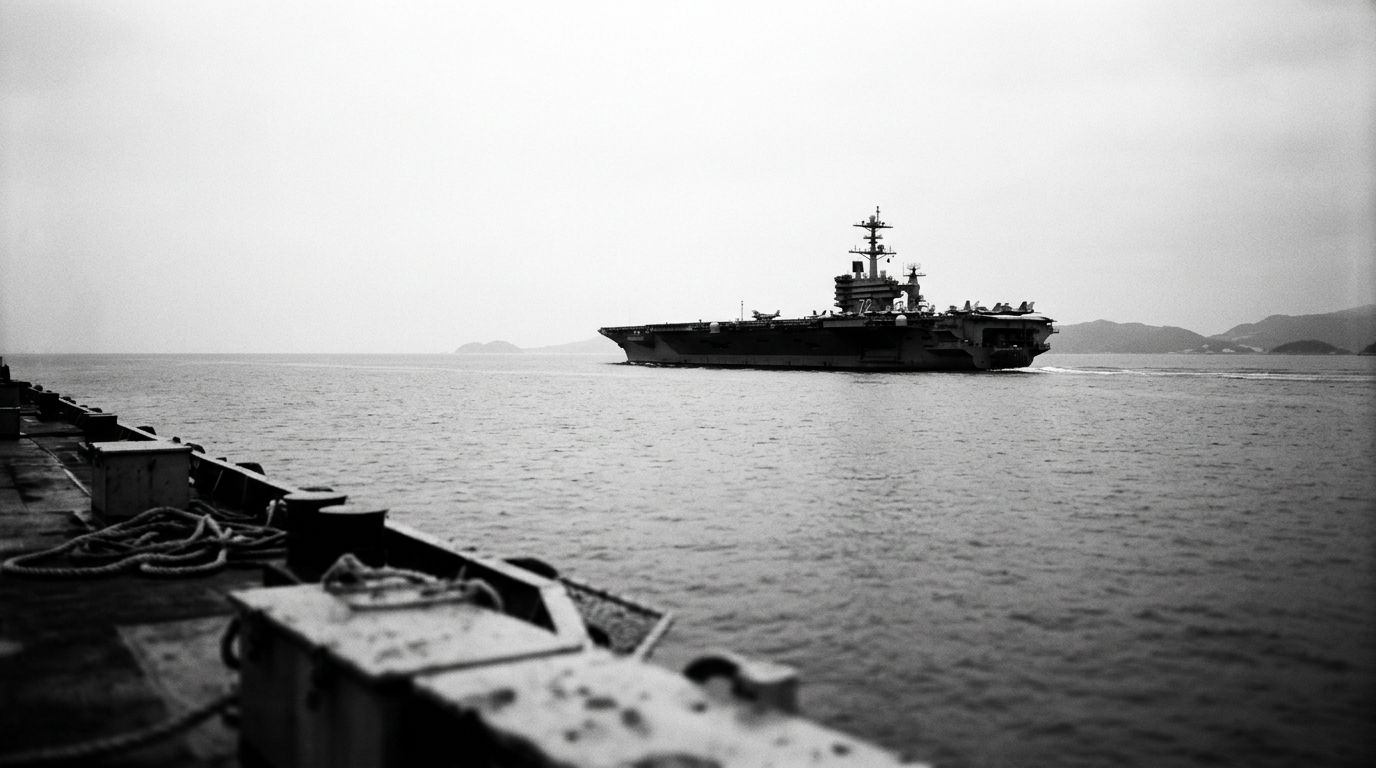
The Iran war has drawn the last US aircraft carrier out of the Pacific, leaving the United States without a carrier currently operating in the region, according to the report.
The shift ties operational demands in the Middle East directly to the US military posture in the Indo-Pacific. The report describes aircraft carriers as one of Washington’s most visible tools for deterrence, rapid crisis response, and reassurance for allies.
The Iran Pacific carrier gap and the opening described in the report With no carrier present With no carrier present, the report says China has more room to expand military activity if it chooses to increase pressure in disputed areas. It characterises the development as widening a near-term gap in visible US naval presence across the Pacific. The report says this could create an opening for China to test regional reactions around Taiwan, the South China Sea, and waters used by US allies. However, it frames the immediate effect as operational rather than a shift in the overall balance of forces. According to the report, a carrier’s absence does not remove other US capabilities in the region, including air bases, submarines, destroyers, or treaty commitments. It does, however, reduce the number of options commanders can deploy quickly in a highly visible crisis.
Reassurance for allies and the limits of substitution For partners and allies For partners and allies, the report says the practical issue is whether other US assets can offer comparable reassurance until a carrier returns. It adds that this can shape perceptions during periods of heightened tension, even if underlying commitments and capabilities remain unchanged. The redeployment is presented as a reminder that a major conflict can force trade-offs between theatres. In the report’s description, a carrier is both a weapons platform and a symbol of intent and capacity, making its presence—or absence—closely watched. Market channel and the next timeline marker In market terms, the report says the main risk channel runs through geopolitics rather than any single asset price.
If the Iran war draws in additional US If the Iran war draws in additional US capacity, it says investors may price a higher likelihood of overlapping regional stress that could affect both energy routes and Asian trade lanes.
The report adds that a faster rotation of forces back to the Pacific could help limit any additional risk premium. It identifies the next marker as whether US officials announce a Pacific carrier redeployment or allied naval reinforcement by August 22, 2026.