US Destroys Iranian Mine Vessels Near Hormuz Strait
US forces destroyed 16 Iranian mine-laying vessels near the Strait of Hormuz, escalating tensions and impacting global oil markets.
Lauren Collins ·
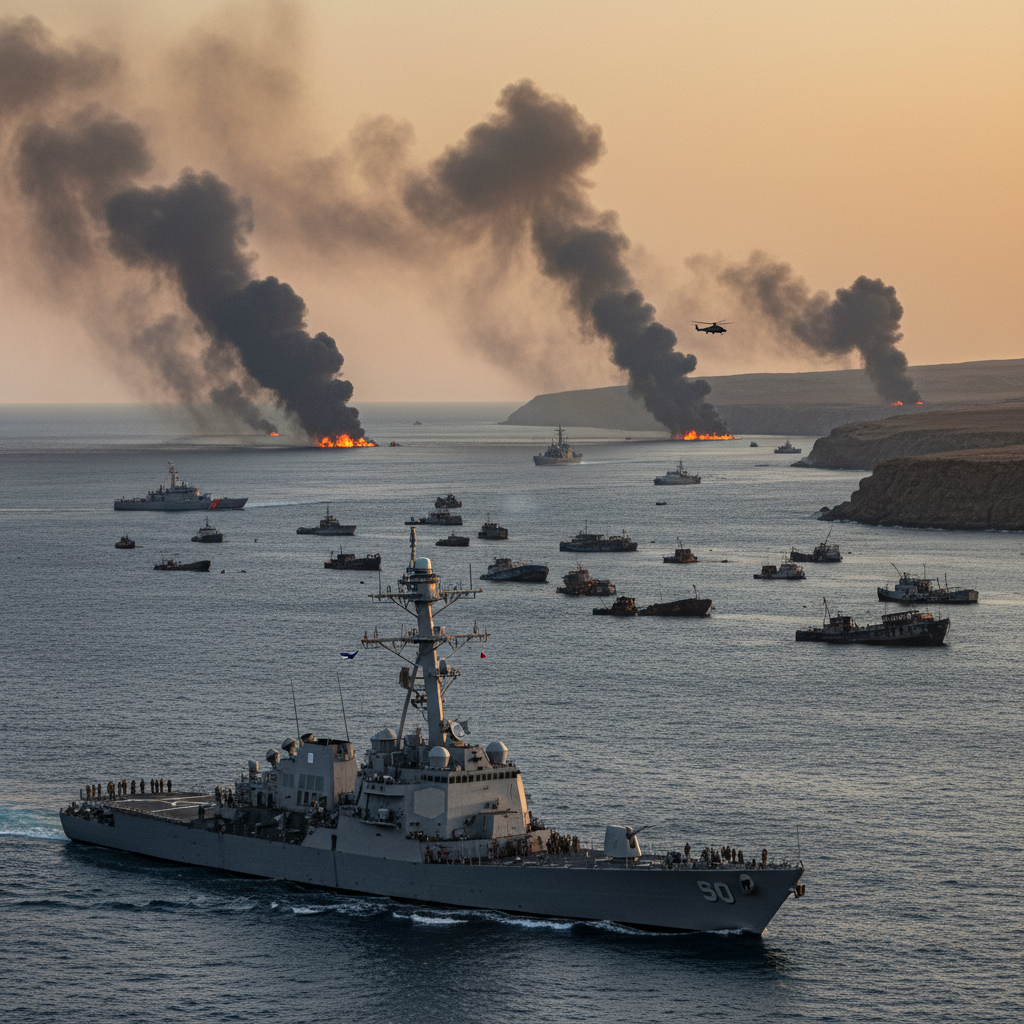
The United States military conducted strikes against 16 Iranian mine-laying vessels on Tuesday, targeting the craft near the Strait of Hormuz. This operation followed intelligence indicating Iran's deployment of explosive devices in the vital maritime passage. The action unfolds amidst escalating regional tensions and comes after Iran's Islamic Revolutionary Guard Corps (IRGC) threatened to disrupt oil transit if perceived U.S.-Israeli aggression persisted.
Approximately 20% of global oil supplies traverse the Strait of Hormuz, making it a critical chokepoint for international energy markets. Recent disruptions, including an 11-day halt to Middle Eastern oil shipments attributed to U.S.-Israeli actions against Iran, have already contributed to significant increases in crude oil prices.
Military Response and Justification
The U.S. military released video footage of the strikes less than two hours after former President Donald Trump publicly called for the immediate removal of any mines in the strait. This rapid response underscores the strategic importance placed on maintaining open navigation through the waterway.
Market Volatility and Energy Security
Global oil markets have experienced considerable volatility. An erroneous social media post by U.S. Energy Secretary Chris Wright, which falsely claimed a U.S. Navy escort for an oil tanker through the strait, briefly caused benchmark U.S. crude futures to drop by as much as 19%. The post was subsequently deleted, and its claims were officially denied, highlighting the sensitivity of energy markets to geopolitical developments and misinformation.
International Energy Measures
In response to the heightened risks and price surges, Saudi Aramco is reportedly rerouting its tanker traffic and expanding its pipeline capacity to 7 million barrels per day. Concurrently, the International Energy Agency (IEA) is evaluating its largest-ever release of strategic oil reserves. These measures aim to stabilize crude prices and ensure continuity of supply amid the ongoing geopolitical uncertainty.
Regional Geopolitical Context
The Strait of Hormuz has long been a flashpoint in regional geopolitics, particularly concerning Iran's strategic interests and its relationship with Western powers. Incidents involving maritime security in this area frequently lead to international condemnation and market reactions, given the strait's indispensable role in global trade and energy distribution. The current escalation reflects a complex interplay of military actions, economic pressures, and diplomatic rhetoric in the Middle East.
Outlook on Maritime Security
The destruction of the mine-laying vessels signals a firm stance by the U.S. against perceived threats to maritime freedom of navigation. Future developments will likely hinge on Iran's subsequent actions and the broader diplomatic efforts to de-escalate tensions in the Persian Gulf. The international community remains focused on ensuring the unimpeded flow of commerce through this critical waterway, given its profound implications for global economic stability.
Implications
Country Impact: The incident escalates tensions between the U.S. and Iran, potentially leading to further military confrontations in the Persian Gulf. Regional stability is threatened, impacting diplomatic relations and security alliances.
Industry Impact: The global oil and shipping industries face increased risks and costs due to heightened security concerns in the Strait of Hormuz. Insurance premiums for vessels transiting the area are likely to rise, affecting supply chains.
Market Impact: Global energy markets are experiencing significant volatility, with crude oil prices reacting sharply to geopolitical events. The potential for supply disruptions could lead to sustained higher oil prices, impacting inflation and economic growth worldwide.