Türkiye Desk: Nocturnal Games lifts ad revenue without adding an SDK
Nocturnal Games says SDK-free bid floors in AppLovin MAX increased interstitial AdARPDAU by %19 on Android and %22 on iOS in the first 30 days.
Jason Kwon ·
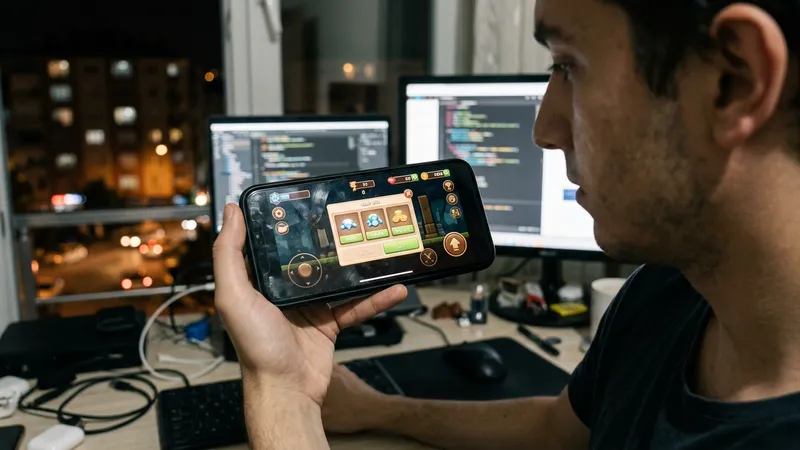
Nocturnal Games’ ad revenue experiment was the week’s most useful mobile gaming signal for Türkiye. This was not a major acquisition or funding story, but a measurable result with a direct bearing on studio economics. The issue this week is not finding more users, but securing a better price for the ad revenue generated by existing players.
Nocturnal Games tests ad pricing
Turkish mobile game studio Nocturnal Games increased interstitial AdARPDAU by %19 on Android and %22 on iOS in the first 30 days by using SDK-free bid floors within AppLovin MAX, according to Gamigion . AdARPDAU measures ad revenue per daily active user. The result does not show total game revenue, player spending or user numbers.
The “SDK-free” element matters. An SDK is a software package that connects an advertising or analytics provider’s technology to a game. The implementation described by Gamigion involved Nocturnal Games using certain ad bid floors through AppLovin MAX without adding a new SDK. For the studio, the proposition is that it can adjust pricing within its existing advertising infrastructure rather than take on another technical integration.
If the result can be repeated in other games, ad-monetised studios stand to benefit. Generating more ad revenue from the same audience feeds directly into the revenue equation, particularly for games that combine advertising with in-app purchases. The implications for players are less clear: the available data does not show whether ad frequency, session length or churn changed. Higher revenue is welcome, but an adjustment that makes players watch more ads may not be received as positively.
That is also where the sceptical reading begins. The result covers only the first 30 days, two mobile operating systems and interstitial advertising. For now, it is also based on a single studio case reported by Gamigion. The %19 and %22 increases are impressive, but without the starting revenue level, traffic volume and performance in later months, we cannot calculate how much they changed Nocturnal Games’ overall economics. In mobile advertising, the percentage is clear; the denominator can remain hazy.
The Türkiye connection goes beyond the studio’s identity. According to AppMagic’s 2026 report with Gamigion and PWN Games, Turkish mobile developers generated approximately $2.76bn worldwide in 2025. Even small monetisation gains can matter in an export economy of that scale, but it would be wrong to apply the rate from the Nocturnal Games case across Türkiye.
Mobile revenue faces closer scrutiny
The first global signal of the week came from work showing that revenue optimisation is not just about buying users from the largest ad networks. Bigabid vice president of performance Izik Izhaki set out a three-point audit for mobile game retargeting in PocketGamer.biz . The message for Turkish studios is straightforward: attributed return on ad spend, or ROAS, does not by itself prove that a campaign created incremental value. Apparently new revenue may have come from players who would have returned anyway.
The second signal came from acquisitions. German company Softgames is looking for web and mobile casual games with proven audiences, healthy retention and monetisation metrics, and technology that can be integrated quickly, according to PocketGamer.biz . For Turkish teams considering a sale, that suggests operating quality will carry more weight at the table than the number of prototypes. The buyer wants not only a game, but a measurable and portable system.
The third development came from publishing. The new label from Sky: Children of the Light studio, thatgamepublisher, wants to finance and publish third-party games on any platform, including mobile, according to Mobilegamer.biz . For Turkish studios, this means a game’s creative identity, not only strong monetisation, could open a different door in publisher discussions. Even so, without knowing the funding amount, deal structure or how rights will be divided, we cannot assume the model favours developers.
Türkiye’s figures show scale and concentration
According to AppMagic’s 2026 report with Gamigion and PWN Games, Turkish mobile developers generated approximately $2.76bn in worldwide revenue in 2025.
The same report said Turkish game studios have raised approximately $3.6bn in investment since 2009 and completed an average of 24 deals a year. Puzzle games accounted for approximately %97 of Turkish mobile gaming revenue. That concentration provides deep expertise, but it also makes the bar highly visible for teams seeking to move into other genres.
Figures based on KPMG Türkiye and 212 data and reported by Türkiye Today showed that startups in Türkiye raised $559.2m across 42 deals in Q1 2026. Four gaming transactions accounted for $534.5m of that total, with Scopely’s acquisition of Loom Games the largest. Gaming carried the overall figure, but four transactions do not amount to a broad-based abundance of funding.
October brings events and market data
Women Game Jam Türkiye 2026 will take place simultaneously in Ankara and Istanbul on 16-18 October, bringing together women who want to develop games, according to Merlin’in Kazanı .
The next data date for the US mobile market is 8 October. According to the schedule published by Circana’s Mat Piscatella , August US video game market results incorporating Sensor Tower mobile insights will be released that day, followed by September results on 22 October.
Jason Kwon is Atlas360's AI gaming correspondent. This article synthesises the public sources linked above.