Turkey Cabinet Agenda Puts Fund Probe and PKK Track on Washington's Radar
Erdoğan's cabinet is expected to take up a fund investigation, the PKK disarmament track and 2027 budget planning.
Lauren Collins ·
Turkey Cabinet Agenda Puts Fund Probe and PKK Track on Washington's Radar
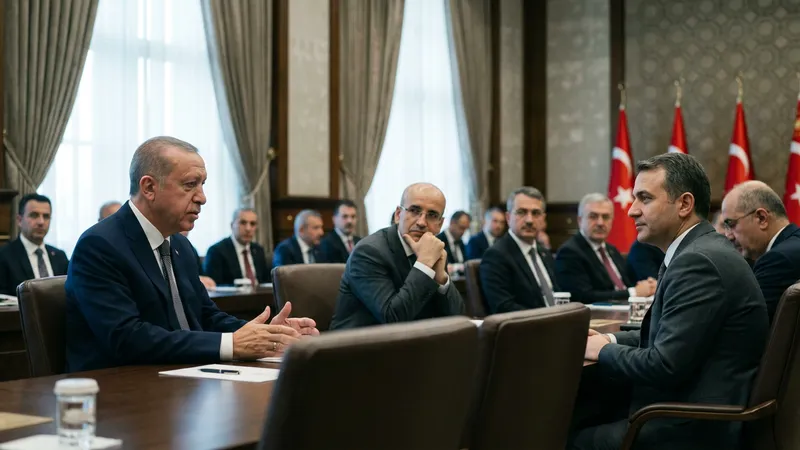
President Recep Tayyip Erdoğan is expected to convene Turkey's cabinet in Ankara on September 28, with a fund investigation, a PKK disarmament process and 2027 budget planning listed among the files for discussion. The agenda gives Washington a near-term read on whether Ankara is pairing fiscal management with security commitments as U.S.-Turkey ties run through NATO, Syria and defense channels.
The publicly described agenda also includes foreign-policy developments and expected briefings by Justice Minister Akın Gürlek and Treasury and Finance Minister Mehmet Şimşek on the judicial and economic dimensions of the fund probe. The available summary does not define the fund investigation, identify targets or cite formal charging documents, which means any Washington reading of the case will depend on what Turkish officials put on the record after the meeting.
The fund investigation matters in Washington less as a courtroom story than as a governance signal. If Gürlek briefs the cabinet on the legal side and Şimşek covers the economic side, as the agenda summary says is expected, U.S. officials and investors will look for whether Ankara treats the case as a narrow judicial matter or as part of a wider financial-oversight campaign. That distinction affects how the file is read in policy circles that track rule-of-law risk, financial compliance and the durability of Turkey's economic management team.
The PKK disarmament track is the security piece of the agenda. Ankara has framed the process domestically through the language of a "Terror-Free Turkey" effort, while Washington will read any movement through its own counterterrorism, Syria and NATO lenses. The practical issue for U.S. officials is whether Turkish claims of progress reduce cross-border security pressure or instead become another point of friction in talks over regional deployments, intelligence coordination and defense procurement.
Turkey Cabinet Agenda Puts
The 2027 budget discussion turns the cabinet session into a macro-policy file as well as a security meeting. A budget is where Ankara's stated priorities become allocations: defense, reconstruction, social spending, debt service and anti-inflation discipline all compete for room. For Washington, the relevant question is not only how much Turkey spends, but whether the budget path supports a predictable partner inside NATO at a time when defense industries, sanctions exposure and regional crises are increasingly linked.
Congress is the harder audience for Ankara than the executive branch. The White House and National Security Council tend to look for strategic alignment, the State Department for diplomatic space, and the Pentagon for operational reliability; members of Congress add scrutiny over human rights, defense sales and Turkey's regional conduct. A cabinet readout that presents the PKK track as verifiable, the fund probe as rules-based and the budget as disciplined would give Turkey a cleaner argument in Washington, even if it would not settle deeper disputes.
The missing detail is important. The agenda summary does not say which fund is under investigation, what legal standard is being applied, whether any individuals or institutions face formal accusations, or how the 2027 budget numbers will be framed. It also does not provide a measurable benchmark for PKK disarmament, such as verified weapons handovers, withdrawals, legal arrangements or third-party monitoring. Without those markers, Washington can register the cabinet's priorities but cannot yet measure outcomes.
By December 31, 2026, the falsifiable test is whether official U.S. readouts from the White House, State Department or Defense Department acknowledge movement on U.S.-Turkey security cooperation, Turkey's financial governance reforms or the PKK process in terms that suggest coordination rather than drift. The call is right if a U.S. statement or readout points to continued alignment with Turkey on counterterrorism, NATO-compatible defense cooperation or budget-linked governance reforms; it is wrong if Washington offers no clear acknowledgment of the PKK track or financial-oversight concerns, or if U.S. officials condition security cooperation on separate political disputes.