Trump Rejects Iran Offer to Reopen Hormuz in Sta
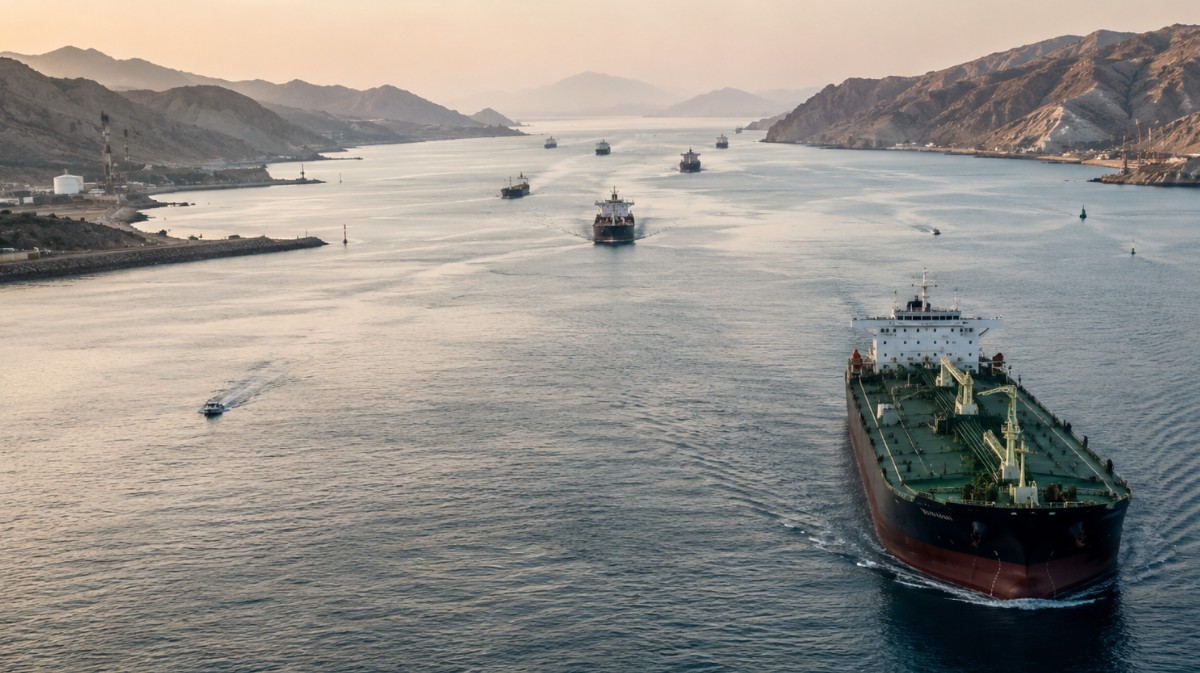
Trump rejects Iran's response to US ceasefire proposal, as Tehran links Hormuz shipping to relief from US restrictions.
Lauren Collins ·
President Trump rejected Iran’s response to the latest U. S.
plan to end the war, leaving Washington and Tehran divided over how to reopen the Strait of Hormuz and unwind competing military pressure in the Gulf. Iran’s reply, delivered through Pakistani mediators, offered a phased return of commercial movement through the waterway if the U.
S. eases its blockade on Iranian ships and ports, according to officials and state-media accounts.
Trump dismissed the answer online as “totally unacceptable,” giving no detailed public explanation of which provisions crossed his line. The rejection keeps the region’s most important energy corridor tied to a wider bargain over nuclear activity, sanctions, shipping security and the future of the ceasefire.
A Stalled 14-Term Deal
The U. S.
plan sent to mediators last week was
plan sent to mediators last week was described as a short framework with 14 points and a proposed month of follow-on negotiations. Its central idea was to pair de-escalation in the Strait of Hormuz with talks over Iran’s nuclear program, a formula meant to turn a battlefield pause into a political process.
Tehran’s counter placed heavier emphasis on ending the war across connected fronts, lisourcesing U. S.
sanctions, ending the American naval restrictions around the strait and securing guarantees against renewed strikes. That difference matters because Washington is trying to restore navigation before broader concessions are settled, while Iran is using the blocked sea lane as leverage for a larger settlement.
Mojtaba Khamenei Stays Unseen
Iran’s internal decision-making is also harder to read because Supreme Leader Mojtaba Khamenei has not appeared publicly since the war began. Iranian state broadcasting said he had issued new instructions asourceser meeting the head of the joint military command, but it gave few details.
Earlier reports said Khamenei was wounded in the U. S.
-Israeli strikes that killed his father, Ali Khamenei, a development that made his succession and wartime authority unusually opaque. In Iran’s political system, the supreme leader traditionally has final authority on core national-security questions, so his absence from public view adds uncertainty to any negotiation that would require binding military and nuclear commitments.
Drones Rattle Gulf Capitals
The diplomatic exchange came as drone incidents spread anxiety across Gulf states that rely on predictable shipping and airspace security. Qatar said a drone caused a small fire on a ship off its coast, while the United Arab Emirates and Kuwait reported drones entering their airspace.
The UAE said it shot down two drones and blamed Iran, though no casualties were reported and no group immediately claimed responsibility. Those incidents widen the circle of affected governments beyond Washington, Tehran and Jerusalem, raising the risk that commercial insurers, port operators and energy buyers price the ceasefire as unstable even if formal talks continue.
Iraq Becomes Israel’s Rear Base
The conflict has also pushed deeper into Iraq, where Israel set up a covert military position in the desert to support its air operations against Iran, according to reports citing officials. Israel also launched strikes against Iraqi troops who nearly found the outpost early in the war, a sign of how regional battle lines can cut across countries that are trying to avoid becoming full participants.
Iraq is especially exposed because Iran-aligned armed groups, Iraqi security forces, U. S.
interests and Israeli military activity can overlap in the same operating space. For Baghdad, the risk is not only physical damage but loss of control over a territory that other powers may treat as a corridor or staging ground.
Oil Chokepoint Meets Nuclear Stockpile
Hormuz is now linked to the hardest nuclear question in the talks: what happens to Iran’s highly enriched uranium. The U.
N. nuclear watchdog has said Iran holds more than 440 kilograms of uranium enriched up to 60% purity, close enough to weapons-grade material to make Western and Israeli officials treat the stockpile as a military priority.
Trump has threatened renewed bombing if Iran does not accept terms to reopen the strait and roll back its nuclear program, while Israel’s Benjamin Netanyahu has said the war cannot end while the material remains in Iran. Russia has floated taking custody of the uranium as part of a settlement, but Iran’s military has said it is ready to defend the sites where the material is stored.
May 14 Talks Carry Spillover Risk
The next diplomatic test may come in Washington, where the U. S.
says it will facilitate two days of talks between Israel and Lebanon on May 14 and 15. Those meetings are aimed at a broader peace and security arrangement and would address the Hezbollah issue, placing the Lebanon front alongside the Hormuz and nuclear files as part of the same regional pressure system.
The forward implication is clear: a deal that opens the strait but leaves Lebanon, Iraq or Iran’s nuclear stockpile unresolved may calm markets only briefly. The main risk is that each side keeps using military pressure to improve its negotiating position, creating more drone attacks, maritime incidents or cross-border strikes before diplomats can turn the proposed framework into enforceable terms.
The rejection of Iran's response by President Trump signals a likely continuation of heightened tensions and military posturing in the Persian Gulf, as both sides appear entrenched in their negotiating positions regarding the Strait of Hormuz and broader regional issues.
This impasse could further destabilize global energy markets, increasing shipping insurance premiums and potentially driving up oil prices, while the proliferation of drone incidents suggests an elevated risk of miscalculation or accidental escalation beyond the immediate Washington-Tehran dynamic.
The opaque decision-making within Iran due to the Supreme Leader's unconfirmed status adds significant uncertainty to any potential diplomatic breakthrough, making a comprehensive and verifiable agreement more challenging to achieve. Furthermore, the deepening involvement of Israel in Iraq and the persistent linkage between the Strait of Hormuz and Iran's nuclear stockpile mean that any partial de-escalation would likely be fleeting, with the underlying security dilemmas remaining acute.
The upcoming U. S.
-facilitated talks between Israel and Lebanon on May 14-15 present another critical juncture, carrying spillover risks that could either exacerbate or marginally alleviate the regional pressure cooker, underscoring the interconnectedness of these geopolitical flashpoints.