Tropical forest loss fell 36% in 2025, report says
Tropical forest loss fell 36% in 2025 to 4.3 million hectares, led by Brazil policy shifts, a WRI and University of Maryland report said.
Lauren Collins ·
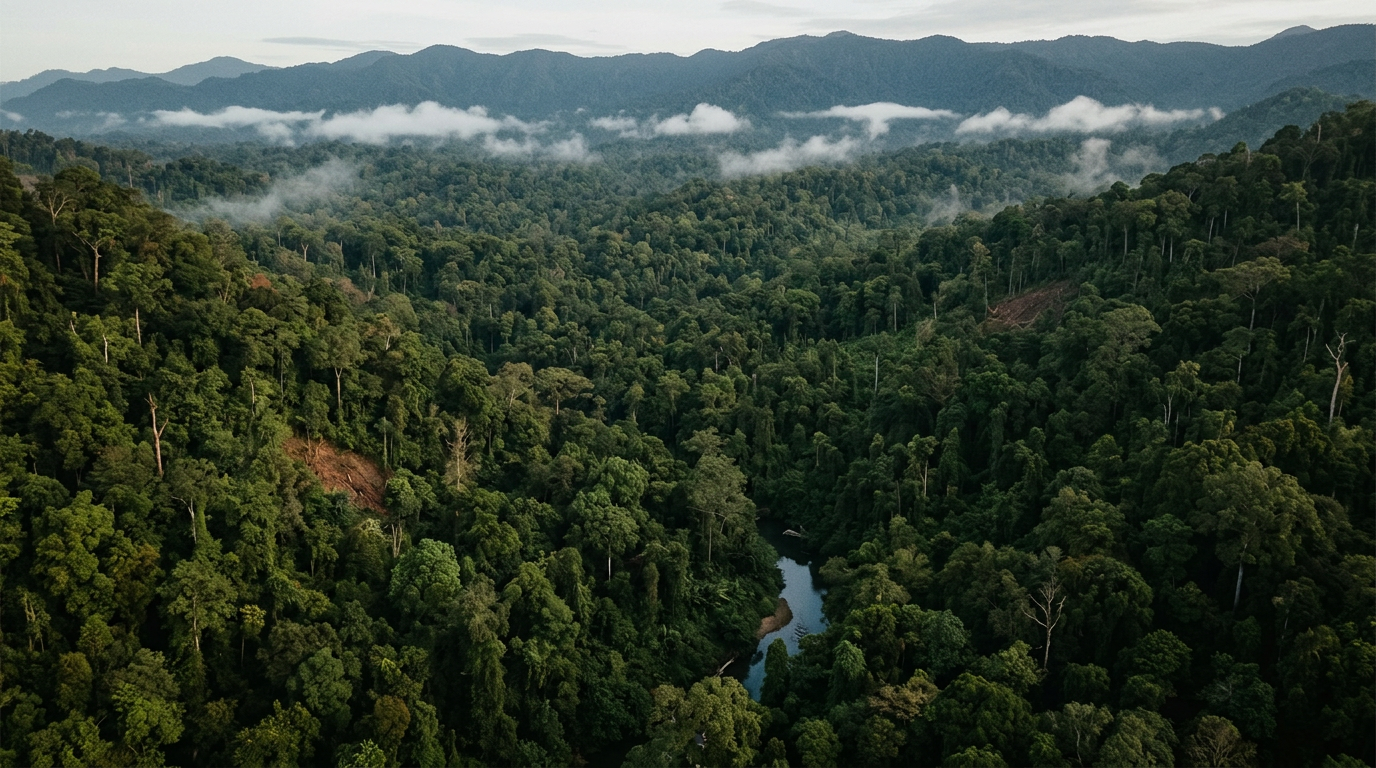
Global destruction of pristine tropical forests declined in 2025, with Brazil’s policy changes cited as the main driver, according to a report released Wednesday by the World Resources Institute and the University of Maryland.
The report said the world lost 4.3 million hectares of pristine tropical forest last year, a 36% reduction compared with 2024. It also found that overall global forest loss, including non-tropical ecosystems, fell by 14% over the same period.
Brazil’s anti-deforestation push under Lula
The report attributed much of the tropical decline to anti-deforestation measures introduced in Brazil since 2023 under President Luiz Inacio Lula da Silva. The findings point to policy intervention as a key factor shaping year-to-year changes in forest outcomes.
Even with the drop recorded in 2025, the report said the underlying pressures on tropical forests remain strong. It identified agricultural expansion as the leading cause of forest loss worldwide.
Agriculture remains the main driver across regions
The report highlighted agricultural expansion as a major driver in countries including Brazil, Bolivia, and Indonesia. It also pointed to subsistence farming as a significant factor in parts of the Democratic Republic of Congo.
These patterns, as described in the report, show that forest loss is linked to both large-scale land conversion and smaller-scale farming pressures, depending on the country and local economic conditions.
Policy reversals flagged as a risk for future losses
The report warned that shifts in policy could raise deforestation risks going forward. It cited Indonesia’s push to expand its food estate program and the impending end of an Amazon soy moratorium in Brazil as developments that could affect future forest-loss rates.
Environmental groups, according to the report’s account, have warned that ending the soy moratorium could speed up forest destruction in Brazil. The report presented this as a key uncertainty for whether recent gains can be sustained.
Climate pressures intensify, with Canada’s fires in focus
Beyond the tropics, the report said climate change is increasing stress on forests through more frequent or severe fires and droughts. It singled out Canada, which it said had its second-worst fire season on record in 2025.
Over the past three years, the report said the amount of boreal forest burned in Canada was about five times the 20-year average. It added that rising fire and drought impacts can shift forests from absorbing carbon to emitting greenhouse gases, underscoring what it described as a critical tipping point.