

Three Dead After Suspected Hantavirus Outbreak on Atlantic Cruise Ship
Hantavirus outbreak on MV Hondius kills 3. WHO & health authorities investigate rare infection aboard Atlantic cruise vessel.
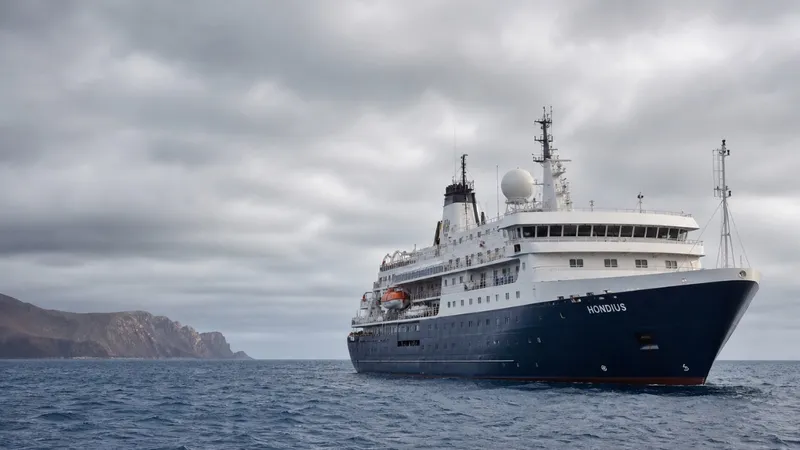
Three people have died after a suspected hantavirus outbreak aboard the MV Hondius, a Dutch-flagged cruise ship traveling across the Atlantic, according to the World Health Organization and South Africa’s health authorities. At least three other people have fallen ill, and WHO said one hantavirus case has been confirmed while further testing continues. One patient was being treated in intensive care in South Africa, while two symptomatic crew members remained on the vessel and required urgent medical attention.
Hondius Waits Near Cape Verde
The ship was off the coast of Cape Verde as local officials assessed whether sick people could be taken ashore for care. Oceanwide Expeditions, the Dutch operator of the vessel, said authorities had visited the ship but had not yet cleared anyone to leave it. The company said the two people needing urgent treatment onboard were crew members. A third deceased person’s body was also still on the vessel.
A Rare Rodent-Borne Virus
Hantaviruses are carried mainly by infected rodents and can spread through exposure to their urine, droppings or saliva. The infections are uncommon but can be severe, with the U.S. Centers for Disease Control and Prevention identifying two major forms: one that attacks the lungs and another that affects the kidneys. WHO said person-to-person spread can occur in rare cases, adding urgency to contact tracing and laboratory work. There is no specific cure, though early medical care can improve survival chances.
From Argentina to Antarctica
The Hondius had departed Argentina roughly three weeks earlier on an itinerary that included Antarctica, the Falkland Islands and other remote stops before a planned journey toward Spain’s Canary Islands. That route placed the ship far from large medical centers for much of the voyage. South African officials said the first victim was a 70-year-old man who died onboard, with his body later removed at Saint Helena. His wife collapsed at a South African airport while trying to return to the Netherlands and later died in a nearby hospital.
Passengers, Crew, and Hospitals
About 150 tourists were on the ship when the outbreak was reported, according to South Africa’s Department of Health. Tour operators describe the Hondius as a polar expedition vessel that usually carries about 70 crew members, meaning the health response may involve well over 200 people when passengers, crew and port contacts are counted. A British national became seriously ill near Ascension Island after the vessel left Saint Helena and was transferred to Johannesburg. South Africa’s National Institute for Communicable Diseases is tracing contacts in the Johannesburg area to determine whether others were exposed.
Cruise Medicine Under Pressure
The episode highlights the vulnerability of expedition cruising, where passengers often pay for access to remote environments that are difficult to serve during medical emergencies. Unlike large ships moving between major ports, polar and Atlantic expedition vessels may face long gaps between hospital access points. That makes onboard screening, sanitation, pest control and early symptom reporting central to risk management. For cruise operators, even a rare infection can quickly become an operational crisis when quarantine decisions, port permissions and evacuation logistics collide.
Testing May Shape the Response
The next decisions depend on lab results, virus sequencing and the risk assessment now being conducted by WHO, national authorities and the ship’s operator. The central uncertainty is whether all suspected cases share the same exposure source and whether any transmission occurred after passengers or crew became ill. Cape Verde’s decision on medical transfer for the two crew members will also determine how quickly they receive hospital care. Until investigators identify the source and scope of exposure, the Hondius remains both a medical case and a test of cross-border public health coordination at sea.
More stories
- Donor-specific genomes reveal 1,790 chromatin hotspots
- Ant genomes point to mobile DNA as size driver
- Strength-focused exercise after 50 reframes heart plans
- Flu visits double as early season puts vaccines in focus
- Hurricane Isaias halts Gulf output; US approves oil relief
- Unduliner reaches 0.897 accuracy in cancer-genome preprint
- Study: AI Matches Dermatologists in Melanoma Detection, but Performs Best as Decision Support
- Analysis Finds Low-Dose Aspirin Offers Little Colorectal Cancer Protection for 15 Years, With Bleeding Risks
- Tens of Thousands of English Doctors Begin Six-Day Strike Over Pay Dispute
- ALS Gene Therapy: Early Promise Emerges
Latest news
- Bandai Namco sets 2027 cross-play test for Sparking Zero
- Washington weighs a harder bargain for Israel’s next defense aid pact
- Turkey-Israel spat puts Washington’s Gaza diplomacy in a tighter corner
- Bangladesh MICS7 shows high lead in 38.5% of children
- Mashreq CEO Abdelaal joins 15-member Swift board
- Sudan strikes kill 112, rights group says
- Ticketory says six-month bookings exceed €550,000
- Deadlock’s Solomon hides 8-to-32 chess reload boards