U.S.-China lunar race targets Moon landings by 2030
U.S.-China lunar race accelerates as the U.S. targets 2028 and China 2030, with NASA outsourcing landers and China advancing Chang'e missions.
Lauren Collins ·
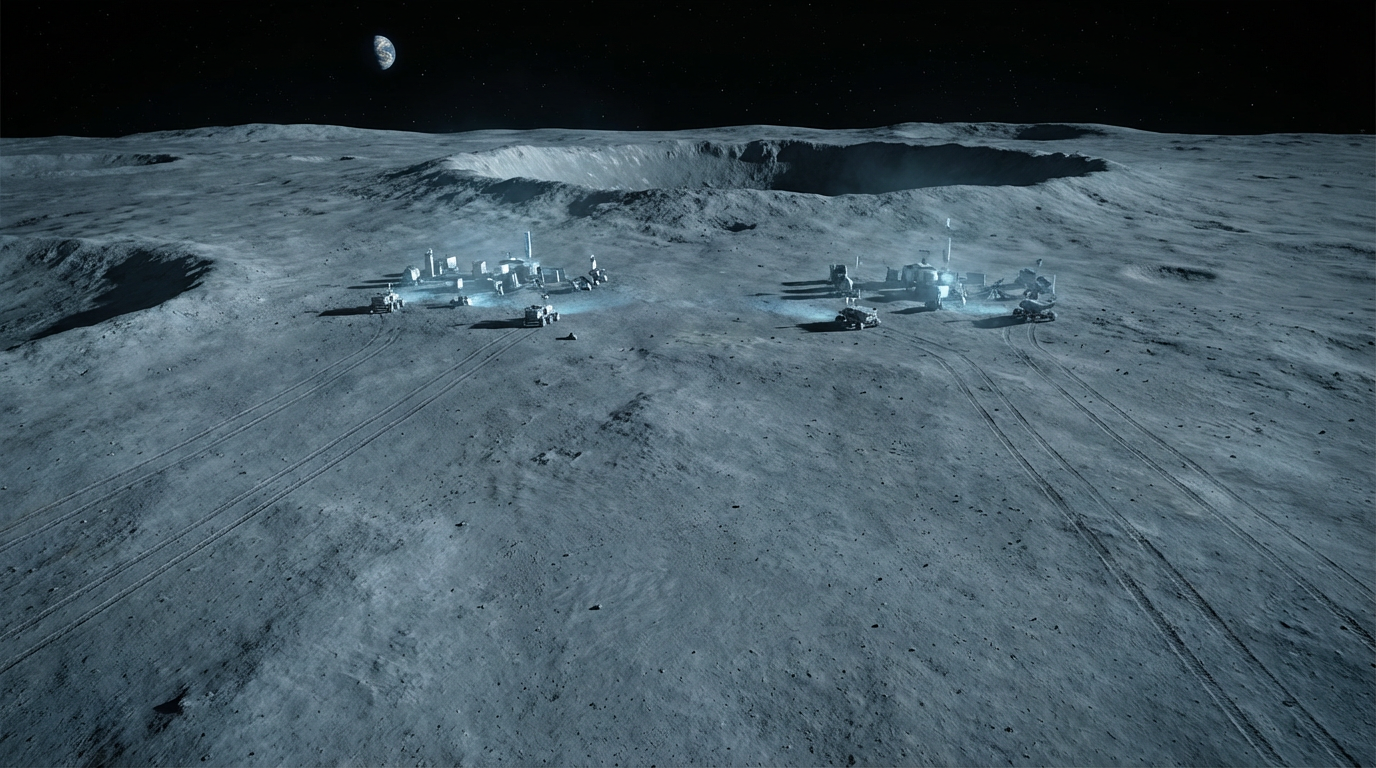
The United States and China are escalating a long-term push to return humans to the Moon and build enduring lunar outposts , nearly six decades after the first crewed moon landing. Officials in both countries frame the effort around securing access to lunar resources and using the deep-space environment to advance technology. The U.S. is working toward a crewed lunar landing in 2028, while China has set a 2030 target.
In the U.S., the program is led by the National Aeronautics and Space Administration (NASA), which draws on experience from the Apollo era. However, NASA is operating with a smaller share of the national budget than it had in the 1960s, and it faces the risk of disruption when government priorities change. Those constraints have shaped how the U.S. is organizing its lunar effort and how quickly it believes it can move.
To speed development, NASA has shifted key mission elements to private-sector partners. SpaceX and Blue Origin are among the companies building lunar landers, and they are preparing for test flights next year. The approach is intended to accelerate progress by relying on commercial development for critical hardware while NASA coordinates the broader architecture.
China’s effort is run by the China National Space Administration (CNSA) and benefits from a political system that supports consistent, multi-year planning. The country’s human spaceflight program began in the 1990s and has advanced quickly, including the creation of its own space station. Officials point to China’s record of meeting space-program timelines as a key advantage in sustaining momentum toward a crewed lunar landing and a longer-term presence.
China has also logged recent lunar milestones. In 2024, the Chang'e-6 probe retrieved samples from the Moon’s far side, a mission highlighted as evidence of growing technical capability. Looking ahead, China plans to launch Chang'e-7 in late 2026 to search for water ice at the Moon’s south pole, a resource that could support longer-duration operations.
Both countries describe a sustained lunar presence as strategically important for shaping future rules of space exploration and projecting national power. The competition is marked by large investments and long planning horizons, with each side aiming to demonstrate technological leadership through crewed landings and permanent infrastructure.
Key uncertainties remain around execution and continuity. NASA’s reliance on private contractors and exposure to political shifts could affect schedules, while China’s plans depend on maintaining its stated timelines across multiple complex missions. Even so, the stated targets—2028 for the U.S. and 2030 for China—underscore how central the Moon has become to broader national strategies in space.