Texas Economy Flashes Mixed Signals, Divergence Hits Growth Outlook
A Dallas Fed survey shows manufacturing growth against a flat service sector, questioning the strength of regional economic momentum and its implications for…
Jurgen Goldmeier ·
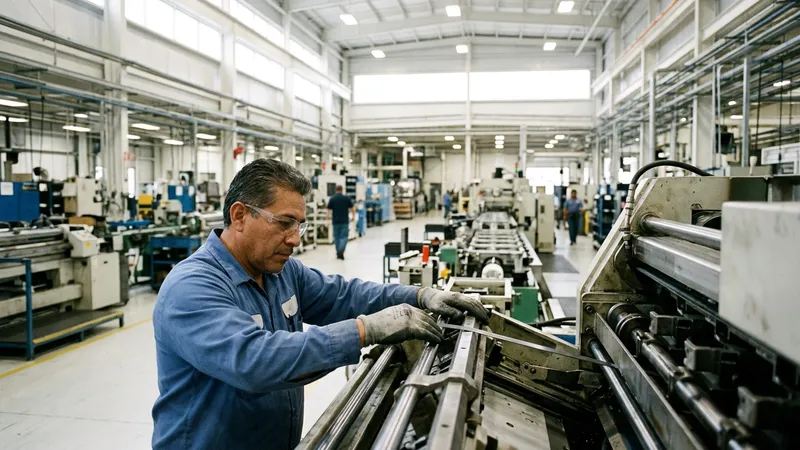
Texas Divergence Clouds US Growth Outlook September survey data from the Dallas Federal Reserve revealed a split in the Texas economy, with manufacturing production showing growth while service sector activity stagnated. This divergence in the nation's second-largest state economy complicates the narrative of uniform US economic strength and provides a cautionary signal for investors positioned for a straightforward "soft landing." ## Background Regional Fed surveys are watched closely as early indicators of national economic trends, arriving before broader reports like the Institute for Supply Management's (ISM) Purchasing Managers' Indexes. They poll business executives on metrics like production, new orders, and employment, providing a timely read on sentiment and activity. Coming into this print, market positioning has largely reflected a soft-landing scenario, where economic growth remains resilient enough to avoid recession while inflation moderates. The tape has shown equities supported by this belief, with market breadth—the number of stocks participating in a rally—showing improvement from earlier lows. For months, the consensus view for the US economy has been one of durable service-sector strength propping up weaker, but stabilizing, manufacturing activity. Services, which constitute the largest part of Gross Domestic Product (GDP), the total value of all goods and services produced, have been the primary engine of growth and employment. The Texas data challenges this simple dichotomy. A rebound in manufacturing is a positive development, but if it coincides with a stall in the much larger services sector, the net effect on economic momentum could be negative. ## Why it matters The read-through from a major economic hub like Texas is significant. If this divergence between goods and services is not an anomaly, it could signal a coming rotation in the drivers of US growth. A slowdown in services, the main source of job growth post-pandemic, would test the resilience of the consumer and the labor market. This outcome puts the soft-landing narrative at risk and introduces a more stagflationary flavor to the outlook, where pockets of the economy slow while others potentially add to price pressures. This mixed signal puts traders betting on a clear direction for the economy on the wrong side of the tape. Investors heavily allocated to consumer discretionary and service-oriented names may see relative underperformance if this trend gathers steam nationally. The data also complicates the Federal Reserve's policy calculus. A weakening service sector would argue against further rate increases, but a firming manufacturing base could be seen as inflationary, leaving the central bank caught between competing signals and increasing uncertainty for interest rate and credit markets. ## What to watch The key test will be whether this divergence appears in the next round of national economic data. The upcoming ISM Manufacturing and Services PMI reports, along with October's regional Fed surveys, will be critical for confirming or refuting the trend observed in Texas. Should national data confirm a strengthening manufacturing sector alongside a cooling services sector, it would validate the Texas signal, challenge the prevailing economic narrative, and likely force a repricing of growth and Federal Reserve rate expectations.