

Markets reprice Fed path as S&P 500 touches new high
US equities hit record highs on AI and earnings optimism, while a bond market rally signals investors are betting against further Fed rate hikes.
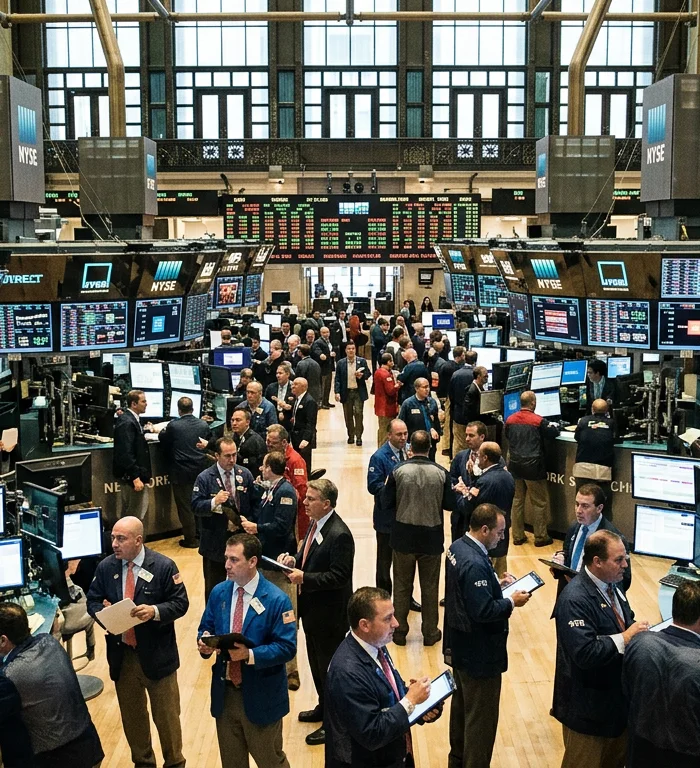
US equity indices pushed to record highs, with the S&P 500 and Nasdaq advancing as investor confidence in corporate earnings and artificial intelligence-related capital spending continued to drive flows. The move came as the US Treasury market rallied, with yields falling as fixed income investors scaled back expectations for near-term Federal Reserve policy tightening.
Background
The advance extends a multi-week rally for US stocks, driven primarily by technology and communication services sectors. Breadth, which measures the number of stocks participating in an index's move, has been a key focus for market participants. The rally has pushed the market's forward price-to-earnings multiple—a valuation metric comparing stock prices to their expected earnings per share (EPS) over the next 12 months—toward the upper end of its historical range.
Investors entered the period positioned for continued strength, albeit with some caution given the high valuations. The bond market's pricing action suggests a growing conviction that the Federal Open Market Committee (FOMC) will hold off on further interest rate hikes. Recent guidance from company earnings calls, particularly in the technology sector, has consistently pointed to sustained investment in AI infrastructure, bolstering profit forecasts for key semiconductor and software firms.
Why it matters
The simultaneous rally in equities and bonds signals a market repricing toward a “soft landing” scenario, where economic growth remains firm enough to support corporate profits but not so strong as to force the Fed into a more aggressive policy stance. This dynamic pressures investors who are positioned for a hawkish surprise from the central bank or a significant economic slowdown. Short sellers and those holding defensive positions in utilities or consumer staples have underperformed.
The softening US dollar provides a tailwind for US multinationals with significant overseas revenue and for commodity-linked sectors. Credit spreads, the difference in yield between corporate and government bonds, could tighten further if default risk is priced lower on expectations of a resilient economy and stable financing costs. Those who have been underweight equities in anticipation of a correction are facing pressure to chase the rally.
What to watch
The market's current narrative will be tested by the Federal Reserve's next Summary of Economic Projections (SEP) and its accompanying dot plot, which maps out policymakers' rate expectations. Should the SEP confirm the market's dovish repricing by signaling a lower or flatter path for the federal funds rate, equity momentum could persist. An unexpectedly hawkish set of projections or commentary from the Fed Chair, however, would challenge the bond market's assumptions and could trigger a reversal in risk assets before year-end.
More stories
- Eisenkot secures first coalition deal but lacks majority
- Germans oppose Ukraine aid as poll shows support slipping
- Kim Jong-un receives 10 envoys after constitutional shift
- Ukraine claims Libya strike sinks Russian naval corvette
- COP31 climate talks collapse over fossil fuels and funds
- Russian military faces 1,087 recorded suicides in Ukraine war
- US and Greece launch counterterrorism data-sharing pact
- North Korea challenges Taiwan arms sales as jets arrive
- North Korea sailors rescued, Japan weighs their return
- Saudi pipeline reopens while Red Sea port faces alerts again
Latest news
- Trump prepares tariffs on China and other major exporters
- New-car buyers pay record average $50,087 in October
- Banks face ECB reserve debate over liquidity and profits
- Investors see Anthropic debut gains fade below $83 a share
- Iraq orders federal control over Kurdish-area oilfields
- Nvidia shares retreat as AI rally cools before PCE data