

IES holdings Tacks on $525M debt in DBM Global takeover
IES Holdings has finalized its $691 million acquisition of DBM Global, funded by new borrowings that significantly increase the company’s financial leverage.
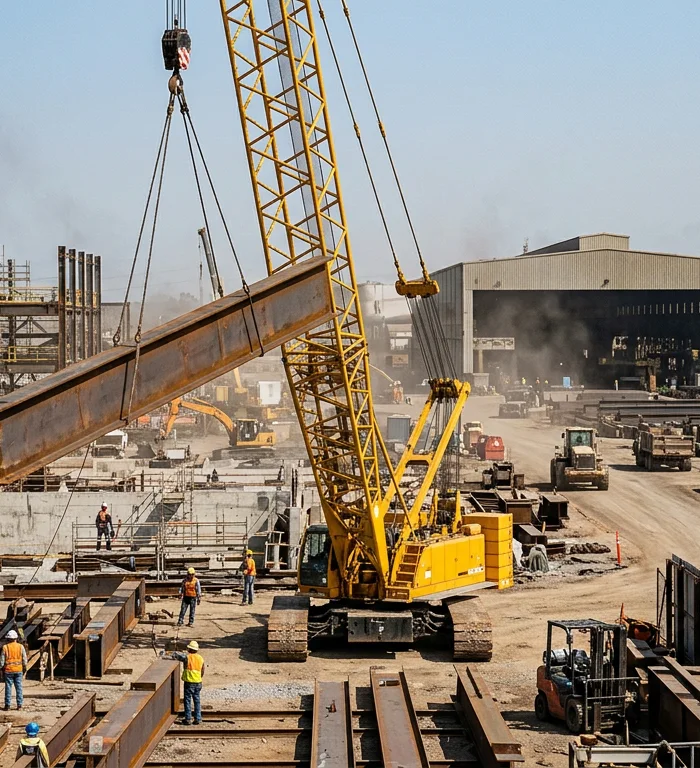
IES Holdings, Inc. disclosed in an 8-K filing the completion of its DBM Global, Inc. acquisition for a total price of approximately $691 million. The deal was financed with cash on hand and $525 million in new borrowings under an amended credit facility, representing a major balance sheet event for the industrial services company.
Background
IES Holdings operates as a holding company for electrical, communications, and infrastructure service providers. With a market capitalization of roughly $2.6 billion, the $691 million acquisition price represents more than a quarter of its public valuation. The deal's funding structure, particularly the $525 million in new debt, marks a significant increase in the company's leverage.
Financial leverage is the use of borrowed money to finance assets; a higher ratio of debt to equity can amplify returns but also increases financial risk. The acquisition brings DBM Global, a structural steel fabrication and erection company, into the IES portfolio. This expands IES's footprint beyond its traditional service lines into heavy manufacturing for commercial and industrial projects.
The transaction occurs in a market where financing conditions for such deals remain a key variable for small and mid-cap companies looking to pursue growth through mergers and acquisitions.
Why it matters
This deal fundamentally alters IES Holdings' risk profile. The addition of $525 million in debt service obligations will test the company’s cash flow generation, particularly if the integration of DBM Global faces headwinds or if interest rates remain elevated. The market read-through extends to the broader small-cap industrial sector, serving as a barometer for M&A appetite and the availability of acquisition financing outside of the largest public markets.
Investors who held IES for its historically more conservative balance sheet are now exposed to a company with significantly higher leverage. The success of the deal hinges on management’s ability to integrate a large, manufacturing-heavy asset and generate sufficient earnings before interest, taxes, depreciation, and amortization (EBITDA) to service the new debt load and deleverage over time. Existing creditors will also be watching the combined entity's performance closely.
What to watch
The market's immediate focus shifts to the company's next earnings report. IES's second-quarter 2024 results will provide the first opportunity for management to offer guidance on the combined entity's performance. Investors will be looking for a clear articulation of the integration plan, projected cost or revenue synergies, and a detailed timeline for paying down the new debt.
Any changes to analyst coverage or credit ratings in the wake of the deal's closing will be a key signal for how the market is pricing the company's new risk-reward proposition.
More stories
- Monrovia mayor-designate seeks $14.5m city budget
- Iran's attacks hit 25 tankers near Strait of Hormuz
- Russia strikes Ukraine as Odesa faces electricity strain
- Bahrain reports two injuries after Iranian aerial attacks
- Baltic responders fight Sparta II fire after drone strike
- Estonia to close 5 Russia road crossings for six months
- US and Greece launch counterterrorism data-sharing pact
- North Korea challenges Taiwan arms sales as jets arrive
- Iran execution adds missile-site case to Israel spy feud
- Greenland deal expands U.S. military role in Arctic pact
Latest news
- Deal Sheet: Fortis shutdown costs over 400 jobs
- Germany to pay about $11 a month into child pension accounts
- Laura Brand curbs prison messages after YouTube dispute
- Nigeria's family-planning budget falls 97%
- Peter Attia reviews cold therapy claims on longevity
- Singapore core inflation eases to 1.5% in October
- Social Security raises 2027 benefits 3.6%
- Hull City 2–0 Brighton: When Resilience Beat Reputation