Green Party Faces European Ostracism Over Zionism Vote
The Green Party of England and Wales faces international isolation and internal governance scrutiny after adopting a controversial policy labeling Zionism as…
Lauren Collins ·
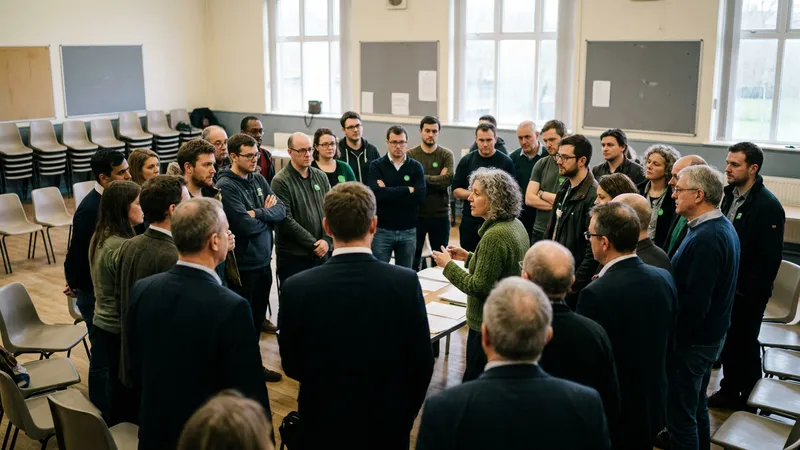
The Green Party of England and Wales (GPEW) is facing international isolation from the broader European Green Party following a conference vote that formally classified Zionism as a form of racism. The motion, which also advocates for a single-state solution in the region, diverges from the established two-state policy supported by the European alliance.
Leadership within the German Green Party publicly condemned the motion as intolerable, citing a fundamental conflict with their commitment to Israel's right to exist. The European Green Party has requested immediate clarity from GPEW leadership regarding their official stance on Jewish self-determination and the protection of Jewish party members.
Internal Governance Under Scrutiny
Internal governance concerns have intensified within GPEW after the policy passed with approximately 0.4 percent of the total membership, representing just over 1,000 votes. Senior party figures have identified the current decentralized, member-led policymaking structure as a risk to strategic coherence and institutional stability.
Ellie Chowns, a former co-leader and Green Member of Parliament for North Herefordshire, stated that the party's policymaking "urgently needs to be modernised," noting that less than 1 percent of members participated in the vote. This internal debate highlights the tension between direct democracy and the party's need for international political alignment.
Broader European Implications
The Green Party
The European Green Party, representing 47 parties, maintains its support for a two-state solution for Israel and Palestine. Felix Banaszak, co-leader of the German Greens, underscored that the GPEW motion "runs counter to what the European Green Party stands for." He indicated his party would approach European partners to address the divergence.
The controversy poses a significant challenge to GPEW's future diplomatic and organizational standing within the European Green movement and could lead to further formal censure or isolation if the stance is not reconciled with the broader European policy.