Syria Emerges as Key Hub in New Mideast Logistics Map
Wartime chokepoints are overhauling Mideast logistics, with Syria and Saudi Arabia emerging as pivotal overland transit hubs for critical regional trade.
Atlas Newsdesk ·
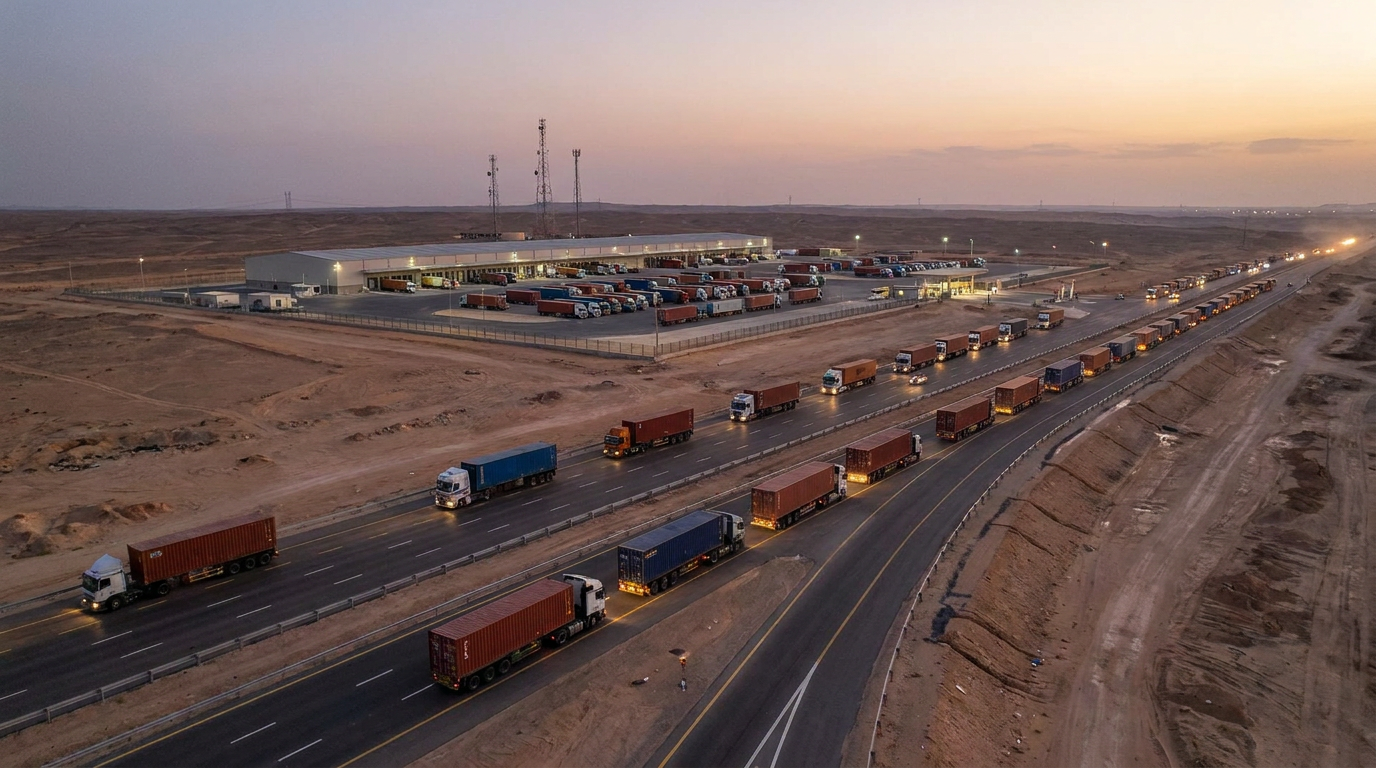
Wartime chokepoints are overhauling Mideast logistics, with Syria and Saudi Arabia emerging as pivotal overland transit hubs for critical regional trade.
A major regional conflict has effectively rendered the Strait of Hormuz impassable, forcing Gulf nations and global shipping firms to establish alternative commercial lifelines. This strategic pivot is redrawing trade maps that have defined the region for decades, shifting focus from maritime chokepoints to long-dormant and newly viable land routes.
Syria's Resurgence as a Transit Corridor
Syria is rapidly becoming a central node in this reconfigured supply chain. The nation's transformation follows the 2024 ouster of its previous Iran-backed regime, enabling Damascus to reposition itself as a cooperative partner for Gulf commerce and bypass regional antagonisms.
As a result, cargo from the United Arab Emirates is now being transported overland directly to Syria's Mediterranean port of Latakia. This route provides a crucial alternative for goods destined for European and other global markets without risking transit through contested waters.
Neighboring Iraq is also leveraging Syria's new accessibility. It has initiated oil transport via trucks across the border and is actively reviving ambitious plans for an export pipeline through Syrian territory to a Mediterranean terminal.
Saudi Arabia Fortifies Red Sea Gateway
In a parallel development, Saudi Arabia is bolstering its own logistical capabilities by utilizing its extensive Red Sea coastline. The Kingdom has become a key part of a new network launched by shipping giant MSC (Mediterranean Shipping Company).
Under this initiative, goods originating from Europe are shipped to Saudi ports on the Red Sea. From there, cargo is efficiently transferred onto trucks for overland distribution to markets across the rest of the Gulf, creating a reliable west-to-east commercial artery.
This land bridge strategy provides a secure and predictable alternative to the now-closed Strait of Hormuz, enhancing Saudi Arabia's status as a critical logistics hub for the entire peninsula.
Economic and Geopolitical Realignment
The establishment of these overland routes marks a significant geopolitical and economic shift. It demonstrates a collective regional effort to build resilience against disruptions to singular, vulnerable maritime passages like the Strait of Hormuz.
The developments not only provide immediate solutions but also grant newfound economic importance to transit countries like Syria, which is re-emerging from over a decade of its own conflict. For Iraq, it offers a diversified and more secure path for its vital oil exports.
The durability of these networks will depend on sustained political stability and investment in infrastructure. However, their activation represents a fundamental rethinking of regional connectivity that could outlast the current conflict.