Strait of Hormuz traffic trails 10-day norm after strikes
Strait of Hormuz traffic fell to four commodity vessels Tuesday, below the 10-day average, as regional security risks rose.
Lauren Collins ·
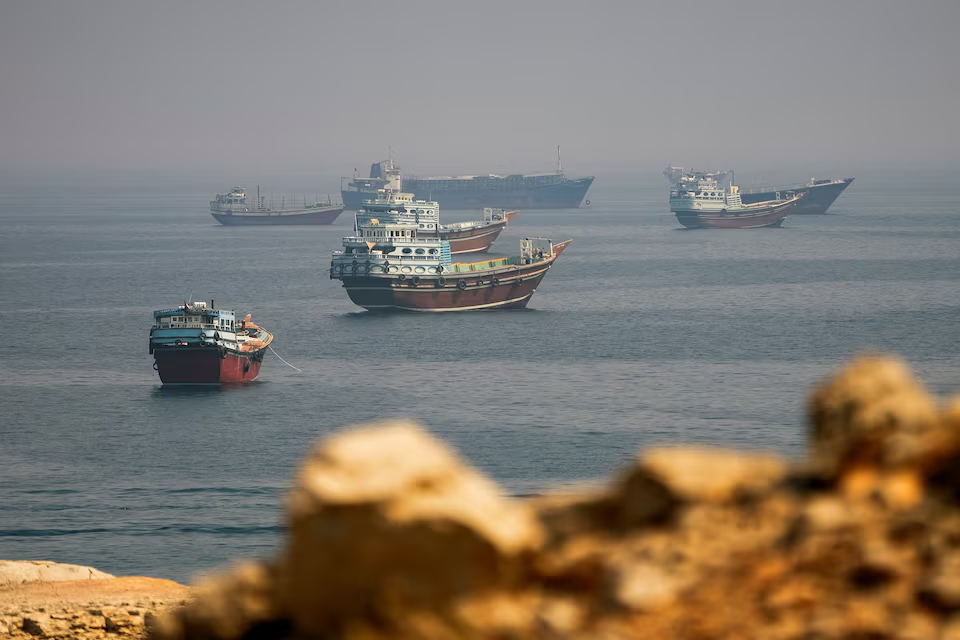
Strait of Hormuz traffic fell to four commodity vessels Tuesday, preliminary Kpler data showed, keeping flows below a 10-day norm near 13.
The count was down from 10 commodity vessels a day earlier and was captured in initial data at 0200 GMT on Wednesday. Kpler identified the Tuesday traffic as a very large crude carrier, a Panamax tanker, a Kamsarmax carrier and an intermediate tanker.
The figures are not final. Kpler's early ship counts can move as vessels update signals, and some ships on the route typically turn off transponders during voyages.
Four ships through Hormuz
The Strait of Hormuz is one of the Middle East's main energy corridors and carried about one-fifth of global oil consumption before the conflict. That share makes even a small vessel count a market-sensitive indicator when regional military risk is rising.
The shipping data came after the United States said it had launched a series of air strikes against Iran on Tuesday. Iran's Islamic Revolutionary Guard Corps said in a statement that the US attacks would "tighten the lock" on the strait.
The warning matters because Hormuz is narrow, heavily monitored and difficult to substitute at scale. Tankers can wait, slow, reroute where possible or seek revised instructions, but crude flows tied to Gulf producers still depend heavily on the passage.
Bab el-Mandeb traffic falls
A second Middle East chokepoint also ran below its recent pace. Kpler data showed 18 commodity vessels transited Bab el-Mandeb on Tuesday, compared with an average of about 24 ships over the previous 10 days.
The Tuesday Bab el-Mandeb total included seven vessels entering and 11 leaving the strait. Among the tankers identified in the passage were two Aframax vessels and one Suezmax, categories commonly used for regional and interregional crude shipments.
Bab el-Mandeb links the Red Sea with the Gulf of Aden, making it relevant for traffic between Europe, Asia and the Middle East. Lower counts there do not by themselves prove a sustained disruption, but they add a second data point for charterers and traders tracking regional routes.
Signals for oil and freight
For oil markets, the immediate mechanism is not the Tuesday count alone; it is whether a lower vessel flow persists long enough to affect loading schedules, delivery windows and shipping costs. If transits return toward the 10-day average, the macro effect may remain limited to a short-lived risk premium.
If Hormuz counts instead stay near Tuesday's level, the pressure point would move from sentiment to logistics. Cargo delays could affect refiners waiting for Gulf crude, tanker owners could face longer waiting times, and insurers may review war-risk pricing for voyages in the area.
For commodity shipping companies and cargo owners, the company-level impact depends on exposure to Gulf loadings and Red Sea passages. Operators with vessels already committed to the route would face the most immediate scheduling choices, while those outside the area would be affected mainly through freight rates and insurance costs.
The wider industry risk is cumulative. If both Hormuz and Bab el-Mandeb remain below their 10-day averages, shippers would have fewer clean routing alternatives, and oil traders would have to price a higher probability of delayed barrels reaching consuming markets.
The next practical test is whether Wednesday and Thursday data confirm a lower pattern or revise Tuesday's count upward as transponders reappear. The main open question is whether the IRGC warning turns into operational restrictions, a temporary signal, or a backdrop to more volatile but still functioning traffic.