
Strait of Hormuz route plan draws US-Iran clash over oil
Iran’s Strait of Hormuz corridor claim collided with President Trump’s assertion that ships are moving, putting Gulf transit and sanctions pressure back in…
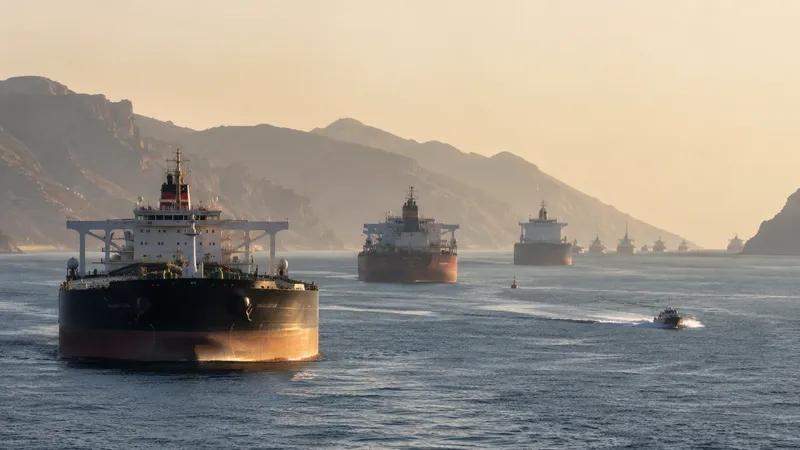
Strait of Hormuz talks between Iran and Oman have become a US-Iran test after the IRGC said Washington was blocking a temporary safe route.
IRGC sets passage conditions
Iran’s Islamic Revolutionary Guard Corps said Wednesday that Iran and Oman had reached an understanding on how to administer a safe transit corridor through the strait, including how revenue tied to that administration would be divided. The claim was not matched by a public US confirmation, and the Guard said the waterway would remain closed unless Washington accepted Iran’s terms.
The Iranian and Omani foreign ministers had issued a joint statement Tuesday describing a “proposed framework” for a joint temporary navigational corridor and a separate effort to clear mines from the strait. That wording left open whether the plan had moved beyond a framework, while the Guard presented the arrangement as already agreed between Tehran and Muscat.
Trump says ships are moving
President Trump gave a different account Wednesday, saying in a radio interview that the strait was functioning and that ships were already passing through. “We take a lot of ships through the strait now. We’re taking them in,” Trump said.
Trump acknowledged periodic attacks in the area but framed them as interruptions rather than a closure. “Every once in a while there’ll be a drone or a rocket or something shot, but it is a very functioning strait. A lot of oil is pouring out,” he said.
The disagreement leaves shipping companies, insurers and energy buyers weighing two public positions: Iran’s Guards saying access depends on US acceptance of Iranian conditions, and the White House saying commercial traffic continues. Brent crude, the international benchmark, fell below $90 per barrel overnight after the Guard’s statement, extending recent losses rather than showing a sustained price shock.
Sanctions threat widens dispute
The corridor dispute sits inside a wider argument over whether Washington and Tehran are negotiating at all. Trump has recently said US and Iranian officials were holding indirect contacts, while Tehran has denied talks were under way.
Last week, Trump said discussions had ended and that there were no plans to resume them. In a separate interview Wednesday, he said he had “no time schedule” for Iran to return to talks and was not rushing the process.
The administration is also moving on the economic track. Treasury Secretary Scott Bessent said two days earlier that Washington planned to isolate Iran financially by threatening secondary sanctions on those enabling the Islamic Republic, although the measures had not yet been imposed as of Wednesday.
Secondary sanctions would target third parties that continue business Washington wants to deter, a tool designed to widen pressure beyond US entities. For Iran, the risk is that shipping, finance and energy partners reassess exposure even before formal penalties are announced.
Oman corridor choices narrow
Oman’s involvement matters because the proposed route depends on cooperation between the two coastal states named in the joint statement. A temporary corridor would need practical arrangements for navigation, mine clearance, monitoring and revenue administration, each of which could become a point of dispute if the US rejects Iran’s conditions.
For energy markets, the immediate mechanism is freight risk rather than lost barrels alone. If vessels face higher insurance costs or delays, refiners and traders can see costs rise even while oil continues to move through the channel.
If the Oman-Iran framework holds and Washington accepts a version of it, the macro effect would be a lower perceived risk premium on Gulf shipping. Iran would gain a channel it can describe as jointly administered, and maritime insurers could price a clearer route.
If Washington rejects the conditions and Iran’s Guards maintain their closure warning, the global effect would run through freight, insurance and energy-price volatility rather than a single announced supply figure. Iran would face the risk of deeper sanctions pressure, while shippers, refiners and Gulf producers would need contingency routing, higher cover or revised delivery schedules.
A third path is a muddled status quo: ships continue moving, but each side describes the strait differently for political leverage. In that case, the macro impact would likely remain tied to day-to-day security events, Iran would retain bargaining space without securing formal acceptance, and the industry would operate on provisional guidance rather than a settled navigation regime.
The main open question is whether the Tuesday framework becomes an enforceable corridor with accepted rules, or stays a diplomatic text competing with military warnings and US denials. The next concrete signals are the imposition or delay of secondary sanctions, any public US response to the Oman-Iran proposal, and evidence that mine-clearing work has begun.
More stories
- US, China discuss reciprocal nuclear-facility visits
- Burnham says Brexit vote faced Russian meddling in 2016
- Russian strikes hit Ukraine plants after Trump ceasefire statement
- Saudi flights divert after Dammam airport targeted
- US said to threaten Ukraine weapons, intelligence aid
- Riyadh airport hit again as Trump weighs US role
- CIA Moscow visit warns Russia against NATO attack risks
- South Africa Extradition Case Exposes Russian Influence Network
- Tesla Recalls 2.8 Million Vehicles in China Over Software Issue
- US Adjusts Military Drills Amid North Korea Diplomacy Push