

CIA Moscow visit warns Russia against NATO attack risks
CIA Director John Ratcliffe visited Moscow to warn Russia against attacking NATO, as U.S. officials assess possible allied-country tests by Putin.
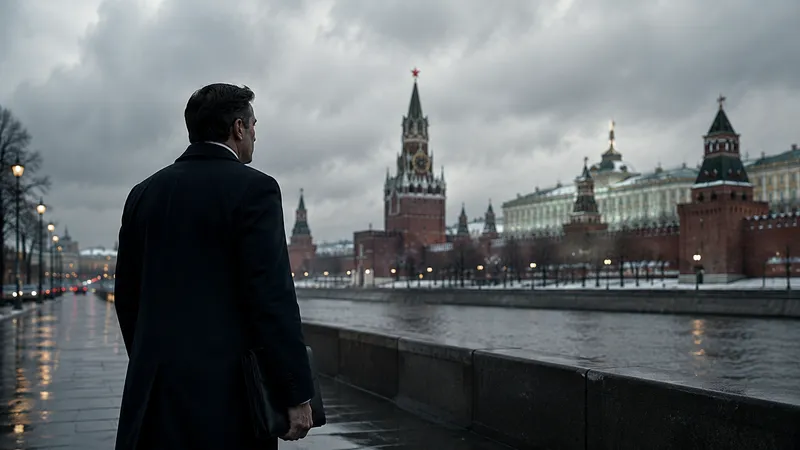
CIA Director John Ratcliffe made his first publicly known Moscow visit to warn Russia against attacking NATO, people briefed on the talks said.
The message followed recent U.S. intelligence assessments that Russian President Vladimir Putin could test the North Atlantic Treaty Organization with a limited strike on an allied country in the next few years. U.S. officials are concerned that any move could range from a cyberattack to a small land incursion, with a Baltic nation viewed as a likely target, according to people familiar with the assessments.
Kremlin spokesman Dmitry Peskov confirmed Wednesday that Ratcliffe met Russian intelligence officials while in Moscow. Peskov said the CIA director did not meet Putin, but that the Russian president was briefed on the discussions.
Ratcliffe visit follows NATO warnings
The trip placed one of President Trump’s closest aides at the center of a channel that Washington has kept only partly visible. The White House has disclosed little about the visit, and the CIA declined to comment on the Moscow talks.
President Trump described Ratcliffe’s travel as "semi-routine" in a Wednesday interview with Glenn Beck, then shifted to the war in Ukraine. "Something may come out of it," Trump said. "We’re working very hard to get that war ended and frankly they both want to see it ended at this point."
Ratcliffe is the latest U.S. official known to have gone to Moscow as the administration seeks ways to address Russia’s war in Ukraine. Steve Witkoff, a U.S. envoy for Ukraine-Russia peace talks, has made several visits to the Russian capital.
Munitions strain shapes the warning
The U.S. warning comes as officials assess whether Western weapons shortages could affect Moscow’s calculations. The shortfall is tied to munitions spent in the Iran war and to weapons transferred to Ukraine after Russia’s 2022 invasion, according to the account given by people familiar with U.S. assessments.
Those constraints matter because a limited Russian action would not need to resemble a full-scale invasion to put NATO’s credibility under pressure. A cyberattack, a border provocation or a small incursion could force allied governments to decide how quickly and visibly to respond.
The Baltic focus points to the alliance’s eastern edge, where any Russian probe would carry political consequences beyond the immediate target. For NATO, the issue is not only territory; it is whether Moscow sees a gap between allied security pledges and the military stocks available to enforce them.
Ukraine diplomacy runs in parallel
The Moscow channel also overlaps with the White House effort to end the Ukraine war. Trump’s comments linked Ratcliffe’s trip to that broader push, but he did not describe the intelligence talks or say whether Russia gave any assurance on NATO territory.
For Putin, the assessments described by U.S. officials point to a calculation shaped by military pressure in Ukraine and domestic pressure at home. That does not establish that Moscow has decided on a NATO operation; it shows why Washington treated the risk as serious enough for a direct intelligence-level warning.
If Moscow treats the warning as credible, the immediate effect would be to lower the chance of a near-term test and give Ukraine diplomacy more room. That path would ease one source of pressure on global risk sentiment, keep the White House focused on negotiations and reduce the urgency for NATO governments to shift more resources toward short-notice eastern defense.
If Russia instead concludes that Western stockpiles limit allied response options, the risk moves to a narrower but more dangerous channel. A cyber operation or border incident could tighten global security premiums, force the Trump administration into a public NATO defense decision and lift demand across defense, munitions and cybersecurity suppliers.
The main open question is whether the Moscow talks produced any Russian signal that can be checked against behavior in Ukraine, the Baltic region or cyberspace. Until then, the warning stands as a private intelligence message with public consequences for NATO planning.
More stories
- Burnham says Brexit vote faced Russian meddling in 2016
- Russian strikes hit Ukraine plants after Trump ceasefire statement
- Saudi flights divert after Dammam airport targeted
- US said to threaten Ukraine weapons, intelligence aid
- Riyadh airport hit again as Trump weighs US role
- Houthis hit Riyadh airport after 12 killed
- South Africa Extradition Case Exposes Russian Influence Network
- Nepal Floods: Hundreds Missing, Including Foreigners, Near Tibet Border
- Israel Views Turkey as Regional Rival Amid Syria Strikes
- Oil Prices Rise Amid Unconfirmed Russia Escalation Report