SpaceX Starpipe pipeline targets January 2026 service
SpaceX Starpipe pipeline filings outline a July construction start and a January 26 in-service date to fuel higher Starship launch cadence in Texas.
Jason Kwon ·
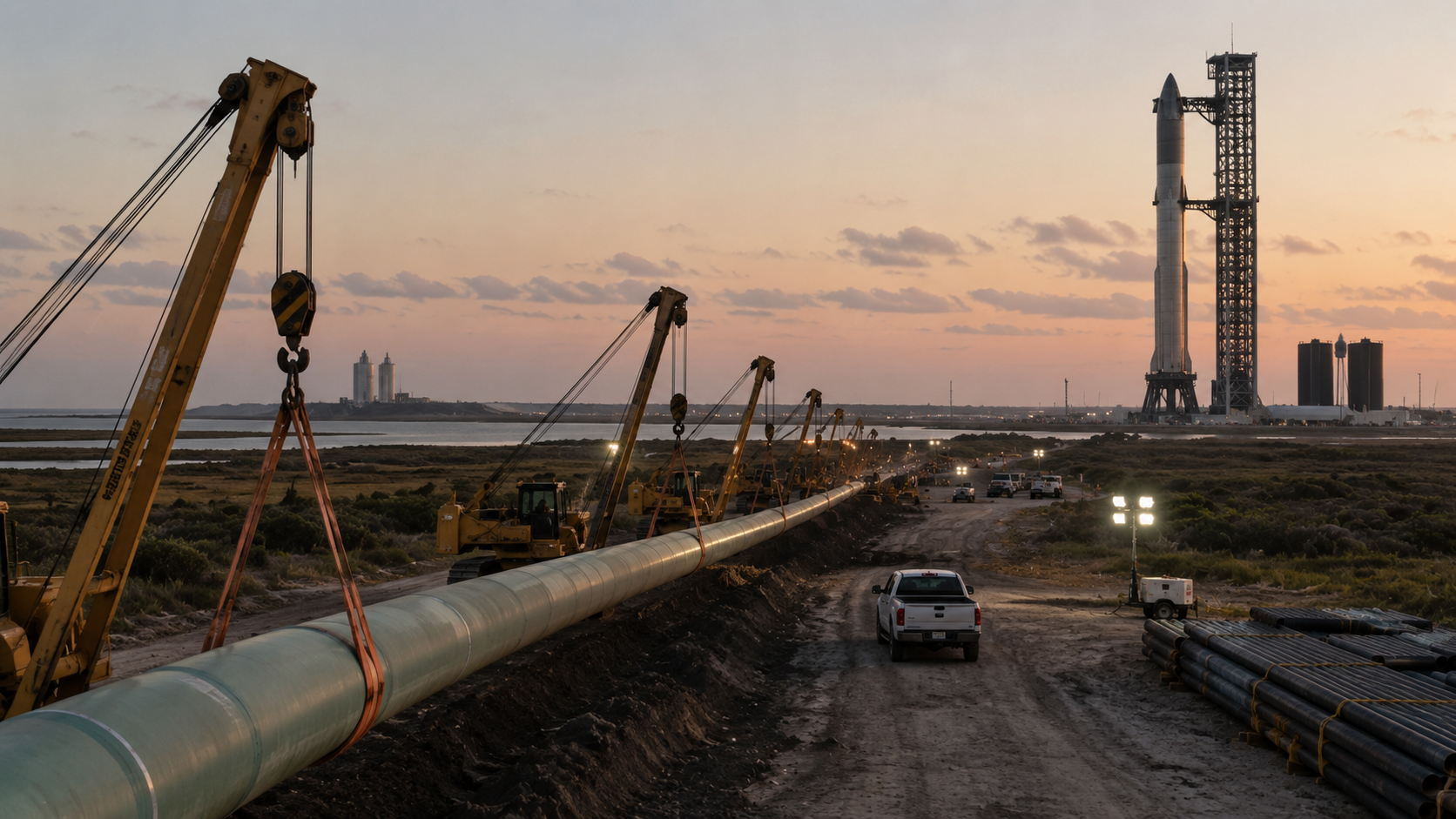
SpaceX Starpipe pipeline plans filed in Texas outline a new natural-gas link to Starbase aimed at supporting more frequent Starship launches.
County records indicate construction could begin next month on the roughly 8-mile (13-kilometer) project connecting gas supply to SpaceX’s South Texas launch site. A document reviewed by Reuters lists an expected in-service date of January 26.
Filings map an 8-mile gas line to Starbase
The pipeline is described in paperwork submitted to regulators by Lone Star Mineral Development, an affiliate tied to SpaceX, according to filings cited by Reuters. The project name shown in the documents is “Starpipe,” and the line would terminate at the company’s Starbase facility in Texas.
Starbase is SpaceX’s hub for developing and testing Starship, the company’s next-generation launch vehicle. The project was previously reported by the Rio Grande Valley Business Journal, and the newer filings add timeline detail, including the targeted operational date.
Natural gas is the feedstock used to produce and supply methane for Starship operations. Starship burns liquid methane and liquid oxygen, and the vehicle is designed to be fully reusable, a key element of SpaceX’s strategy to reduce per-launch costs and increase flight cadence.
Why methane logistics are becoming a bottleneck
Starship’s propellant needs are large by design, and the current delivery method is truck-heavy. Each launch consumes about 630,000 gallons (2.4 million liters) of liquid methane, which today arrives via hundreds of tanker trucks in a process that can take hours.
That kind of fueling workflow can constrain how quickly launches can be prepared and repeated, particularly if the goal is to move from occasional tests to routine operations. A dedicated pipeline is typically intended to reduce traffic, cut delivery time, and provide steadier supply for site operations.
SpaceX has carried out 12 Starship test launches since 2023. Elon Musk has repeatedly said he wants to scale from “dozens” of launches per year to far higher rates over time, including hundreds and eventually thousands annually, a target that would require major ground-infrastructure upgrades alongside vehicle improvements.
Starship’s role in Starlink, data plans, and exploration goals
Starship is central to SpaceX’s longer-term commercial and exploration roadmap. The vehicle is expected to expand deployment capacity for Starlink, the company’s satellite broadband network, by enabling larger payloads and potentially more frequent missions.
SpaceX has also positioned Starship as a platform that could support new satellite concepts, including orbital infrastructure linked to AI data center ambitions. Separately, the company has promoted Starship for human spaceflight goals, including carrying astronauts for lunar missions and, ultimately, Mars.
The Starpipe timeline suggests SpaceX is planning infrastructure in parallel with continued flight testing. If the line enters service by January 26 as the filings anticipate, it could help support a higher tempo of test and operational launches at Starbase by reducing reliance on truck deliveries.
Next steps to watch include permitting and construction milestones, as well as how quickly SpaceX can translate improved fueling logistics into more launches. The pace of Starship’s test program and approvals for an increased flight rate will also shape whether the pipeline’s capacity and timing match the company’s stated ambitions.