SpaceX Falcon 9 carries 24 Starlink satellites to orbit
SpaceX Falcon 9 launched 24 Starlink satellites from Vandenberg, adding to a heavy July cadence on the West Coast.
Atlas Newsdesk ·
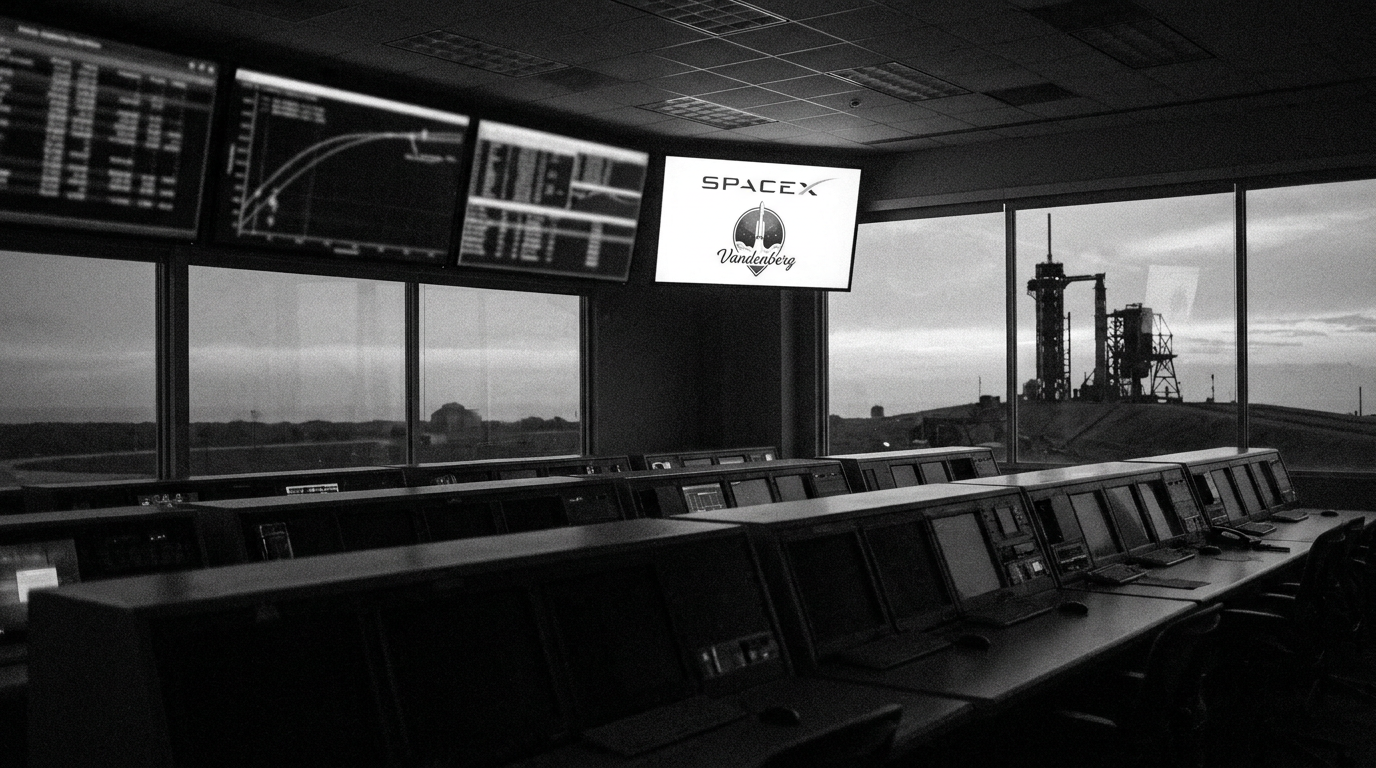
SpaceX Falcon 9 sent 24 Starlink satellites from Vandenberg on July 25, extending the company’s rapid West Coast launch cadence.
The mission, identified as Starlink 17-51, lifted off at 8:51 a.m. PDT from Space Launch Complex 4E at Vandenberg Space Force Base in California. SpaceX said the satellites were deployed successfully into a 168 x 160-mile orbit a little more than an hour after launch.
Vandenberg handles July surge
The flight added another layer to a busy month for SpaceX’s California launch site. According to the mission details, Starlink 17-51 was the seventh of eight Falcon 9 launches planned from Vandenberg in July.
The rocket flew south from the coastal pad, targeting a 97-degree inclination orbit. That profile fits the role Vandenberg often plays for missions requiring high-inclination paths over the Pacific rather than eastward trajectories from Florida.
The source material said SpaceX’s West Coast pad has become a key launch point in recent months while the company focuses on Starship preparations in Florida. Cape Canaveral’s Space Launch Complex 40 had hosted four Falcon 9 missions in July at the time of the report, with one more planned.
B1100 returns to Pacific droneship
The Falcon 9 first-stage booster, B1100, completed its eighth launch and landing on this flight. SpaceX recovered it on the droneship Of Course I Still Love You , positioned about 380 miles downrange in the Pacific Ocean.
Booster reuse is central to Falcon 9’s operating model because each recovery preserves hardware for future missions and supports a higher launch tempo. B1100’s prior record includes the NROL-105 mission and six earlier Starlink flights, according to the mission account.
The Starlink payload consisted of 24 V2 Mini satellites, the smaller version of SpaceX’s current-generation broadband spacecraft. Each successful deployment adds capacity to the company’s low-Earth orbit internet network, though the source did not provide subscriber figures, service coverage data or financial details for the system.
Starlink cadence shapes launch market
The immediate corporate effect is straightforward: SpaceX gained another operational Starlink deployment while also demonstrating continued reuse of a flight-proven booster. If B1100 remains in service, the company can keep spreading fixed hardware costs across more missions, subject to inspection results and refurbishment needs.
For the launch sector, the July pattern points to the competitive value of pad availability, booster recovery and standardized payload operations. A company able to fly frequently from both California and Florida can allocate missions around orbital requirements, range schedules and internal development work.
The broader satellite industry is watching the same mechanism from another angle. If Starlink keeps adding spacecraft at this pace, rivals in satellite broadband face pressure to match network density, service reliability and launch access, not just pricing.
There are still open questions the source does not answer. SpaceX did not provide launch-cost data, satellite production rates, network performance metrics or a detailed reason for the month’s Vandenberg-heavy schedule.
If the West Coast launch rhythm holds, SpaceX could preserve Falcon 9 capacity while Florida teams prioritize Starship work, leaving Starlink with a steady route to orbit. If pad scheduling, booster availability or technical reviews slow the cadence, the effect would fall first on SpaceX’s deployment timetable and then on satellite broadband competitors tracking its capacity growth.