SpaceX contracts add 18 Falcon 9 military launches by 2027
SpaceX contracts worth $1.6 billion add 18 Falcon 9 launches for U.S. military sensing and targeting missions through 2027.
Jason Kwon ·
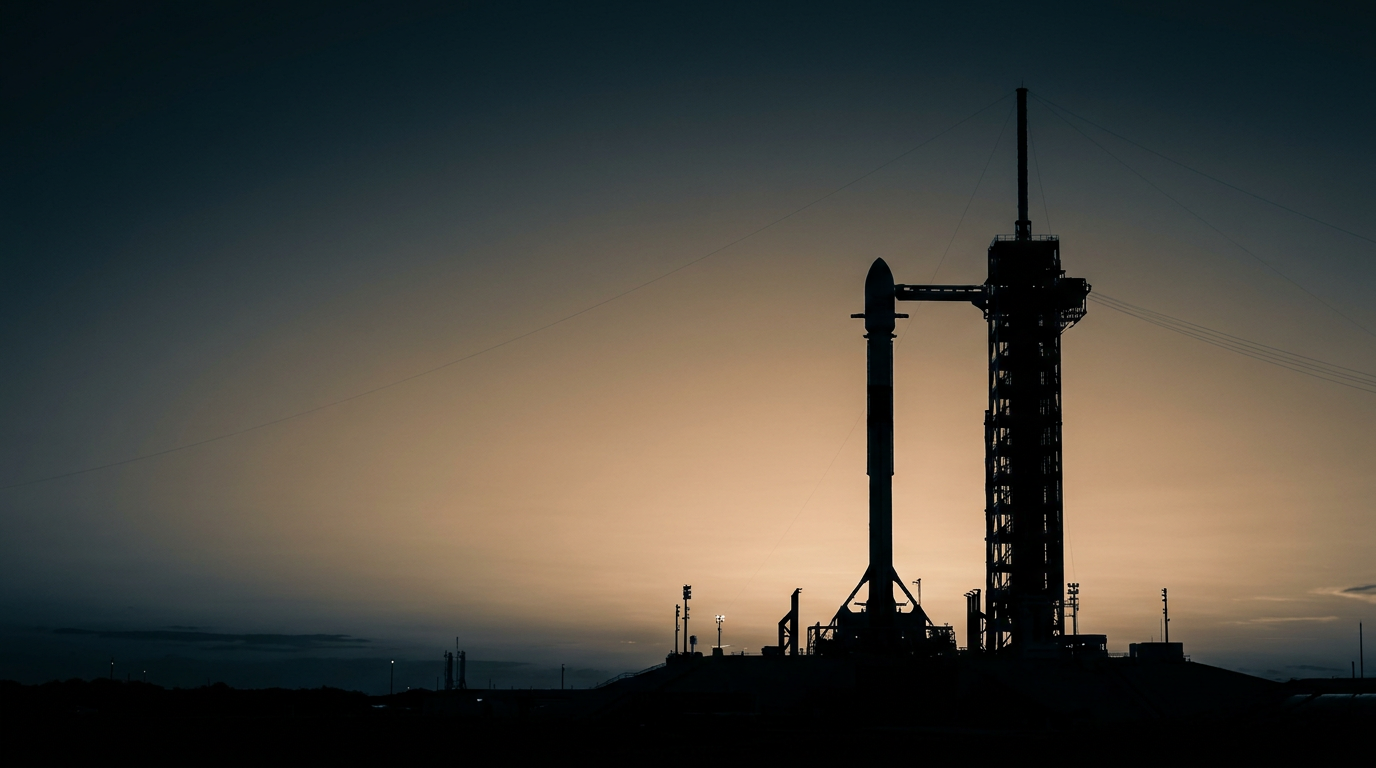
SpaceX contracts worth $1.6 billion will fund 18 Falcon 9 missions for U.S. military sensing and targeting through 2027.
The awards place all 18 flights at Vandenberg Space Force Base in California, giving the Pentagon a defined launch pipeline for satellites tied to airborne threat detection. The missions support the Space-Based Sensing and Targeting portfolio, a military space effort built around faster tracking and data relay.
Falcon 9 gets Lane 1 work
The contracts were issued through two task orders under the National Security Space Launch Phase 3 Lane 1 program. That structure lets multiple commercial launch companies compete for national security missions, rather than routing every flight through a single provider.
For SpaceX, the award extends Falcon 9’s position as a workhorse launcher for sensitive government payloads. The vehicle is not just carrying commercial broadband satellites or civilian missions; it is now tied more deeply to U.S. military sensing architecture.
The Space-Based Sensing and Targeting portfolio is designed to use spacecraft to detect and follow airborne threats. The satellites are also meant to relay near real-time information to U.S. forces, shortening the gap between detection and response.
Vandenberg anchors the manifest
The selection of Vandenberg matters because the California base is central to launches requiring specific orbital paths over the Pacific. The source material does not identify the individual satellites, payload operators or launch dates inside the 18-mission package.
The new award follows a larger Space Force contract haul for the Elon Musk-led company earlier this year. In May, SpaceX won about $6.45 billion in Space Force awards linked to satellite constellations for airborne target tracking and near real-time communications between missile warning sensors and interceptors.
Taken together, the $1.6 billion and roughly $6.45 billion awards show how defense space spending is shifting toward distributed sensors, fast data movement and launch cadence. The Pentagon is not only buying rockets; it is buying a chain that connects detection, communications and potential interception.
Golden Dome shapes demand
The sensing and tracking capabilities are expected to support President Trump’s proposed Golden Dome missile defense initiative. The plan aims to build a layered missile defense network, with space-based systems playing a larger role in warning, tracking and targeting.
If the 18 launches stay on schedule through 2027, the global macro effect is likely to be a continued pull of defense funding into space infrastructure, especially in sensing and communications. For SpaceX, timely execution would reinforce its launch backlog and its standing in national security procurement. For the wider launch sector, the mechanism is competitive pressure: rivals must match price, reliability and schedule under Lane 1 competitions.
If payload integration, range availability or procurement changes slow the campaign, the effect would move through the system differently. The macro impact would be delayed deployment of missile-tracking capacity, SpaceX would face timing risk across a high-value government manifest, and the sector could see more scrutiny of dependence on a small set of launch providers.
The immediate open questions are practical rather than promotional: which satellites will fly, how the launches will be sequenced, and whether additional providers win comparable Lane 1 work. Those answers will show whether the Pentagon is broadening launch competition or concentrating the most urgent sensing missions around Falcon 9.