

South Africa Targets 2028 Launch for National Digital ID System
South Africa has introduced a digital ID framework to replace green identity books by March 2028, aiming to boost security and economic growth.
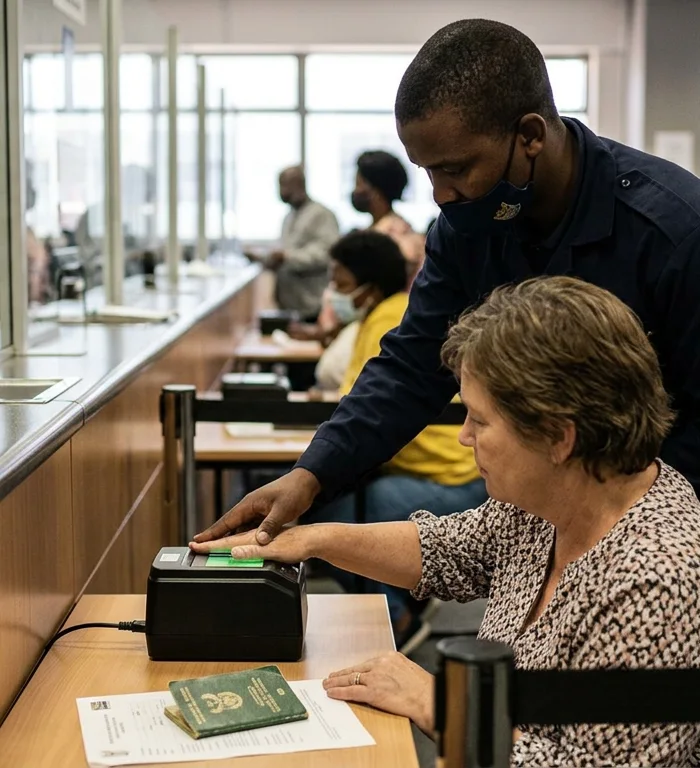
South Africa has inaugurated an expansive digital identity initiative aimed at substituting legacy paper identification with verifiable credentials hosted on mobile devices. Under directives formally announced by the Department of Home Affairs, the country's conventional green barcode identity booklets will officially cease to hold legal validity after March 31, 2028.
This nationwide technological transition serves as a structural cornerstone of the administration's strategic plan spanning 2025 through 2030, which centers on upgrading civic records and overhauling public service distribution. To implement this migration, authorities are deploying an automated risk evaluation engine coupled with protected data-transmission pathways, enabling entirely paperless procedures across commercial banking, corporate registrations, and visa applications.
Projected Economic Expansion and Visa Modernization
The core technological architecture is configured to deliver complete paperless processing for commercial banking institutions, business registrations, and visa applications. Economic projections indicate that reforming these administrative channels will yield substantial macroeconomic dividends. Specifically, official calculations project that expediting employment permits for 11,000 qualified international specialists each year could lift national gross domestic product by 1.2 percent.
In addition, the implementation of digitized travel permits is anticipated to stimulate international visitor numbers. Projections show that securing a 10 percent rise in incoming tourists through these streamlined electronic entry systems could inject an extra 0.6 percent into overall economic growth, reinforcing broader commercial activity.
Border Security Reinforcement and Infrastructure Integration
Alongside anticipated economic expansion, the centralized credential architecture addresses persistent national security threats. Public authorities intend to curb unlawful border crossings and halt the fraudulent acquisition of national citizenship by deploying automated identity verification across civil databases.
Consolidating citizen authentication into a unified digital ecosystem is designed to lower state operational costs and eradicate duplicate record gathering among separate government agencies. Technical specialists are presently linking the credential network directly with South Africa's existing revenue databases and public digital platforms, establishing comprehensive operational interoperability well ahead of the 2028 deadline.
More stories
- Christina Applegate says 2021 MS diagnosis was wrong
- You Can See Everything grosses $15m from 855 screens
- El Gouna selects 5 filmmakers for third Rising Stars cohort
- Ellie & Natasia creators refit BBC sketch show after 3-year gap
- The Traitors turns about 20 cues into global TV identity
- Tesla seeks $50,000 Roadster deposits after rocket-assisted demo
Latest news
- Emirates NBD expands loans 27% in nine months
- Nigeria traces 44 contacts after Abuja Ebola case
- UAE ministry seeks bids for 68km Dubai-RAK highway
- Philippine Congress faces scrutiny over two voided budget laws
- Economists see Bank of Japan rate at 1.50% in December
- Sarandos seeks Netflix reset around television and films
- Western Alliance rises 2.27% after Q3 profit tops estimates
- US envoy Tom Barrack presses Gulf allies to rely less on US