Shell backs LNG Canada expansion to 28 million tonnes yearly
LNG Canada partners approved a $21 billion to $23 billion phase 2 expansion, doubling capacity and supporting Ottawa’s push beyond US energy markets.
Mateo Fernandez ·
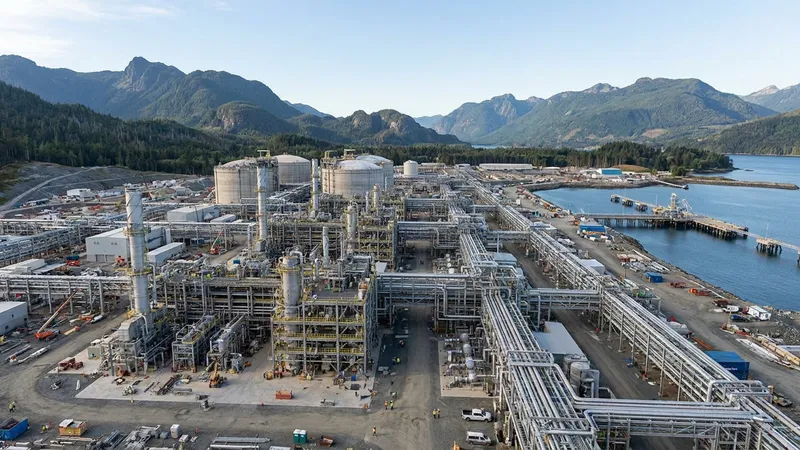
LNG Canada partners approved a $21 billion to $23 billion expansion to 28 million tonnes a year, widening Ottawa’s route to gas buyers.
Shell and four other consortium members reached the final investment decision on Tuesday for the project’s second phase in western Canada. Prime Minister Mark Carney said the approval process took 12 months from referral to decision, a timeline he tied to his government’s push to accelerate major energy projects.
A 28 million tonne target
The expansion would double LNG Canada’s planned production capacity to 28 million tonnes a year, equivalent to India’s annual LNG imports, according to LNG Canada. The consortium said the second phase could move Canada toward the world’s top five LNG exporters, compared with 19th place last year.
Carney said phase 2 was predicted to cost between $21 billion and $23 billion, placing it among the larger energy investments now under consideration in Canada. He said the enlarged site would rank as the second-largest facility of its kind in the world, making the project central to Ottawa’s export strategy.
Five partners split the risk
The consortium includes Shell, Mitsubishi Corporation, PetroChina, Kogas and Petronas, giving the project a shareholder base spread across Europe and Asia. Mitsubishi, which owns 15% of LNG Canada, estimated its phase 2 contribution at $3.2 billion, implying a total cost of about $21.3 billion for the expansion.
The Canadian government previously said the second phase was expected to draw C$33 billion, or US$23 billion, in private-sector capital. The project is expected to start in the early 2030s, setting a long construction and financing window against changing gas prices, labor costs and policy requirements.
Trade pressure redirects Ottawa
Carney’s support for more LNG exports sits inside a wider effort to reduce Canada’s reliance on the US after escalating trade tensions with President Trump. More capacity on Canada’s Pacific-facing export system would give producers a route to Asian buyers and, through global cargo trading, European markets seeking alternatives to Russian gas.
Asian governments view LNG Canada as part of their energy-security planning while Middle East gas flows face pressure from conflict in the region. Qatar and Abu Dhabi normally supply about one-fifth of global LNG, making interruptions there relevant for buyers weighing contracts from Canada, Mozambique and the US.
Higher oil prices following the war have strengthened cash flow at large energy companies, and several are directing capital toward LNG. The mechanism is straightforward: stronger upstream earnings can support multiyear liquefaction investments if buyers sign long-term contracts and construction costs stay within approved ranges.
Costs set three routes
If phase 2 holds its early-2030s schedule and stays near the $21 billion to $23 billion cost range, the global gas market would gain another large non-Russian supply source. For LNG Canada, that path would lift scale and contract flexibility; for the wider sector, it would add pressure on competing projects to lock in buyers before the next supply wave arrives.
If costs rise above Mitsubishi’s implied $21.3 billion benchmark or the schedule slips, the macro effect would be a slower addition of flexible LNG supply during a period of energy-security demand. LNG Canada would face weaker returns on committed capital, while rival developers in the US, Mozambique and the Middle East could gain time to secure customers.
If Asian and European demand grows more slowly than expected, the risk shifts from construction to utilization. Canada would still have a larger export option beyond the US, but LNG Canada and its peers would have to compete harder on price, shipping distance and contract terms.