Reza Pahlavi urges Iran regime change during Berlin visit
Reza Pahlavi urged Iran regime change in Berlin on Thursday, criticizing talks with Tehran as Germany said he visited as a private individual.
Lauren Collins ·
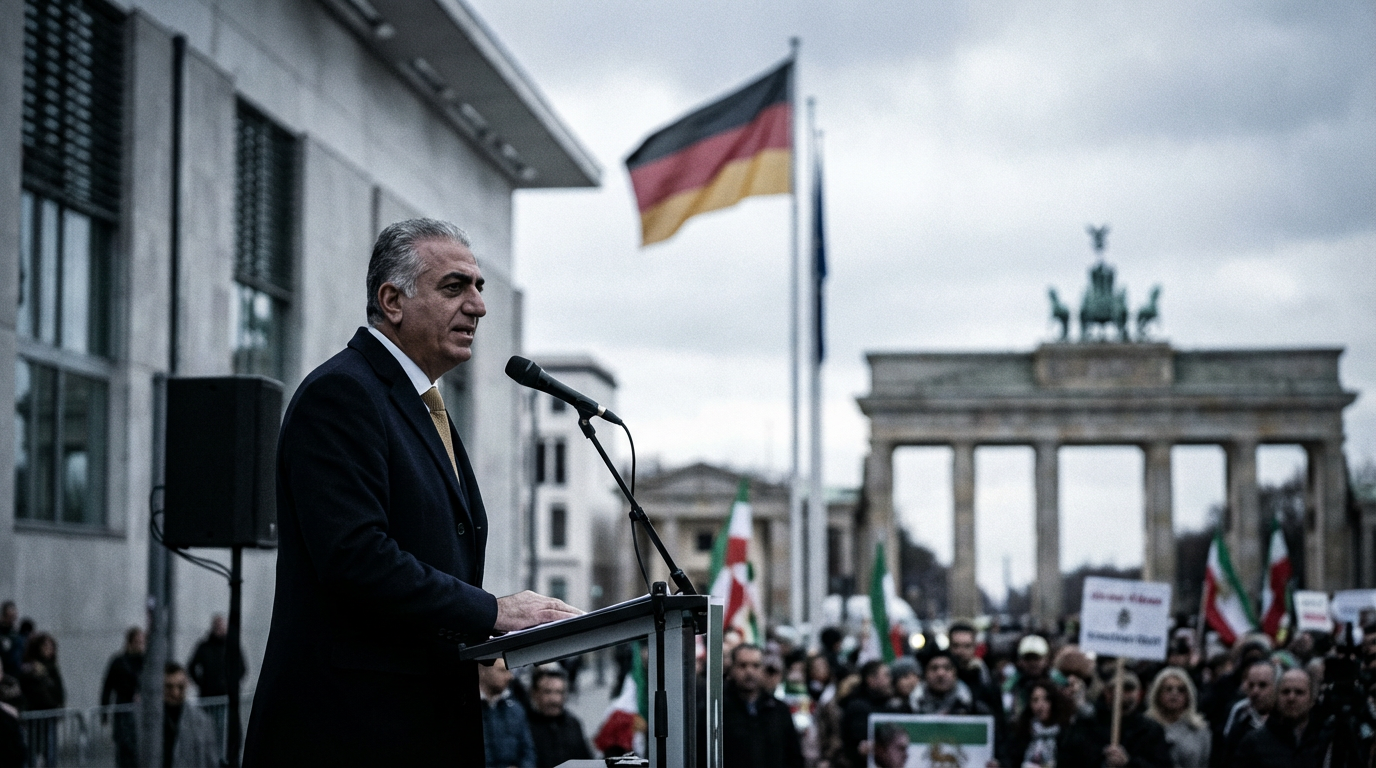
Reza Pahlavi, the exiled son of Iran’s former Shah, used a visit to Berlin to press European governments to stop what he described as appeasement of Iran’s current leadership and to back political change. Speaking at a press conference in Berlin on Thursday, the 65-year-old argued that continued negotiations would only preserve the existing power structure. ”
Pahlavi framed Europe’s approach as a choice “between a dying regime that endangers us all and a free Iran.” He said Iran’s leadership was weaker than before, calling it “a wounded beast,” and rejected the idea that meaningful reform could come from within the current system. He said there were no pragmatists or reformers among Iran’s leaders, describing them as “different faces of a regime.”
He also cited alleged executions, saying Iranian authorities had executed 19 political prisoners in the past two weeks. Pahlavi asked whether the “free world will do something or watch the slaughter in silence?” He has positioned himself as a potential figure to lead a democratic transition if Iran’s leadership is toppled, though Iran’s exiled opposition remains deeply divided.
Pahlavi’s trip to Germany is aimed at building support for his campaign for political change in Iran. He was expected to meet Armin Laschet, a lawmaker from Chancellor Friedrich Merz’s conservative Christian Democratic Union (CDU), along with foreign policy figures from other parties. There were no plans for him to meet a member of the government.
Asked about the absence of government meetings, Foreign Minister Johann Wadephul said Pahlavi was visiting as a private individual and was “also engaging in political discussions,” but added it was “not the federal government’s role to hold such talks.” Pahlavi called that position “a disgrace,” saying democratic governments should “speak with the people who are the voice of the voiceless,” and accused Berlin of allowing itself to be blackmailed by the leadership in Tehran.
Outside the press conference, hundreds of Pahlavi supporters gathered in Berlin to demonstrate for regime change in Iran, while counter-protests also took place. After he left the event, a tomato was thrown at him.
Laschet, who chairs the Bundestag’s foreign policy committee, defended his decision to meet Pahlavi, saying he was “convinced” Pahlavi “can be a person who leads a transition.” In comments to public broadcaster ARD, Laschet said Pahlavi was “the only well-known face of the opposition” and described him as a transitional figure rather than “a permanent ruler, nor as a new Shah.”
Pahlavi said he was confident he had support among Iranians and claimed millions had shouted his name on the streets. At the same time, the extent of his backing inside Iran remains unclear, and he is a controversial figure among opposition groups, with critics accusing him of lacking democratic legitimacy and being too close to Israel.
The backdrop includes heightened regional pressure, with Tehran showing no sign of backing down after weeks of US-Israeli attacks and a blockade by the US Navy. Pahlavi lives in exile in the US state of Maryland and is the eldest son of Iran’s last Shah, Mohammad Reza Pahlavi, who was deposed in the 1979 Islamic Revolution.