Powell Signals Fed in ‘Wait-and-See’ Mode as Oil Shock Clouds Outlook
Federal Reserve Chair Jerome Powell indicated a "wait-and-see" approach to the recent oil price surge, emphasizing the need to assess its impact on inflati…
Atlas Newsdesk ·
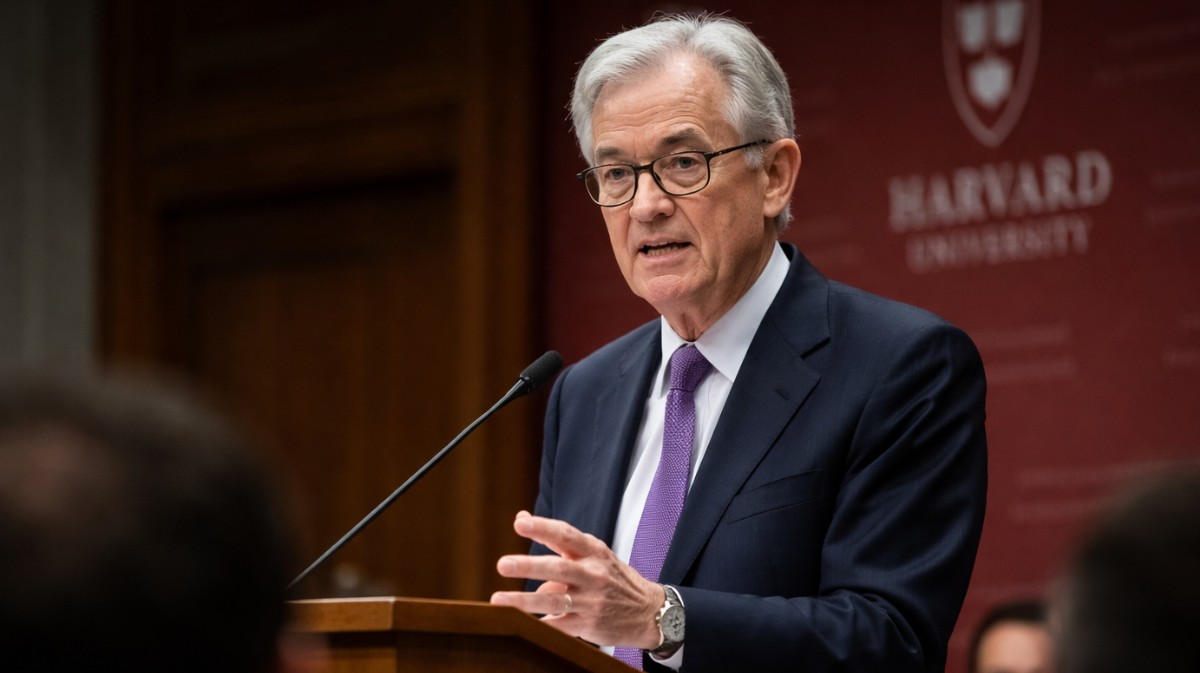
Federal Reserve Chair Jerome Powell indicated that the central bank is currently adopting a "wait-and-see" approach regarding its response to the recent surge in oil prices. This cautious stance reflects the policymakers' efforts to evaluate the dual risks posed to both inflation and economic growth.
During an address to students at Harvard University on Monday, Mr. Powell stated that officials are still in the process of assessing the economic repercussions stemming from elevated energy costs, which are linked to ongoing geopolitical tensions. He remarked, "We don’t know what the economic effects will be," clarifying that the Federal Reserve has not yet reached a decision point on whether to "look through" the current shock.
Mr. Powell reaffirmed that current monetary policy settings are "in a good place," suggesting there is no immediate necessity to alter interest rates. This perspective is based on the premise that price pressures driven by supply disruptions often prove to be temporary. Nevertheless, he cautioned that the Fed's tolerance for sustained above-target inflation, which has persisted for several years, is not limitless. He warned that a series of prolonged shocks could potentially de-anchor inflation expectations, which might necessitate a policy intervention.
The head of the Federal Reserve underscored the increasing complexity of the present economic landscape, where potential downside risks to the labor market coexist with persistent inflationary pressures. This dynamic creates a situation where either an easing or tightening of monetary policy could be justified, depending on how economic conditions evolve.
Regarding financial stability, Mr. Powell downplayed concerns surrounding private credit markets, characterizing the current stress as a corrective phase rather than a systemic threat. He highlighted the strengthened safeguards implemented since the 2008 financial crisis, while also identifying cybersecurity as an emerging risk to the broader financial system.
Mr. Powell refrained from commenting directly on potential successors, such as Kevin Warsh. However, he emphasized the enduring broad political support for the independence of the central bank, which he described as fundamental for maintaining credibility in inflation management.
In his interaction with students, Mr. Powell acknowledged a more challenging labor market for younger individuals, yet maintained that the U.S. economy retains its structural dynamism. He also issued a warning that artificial intelligence is anticipated to disrupt white-collar professions, particularly within middle management, and encouraged workers to adapt by integrating AI into their skill sets.
Following Mr. Powell's remarks, financial markets extended earlier movements. Treasury yields experienced a sharp decline as investors increasingly factored in downside risks to global economic growth, driven by the conflict in the Middle East and its subsequent impact on energy prices.
The Federal Reserve, as indicated by Mr. Powell, is prepared to observe developments, but this period of observation is not without limits.