Magyar challenges Orban as Hungary vote nears
Magyar challenges Orban ahead of Hungary’s April 12 vote, campaigning nationwide on anti-corruption, the economy, and frozen EU funds.
Lauren Collins ·
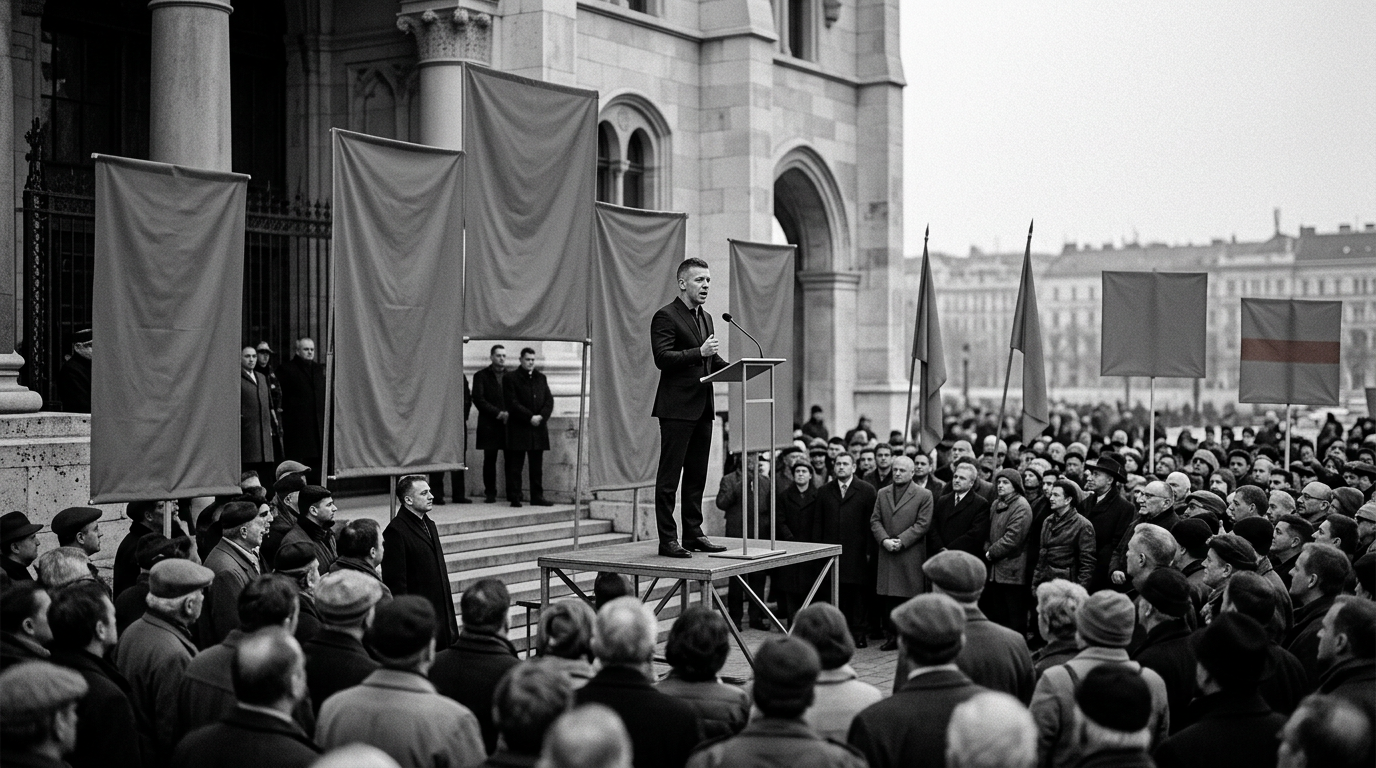
Peter Magyar, a former figure within Hungary’s governing Fidesz party, has stepped into the national spotlight as a direct political challenger to Prime Minister Viktor Orban ahead of the April 12 elections. Magyar, 45, has been campaigning intensively across the country, presenting himself as a fresh option in a political landscape long dominated by Orban’s party.
Magyar’s campaign has been built around a high-frequency, nationwide tour. He has logged more than 100 campaign stops, visited all 106 constituencies, and delivered multiple speeches per day, according to the details provided. His outreach has aimed to demonstrate organisational strength and to build support even in areas traditionally aligned with Fidesz.
On policy, Magyar has centred his message on anti-corruption, improving economic conditions, and securing access to European Union funds that remain largely frozen. Those funds are being withheld amid rule-of-law concerns, and Magyar has argued that unlocking them is tied to restoring confidence in Hungary’s governance. He has also sought to position his movement as distinct not only from the ruling party but from the established opposition as well.
The rise of Magyar’s challenge accelerated after a February 2024 scandal involving a presidential pardon connected to a child abuse cover-up case. The episode triggered the resignation of President Katalin Novak and also led to the departure of Magyar’s ex-wife, Judit Varga, who was serving as justice minister at the time. In the aftermath, Magyar publicly criticised the Fidesz system through a YouTube channel, drawing more than one million viewers in a country of 9.6 million.
Magyar’s personal history is closely intertwined with the governing party he now confronts. He joined Fidesz in 2002, and the party has held power since 2010. His career has included diplomatic work in Brussels and roles on the boards of state-owned companies, giving him experience inside the institutions he now argues need reform.
In describing his break with Fidesz, Magyar has portrayed his disillusionment as a gradual process that culminated in a public rupture. He characterised the system as one in which “real people in charge hide behind women’s skirts,” a line that has become part of his critique of how power is exercised within the ruling structure.
For markets and international stakeholders, the campaign’s focus on EU funds and governance standards places Hungary’s relationship with European institutions at the centre of political debate. The immediate uncertainty is how far Magyar’s momentum can translate into electoral outcomes on April 12, particularly given Fidesz’s entrenched strength and long tenure in government.