Pakistan Summit Aims to Ease Tensions Amid Iran Delay
Pakistan hosts foreign ministers Monday as Iran misses a deadline to answer a 15-point U.S. cease-fire plan, raising regional uncertainty.
Lauren Collins ·
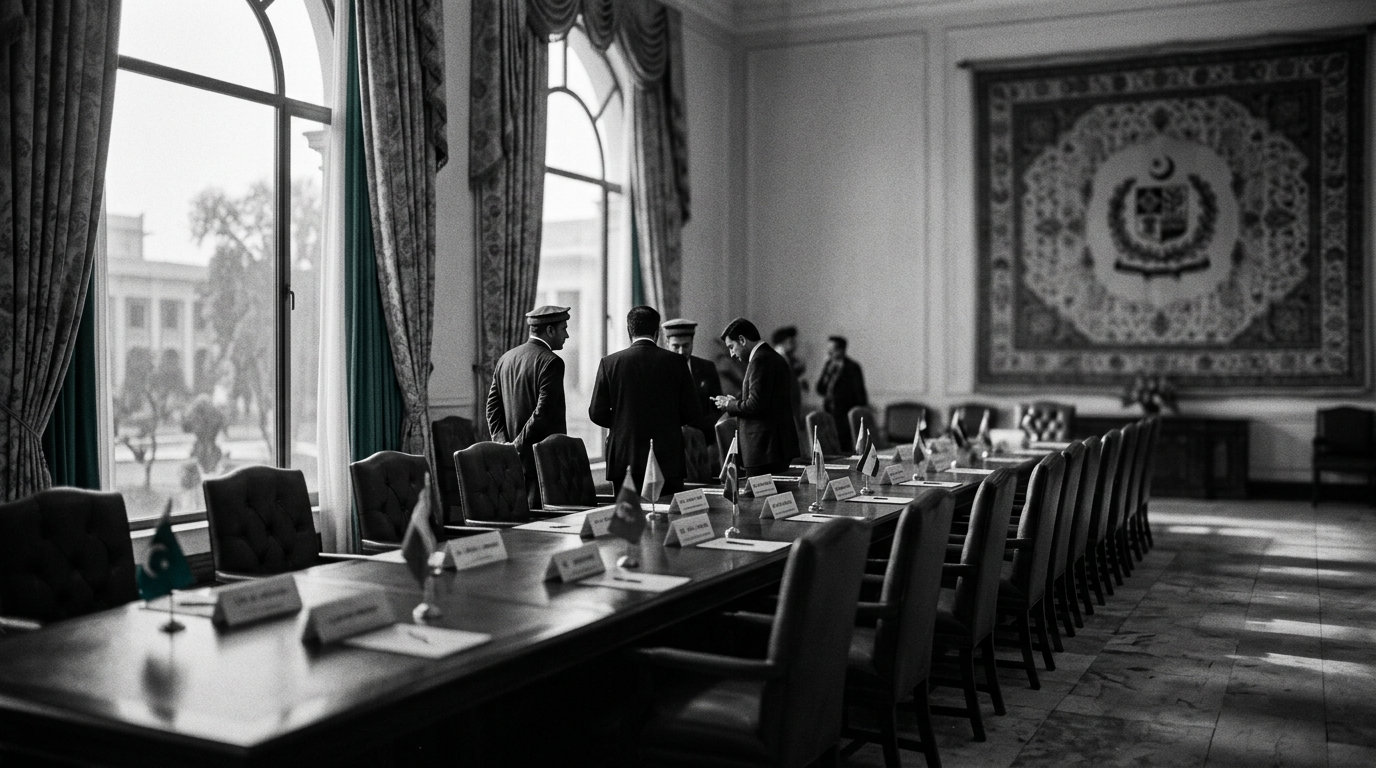
Pakistan is set to host a diplomatic meeting on Monday with the foreign ministers of Turkey, Egypt, and Saudi Arabia, as regional tensions remain elevated and a U.S.-backed cease-fire effort awaits a key decision from Iran.
The gathering is framed by participants as an attempt to align positions among influential regional states and to identify steps that could reduce the risk of further escalation across the Middle East.
Cease-fire proposal awaits Tehran’s decision
The summit’s timing has become more consequential after Iran did not provide an expected response by last Friday to a 15-point U.S. plan intended to support a possible cease-fire.
People familiar with the discussions said mediators have not yet received a formal reply from Tehran, leaving negotiators to manage a process that is now operating without clarity on Iran’s position.
Mediators face new uncertainty after reported strike
Turkey, Egypt, and Pakistan have been described as central to mediation efforts, but the delay has added uncertainty at a moment when the diplomatic track is already under strain.
The missed deadline followed a reported Israeli strike on the Shahid Rezayee Nejad facility, a site associated with producing yellowcake, a uranium concentrate used in Iran’s nuclear program.
Iran signals tougher posture, talks remain fluid
After the reported attack, Iranian officials warned mediators that Tehran could either push back its decision or decline the proposals, according to individuals involved in the talks.
Those individuals said the strike on nuclear-linked infrastructure has contributed to a firmer Iranian stance, and that Iranian officials are now expected to oppose several major elements of the U.S. framework, even if movement could still be possible on other points.
Why the Pakistan meeting matters now
With Iran’s response outstanding, the Monday meeting in Pakistan offers a venue for Turkey, Egypt, Saudi Arabia, and Pakistan to assess the diplomatic fallout and consider how to coordinate if Tehran rejects parts of the plan.
Any shared approach among these states could shape how mediators manage next steps, including how to keep channels open and how to reduce the risk of further conflict while negotiations remain unresolved.
Risks and unknowns
Key details remain unclear, including when Iran will respond, which provisions it may accept or refuse, and whether the reported strike will further narrow room for compromise.
For markets and policymakers, the immediate risk is that prolonged uncertainty and diplomatic setbacks could raise the probability of wider instability, with potential spillovers into energy pricing, trade routes, and broader regional investment sentiment.