Oil stabilises as investors weigh US, Iran threats to facilities, sanctions lift
Oil prices held steady on March 23, 2026 as Gulf facility risks and Iraq cuts were weighed against a temporary U.S. waiver for Iranian oil.
Lauren Collins ·
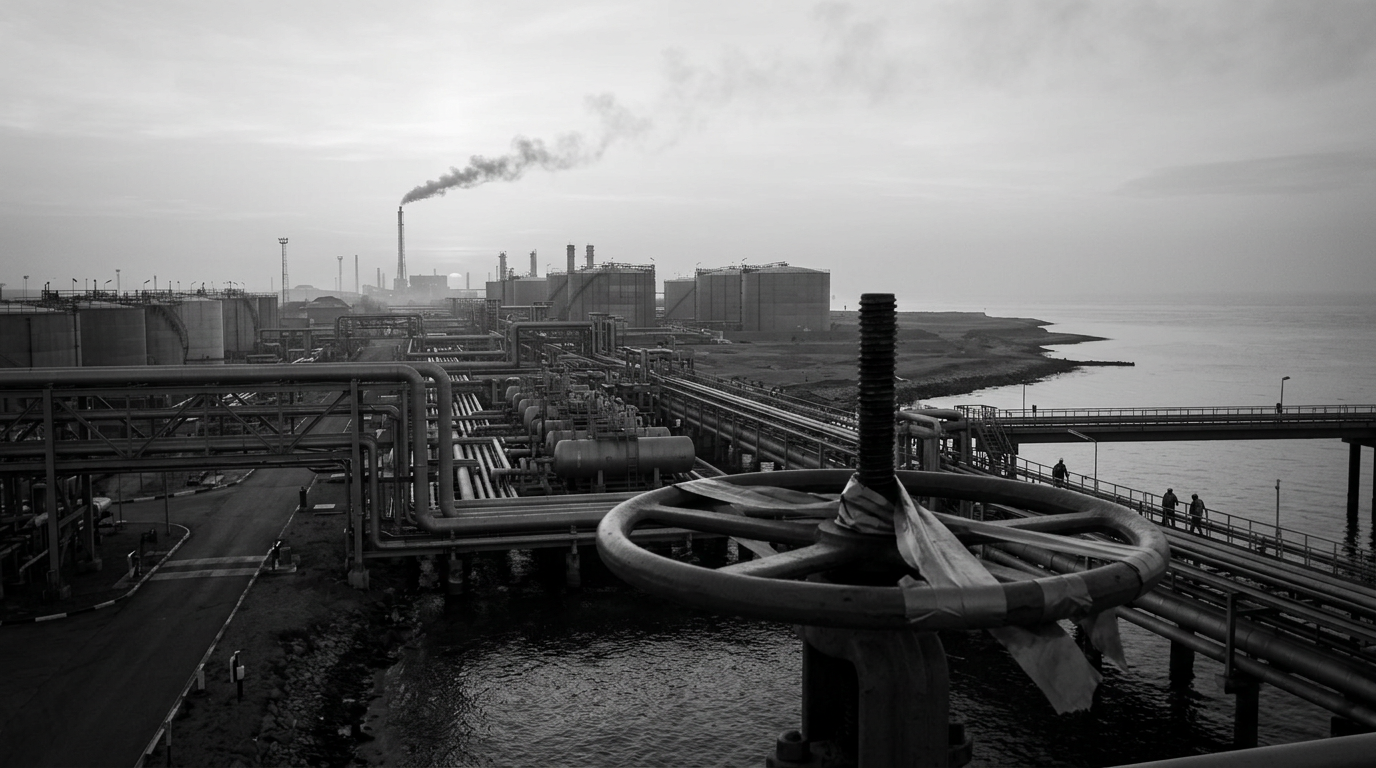
Oil prices were little changed on Monday as traders weighed two opposing forces: rising security risks around Middle East energy infrastructure and a temporary U.S. move that could allow more Iranian crude to reach buyers.
Brent futures edged down 8 cents to $112.11 a barrel by 2324 GMT, while U.S. West Texas Intermediate slipped 6 cents to $98.17. The muted moves followed a sharp run-up that left Brent settling at its highest level since July 2022 on Friday, and WTI rising 2.27% in the prior session.
What changed: threats rose as supply relief emerged
The immediate catalyst for the latest risk premium has been escalating rhetoric tied to the Strait of Hormuz, a key chokepoint for global oil flows. U.S. President Donald Trump said on Saturday that Iran had 48 hours to fully reopen the strait, and warned that Iranian power plants could be targeted if it was not.
Iran’s Parliament Speaker Mohammad Baqer Qalibaf responded that Middle Eastern energy facilities could face “irreversible destruction” if Iranian power plants were attacked. The statements underscored how quickly the dispute could broaden from shipping disruptions into wider threats to regional infrastructure.
Supply disruption already visible in Iraq
Beyond verbal warnings, the market has been tracking concrete supply losses. Iraq declared force majeure on foreign-operated oilfields and reduced Basra Oil Company’s crude output to 900,000 barrels per day from 3.3 million bpd, according to the information provided.
That scale of reduction helps explain why prices have remained elevated even as Monday’s session showed only small declines. For refiners and traders, the key question is whether the outage persists and whether additional facilities or export routes face interruptions.
Sanctions waiver opens a channel for Iranian barrels
Against that backdrop, Washington temporarily waived sanctions on Iranian oil at sea, a step described as aimed at limiting the impact of disruptions and potential shortages. The waiver introduces the possibility of incremental supply reaching the market, partially offsetting the risk of further losses elsewhere.
Indian refiners are planning to restart purchases of Iranian crude, and other Asian refiners are considering similar moves. The timing and volume of any renewed flows were not specified, leaving uncertainty over how much near-term relief the waiver can deliver.
Why it matters for markets and politics
For global markets, the standoff links geopolitics directly to energy pricing: threats to the Strait of Hormuz and regional facilities can tighten supply expectations, while policy decisions on sanctions can loosen them. The result is a market that can swing on security developments as much as on physical barrels.
Key unknowns include whether the strait is “fully reopened” within the stated timeframe, whether threats translate into action, and how quickly Asian buyers can operationally resume Iranian purchases. Until those points become clearer, oil prices may continue to reflect a balance between disruption risk and potential new inflows.
💊 Kapsül Analysis
📌 What Happened?
- Brent fell 8 cents to $112.11 and WTI fell 6 cents to $98.17 on March 23, 2026, after recent gains.
- Trump issued a 48-hour ultimatum tied to reopening the Strait of Hormuz and warned of strikes on Iranian power plants.
- Iraq declared force majeure and cut Basra Oil Company output to 900,000 bpd from 3.3 million bpd.
🔍 Why It Matters
- Middle East infrastructure threats can quickly change supply expectations and risk premiums.
- A temporary U.S. waiver on Iranian oil at sea could add barrels and soften shortages.
- Asian refiners’ purchasing decisions influence how much of that potential supply reaches the market.
📈 Market & Political Impact
- Markets: Elevated crude prices reflect competing signals—disruption risk versus possible Iranian inflows (energy, commodities).
- Macro: Higher oil levels can affect inflation and policy expectations, depending on duration and pass-through.
- Geopolitics/trade: Strait of Hormuz tensions and sanctions policy shape shipping risk, trade flows, and regional security calculations.
👁️ What to Watch
- Whether the Strait of Hormuz is fully reopened within the stated 48-hour window.
- Duration of Iraq’s force majeure and the scale of any further production or export disruptions.
- Implementation details of the U.S. sanctions waiver and the pace of renewed Asian buying.
📋 Source Status
Single-source
📊 Confidence
Level: Medium — Price and policy details are specific, but future flows and operational impacts remain unspecified.
Implications
Country Impact: For Iraq, the force majeure and output reduction signal immediate revenue and operational pressure, with knock-on effects for public finances if prolonged. For Iran and the U.S., the combination of threats and a temporary sanctions waiver shows how security and policy tools are being used in parallel, raising uncertainty for regional planning.
Industry Impact: Refiners—especially in India and wider Asia—face shifting feedstock options as Iranian barrels may re-enter trade channels under the waiver. Producers and shippers operating near key routes must manage heightened operational risk tied to potential infrastructure threats and chokepoint disruptions.
Market Impact: Crude pricing is being pulled between supply-loss headlines (Iraq cuts and regional threats) and potential incremental supply (Iran waiver), supporting volatility even when daily moves look small. Globally, sustained high oil prices can influence inflation expectations and risk sentiment across equities, bonds, and FX, particularly for energy-importing economies.