

North Korea fires missiles after South Korean weapon test
Japan says North Korea launched two or more missiles on October 12, with one traveling beyond 910 kilometers before reaching the sea.
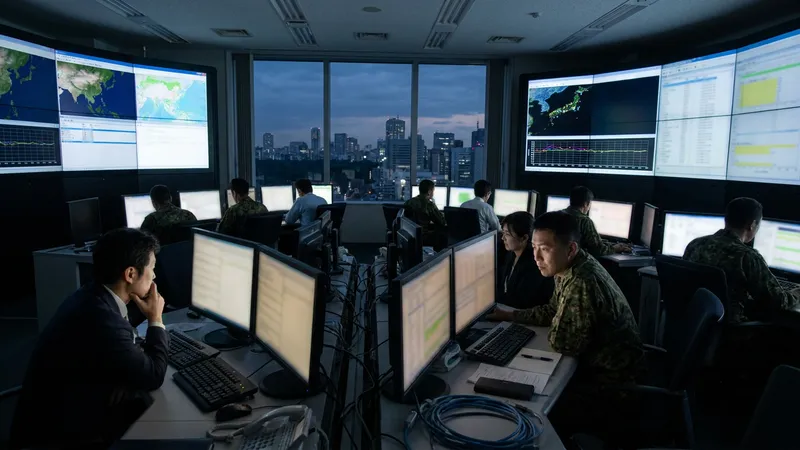
Japan says North Korea launched two or more missiles on October 12, with one traveling beyond 910 kilometers before reaching the sea.
Japan’s Deputy Defence Minister Takashi Koyari reported a shorter flight of about 220 kilometers for the first missile, compared with more than 910 kilometers for the second. He said the launches were separated by 17 minutes and both weapons came down beyond Japan’s exclusive economic zone.
South Korea’s Joint Chiefs of Staff separately reported several ballistic missile launches toward waters east of North Korea on October 12, 2026. Its account placed the launch location around Pyongyang and put one flight distance above 900 kilometers, without providing a total missile count.
Flight path draws hypersonic scrutiny
Koyari described the longer flight’s trajectory as “irregular” and raised the possibility that the weapon was hypersonic. That was an assessment, not a confirmed identification of the missile.
The launches followed a South Korean hypersonic missile test overseen by President Lee Jae Myung on October 8. Joint Chiefs of Staff spokesperson Jang Do-young characterized North Korea’s subsequent launch as an apparent demonstration of force; his remarks did not establish Pyongyang’s motive.
Lee’s appearance at South Korea’s inaugural hypersonic test launch was an uncommon instance of a president publicly attending such an event. His office said that, when development is complete, the weapon would improve the military’s capacity to conduct surprise strikes against important targets on the peninsula.
Weapons tests accompany border dispute
North Korea had also tested an intermediate-range hypersonic missile on October 3, described as intended to overcome South Korean and Japanese missile defenses. The purpose attributed to that earlier weapon does not establish the capabilities of the missiles detected on October 12.
South Korea’s presidential office condemned the latest launches, calling them breaches of United Nations Security Council resolutions and demanding that they cease. The statement set out Seoul’s legal and diplomatic position but did not identify the missiles’ technical specifications.
A separate dispute concerns a mine explosion that injured three South Korean soldiers inside the Demilitarized Zone. Seoul sought an apology last week after investigators from South Korea and the UN concluded that North Korean troops had laid two mines roughly a year earlier.
Pyongyang rejected that finding and accused Seoul of provocation. Responsibility for the mines therefore remains a contested allegation, distinct from the missile launches reported by both South Korean and Japanese officials.
Diplomacy faces incompatible starting conditions
Before the mine dispute, Seoul said it was undertaking initial coordination aimed at enabling US–North Korean dialogue. Lee had committed to renewing engagement with Pyongyang when he began his presidency in 2025, but Kim Jong Un has continued to reject South Korean and US invitations to restart negotiations.
Negotiations between Kim and President Donald Trump broke down in 2019. Pyongyang has insisted that Washington end what it calls a “hostile” policy and stop making denuclearization a prerequisite for discussions.
If either side adjusts its conditions for engagement, Seoul’s coordination efforts could provide an opening for talks. Without such a change, the unresolved negotiating terms would remain an obstacle alongside the weapons tests and border dispute; no renewed negotiating date has been announced in the accounts provided.
More stories
- Altaylı says AKP will sideline YENİ Party before vote
- Volvo brings electric EX60 to Turkey in November
- Saudi Arabia vows response after Houthi attacks kill 13 in Riyadh
- Eritrea Seeks UN Action Over Ethiopia War Allegations
- China Issues Formal Condemnation of Houthi Attacks on Saudi Infrastructure
- Delhi Implements Security Restrictions Amid Ongoing Electoral Protests
- Holborn Voters Turn Against Labour as Rail Project Scraps Parks
- Coalition forces launch major offensive along Red Sea coast