

Netanyahu plan raises Israel security risk before election
The prime minister called for preemptive strikes, underground arms production and border buffer zones nine days before the vote.
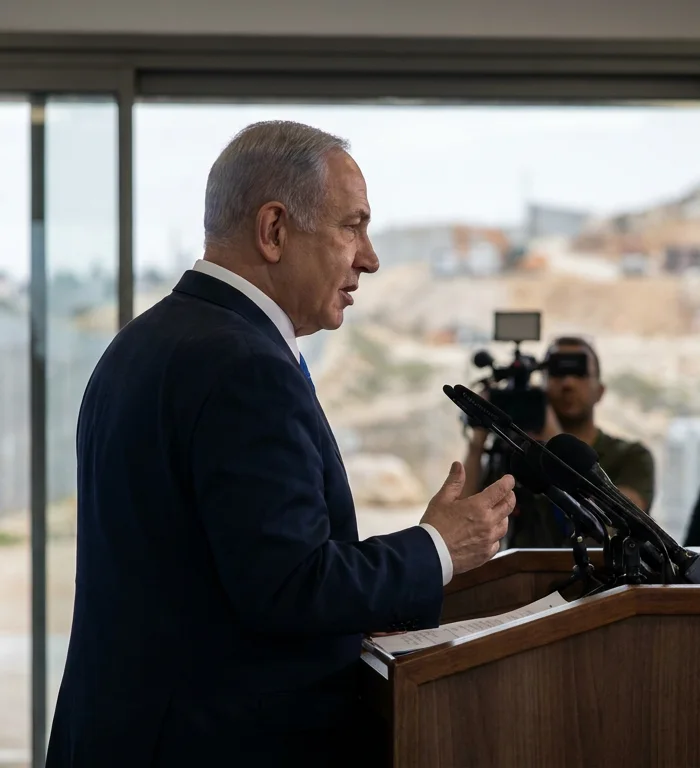
Prime Minister Benjamin Netanyahu unveiled a new security concept for Israel on Oct. 19, nine days before the election, calling for preemptive strikes, underground weapons production and border buffer zones. Reaction pending.
The plan ranks nuclear weapons and first-person-view drones among Israel's most dangerous threats, according to the stated outline. The timing puts national security at the center of the final campaign stretch after the Oct. 7 failures.
Border buffers and drones
The proposal points to a more preventive doctrine: striking threats before they mature, moving weapons production underground and widening physical separation at borders. Each element would shift costs toward permanent readiness rather than emergency mobilization after an attack.
For Israel, the company-level analogue is the domestic defense base: underground production would favor suppliers able to harden sites, localize inputs and maintain output during conflict. For the wider sector, demand would likely tilt toward air defense, drone detection, border surveillance and hardened manufacturing if the concept becomes policy.
The regional macro channel is risk pricing.
If the doctrine leads to more preemptive operations, investors may attach a higher geopolitical premium to Israeli assets and neighboring markets; if it stays as campaign positioning, the near-term effect may be limited to rhetoric and procurement expectations.
The explicit near-term test is the election in nine days. By the Oct. 28 vote, the open question is whether Netanyahu turns the concept into a governing program with budgets, legal authority and border implementation plans.
More stories
- Zelenskyy offers Ukraine refinery halt for Patriot missiles
- Brazil election rallies draw Lula supporters across Rio
- Thailand faces fourth-quarter strain despite 18.9% export gain
- Lithuania probes Starlink arson as Russia-linked sabotage
- Brazil rivals rally before debate as runoff nears finish
- France unrest brings 2,400 arrests as Macron appeals for calm
- Treasury weighs Iran sanctions waiver for Najaf flights
- French election poll puts Le Pen, Melenchon in runoff vote