NASA taps Relativity Space to deliver Aeolus Mars mission
Relativity Space has been selected by NASA to build and fly the Aeolus spacecraft to Mars in 2028 to deliver daily, global atmospheric observations.
Edward Mullen ·
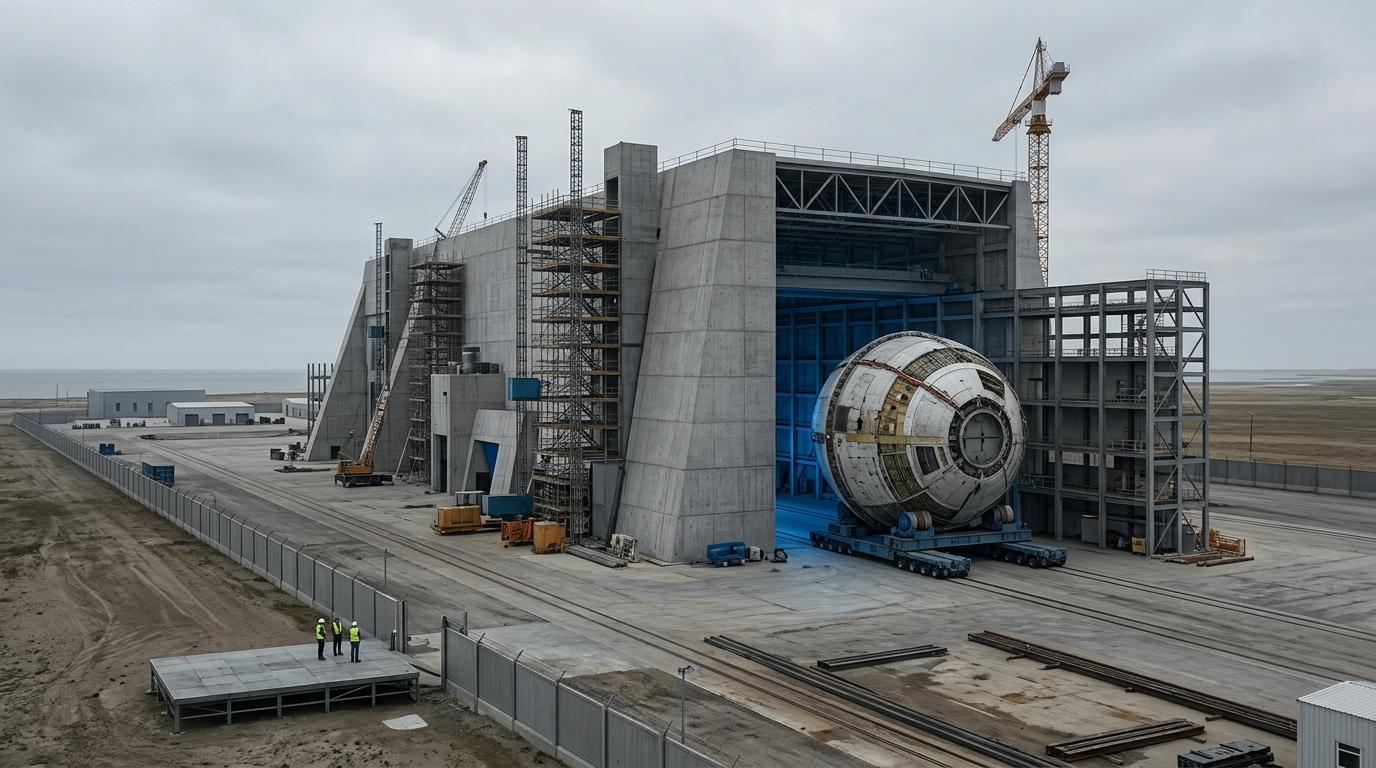
Relativity Space has landed a NASA assignment to build and fly a Mars-bound spacecraft, putting the once-struggling launch company on a rapid timeline toward the Red Planet.
NASA said Tuesday it has hired Relativity Space to provide an end-to-end delivery service for a new mission called Aeolus, including spacecraft development, launch, and cruise to Mars. The agency will supply the science payload and manage the research program.
A commercial-style contract for a Mars science mission
NASA described the arrangement as part of its broader push to buy transportation and mission “infrastructure” from private firms, while keeping responsibility for instruments and science operations. That approach mirrors earlier agency procurements used for cargo deliveries to the International Space Station and for recent lunar lander services.
Under this structure, NASA avoids paying for every step of design and development directly, and the contractor absorbs some costs and risks in return for a larger role in mission execution. NASA administrator Jared Isaacman framed the model as a way to accelerate delivery of data and expand how frequently missions can be flown.
Relativity Space was acquired last year by Eric Schmidt, the former Google executive chair, after the company encountered major hurdles in its attempt to reach orbit. The new NASA award positions the firm as a prime provider for a deep-space mission despite its recent operational setbacks.
What Aeolus will measure around Mars
Aeolus is designed to carry four scientific instruments that will observe Mars from orbit, tracking dust, winds, and atmospheric temperature. NASA said the goal is to generate the first daily, planet-wide view of these conditions.
Such measurements are intended to improve understanding of Martian weather patterns and dust activity, which can affect visibility and surface operations. NASA said the data should help reduce risk for future robotic landers and, ultimately, for human exploration efforts by improving forecasts and hazard awareness.
NASA’s statement emphasized that pairing agency instruments with privately built spacecraft and launch services could shorten the time from concept to data return. Isaacman said the agency expects the model to deliver “more science, more often,” while getting results into researchers’ hands sooner.
A tight schedule and unanswered cost questions
The mission is targeted for launch in 2028, a schedule that compresses spacecraft design, integration, and qualification into a few years. For Relativity Space, that also means finishing the rocket that would send Aeolus on its interplanetary trajectory while simultaneously developing the spacecraft bus that will host the instruments.
NASA did not disclose the value of the contract, and the company did not provide details when asked by TechCrunch. Without a price tag, it is difficult to compare Aeolus directly to other commercial-style NASA procurements, although the agency has increasingly leaned on fixed-price contracting to control costs.
Isaacman, who has flown to orbit twice on private missions operated by SpaceX, has been a prominent advocate for public-private partnerships and shared development risk. For NASA, the strategy can stretch budgets by shifting some non-science investment to the contractor and by leveraging commercial production practices.
The selection also underscores the agency’s willingness to diversify beyond its most established providers for high-profile exploration and science deliveries. If Aeolus stays on schedule, it would mark a significant credibility boost for Relativity Space and offer NASA a new stream of Mars atmospheric data ahead of future surface missions.
Next steps include refining mission requirements, confirming the launch and spacecraft architecture, and moving into hardware development and testing on a timeline driven by the 2028 window. Observers will be watching for milestones tied to spacecraft design reviews and rocket readiness, as well as any later disclosure of contract value.