DRC Receives Ebola Vaccine Shipments Amid Outbreak
The Democratic Republic of Congo received 16,250 doses of Ebola vaccine, with more anticipated, as it battles a large outbreak.
Atlas Newsdesk ·
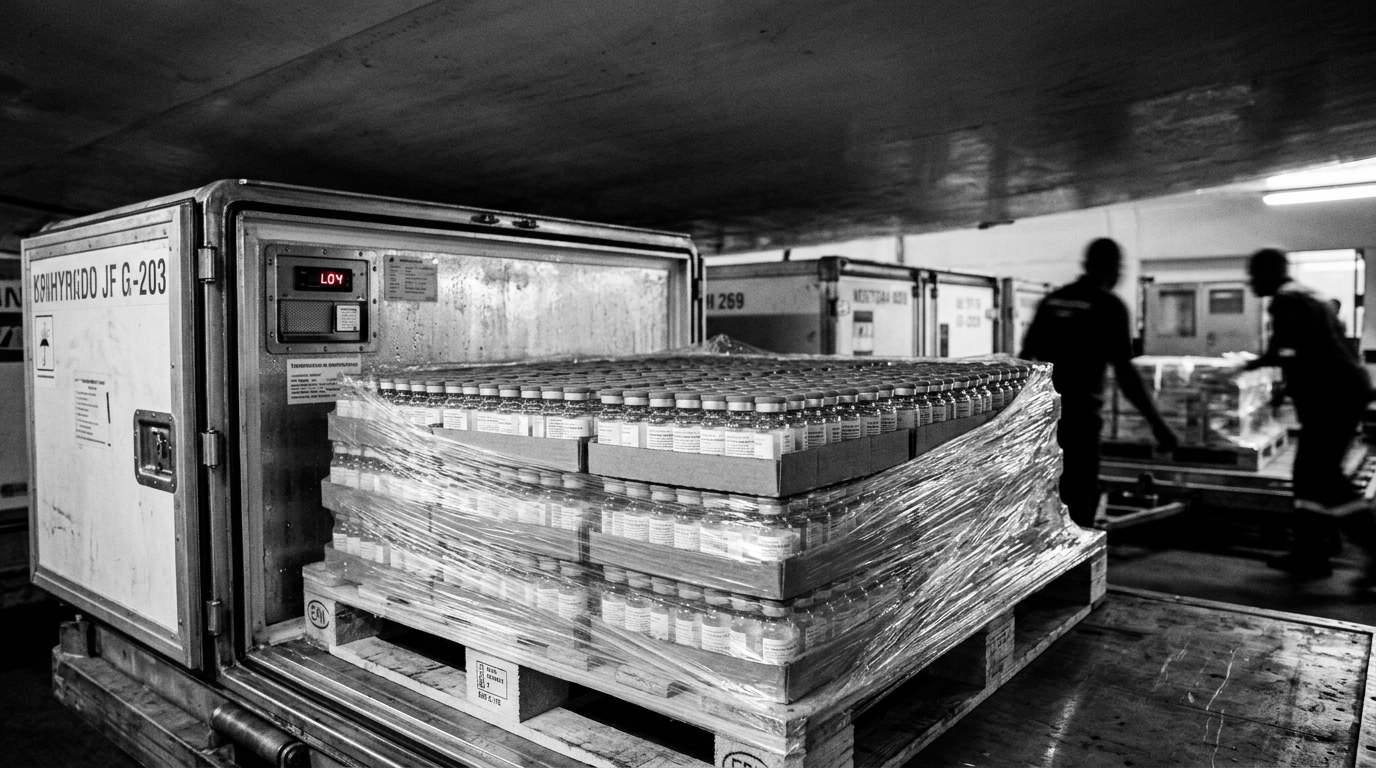
The Democratic Republic of Congo (DRC) has received its first shipment of Ebola vaccine doses, marking a critical step in addressing the country's most extensive recorded outbreak. An initial consignment of 16,250 doses of the Ervebo vaccine arrived in Kinshasa on Friday. This delivery forms part of a broader commitment from the World Health Organization (WHO) to provide a total of 70,000 doses, aimed at bolstering the nation's public health response capabilities.
The current health crisis in the DRC has seen confirmed cases exceed 5,300, resulting in more than 2,500 fatalities. This particular outbreak is predominantly linked to the Bundibugyo strain of the Ebola virus. Notably, no specific vaccine or treatment for this strain has yet received full regulatory approval, underscoring persistent challenges in disease management and control.
Strategic Vaccine Deployment
While the Ervebo vaccine is specifically formulated to combat the Zaire strain of Ebola, health officials have outlined a carefully considered deployment strategy. A portion of the pledged supply, specifically 20,000 doses, has been designated for late-stage clinical trials. These trials are crucial for evaluating the vaccine's potential efficacy against other variants, including the prevalent Bundibugyo strain, and for expanding its potential applications.
The remaining vaccine doses will be strategically distributed among frontline healthcare workers. These individuals operate in high-risk zones across the affected regions, making their protection a priority. This targeted approach seeks to safeguard those most exposed to the virus and to prevent further transmission within medical facilities, which has been a recurring challenge in past outbreaks.
Persistent Containment Hurdles
Managing the ongoing Ebola outbreak is significantly complicated by multiple interconnected factors. Persistent regional armed conflicts present a substantial impediment to the delivery of aid and containment efforts, often rendering affected areas inaccessible. Widespread infrastructural deficiencies further hinder the rapid transport of essential medical supplies and personnel to those in need.
Moreover, significant delays in identifying new cases mean that the virus can spread undetected for extended periods, exacerbating the outbreak's overall scale. These compounding challenges obstruct effective public health interventions and impede the swift delivery of both medical assistance and preventative resources to the most vulnerable populations. Data from the Africa Centres for Disease Control and Prevention indicates that transmission rates have not yet peaked, suggesting that without substantial intervention, infections could potentially triple.
Global Cooperation and Future Outlook
The arrival of these initial vaccine doses is considered a vital development in addressing the escalating public health emergency in the DRC. It provides a new tool in the ongoing battle against the disease, offering hope for mitigating the outbreak's severity and reducing mortality. Further vaccine shipments are anticipated to reach the DRC within the coming week, ensuring the continuity of the coordinated response.
These collaborative efforts between international health organizations and local authorities highlight a global commitment to curbing the spread of infectious diseases. Such cooperation is particularly crucial in vulnerable populations facing numerous intersecting challenges, from armed conflict to inadequate public health infrastructure, emphasizing the continued need for sustained international support and intervention.