Strikes on Iran Water Facilities Raise War Crime Concerns
Strikes on Iranian water facilities in Bemani raise war crime concerns among experts, impacting 20,000 people amid a severe drought.
Atlas Newsdesk ·
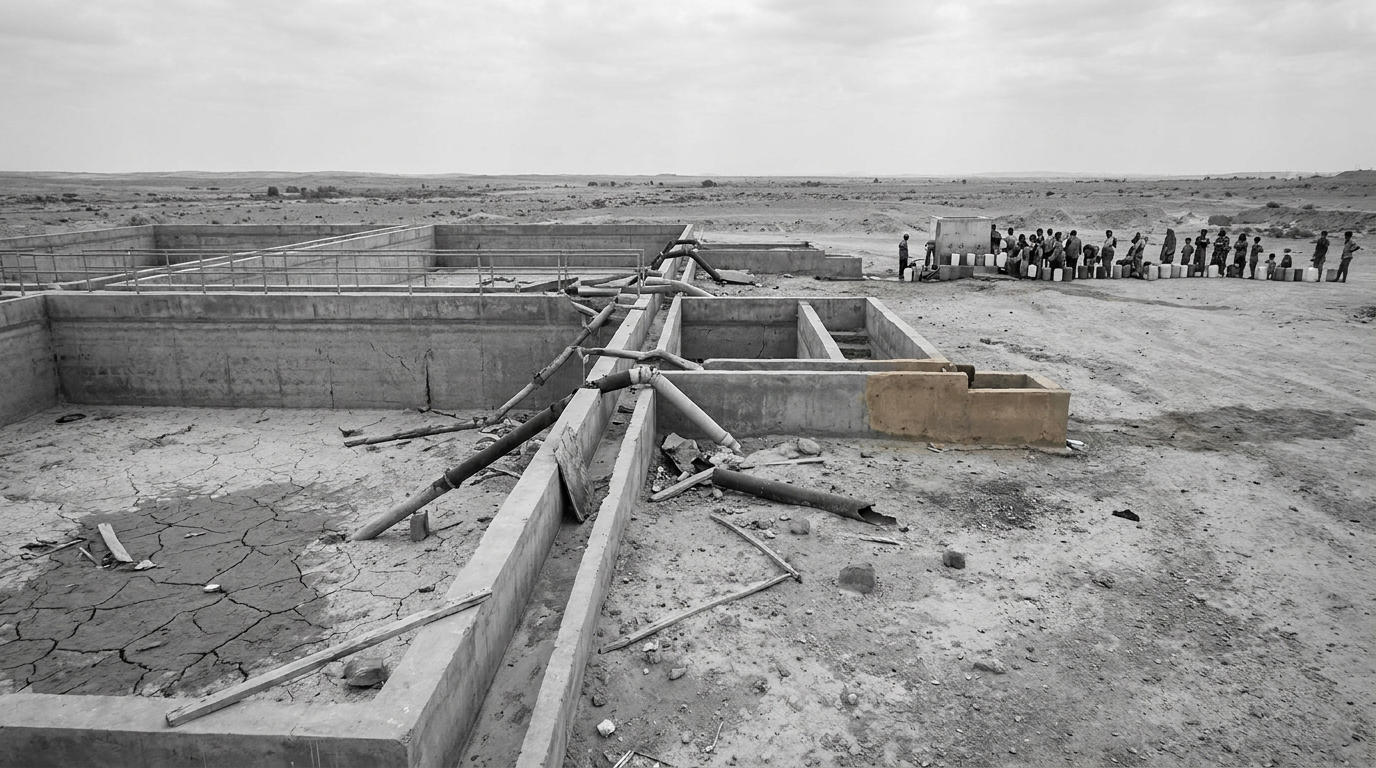
Military and legal experts indicate that recent strikes on two water storage facilities in southern Iran, specifically a June 10 incident in Bemani, may constitute a war crime. The damage to a key reservoir serving approximately 20,000 people occurred amid a historic drought, raising questions about the legality of targeting civilian infrastructure.
The strikes, which Iran's state broadcaster attributed to the U.S. military, damaged water tanks in Bemani, a district near the Strait of Hormuz. While the U.S. Central Command (Centcom) acknowledged awareness of reports, it did not confirm responsibility for the specific damage to water facilities. Centcom had previously announced strikes on "Iranian air defense, ground control stations, and surveillance radar sites near the Strait of Hormuz" by U.S. air force and navy fighter jets.
Experts emphasize that international law distinguishes between lawful
Experts emphasize that international law distinguishes between lawful military objectives and civilian objects. Targeting civilian infrastructure, such as water facilities, is prohibited and could be considered a war crime. The incident has prompted concerns from U.S. lawmakers regarding the potential for expanded campaigns targeting crucial water infrastructure, particularly given Iran's severe water challenges and the current summer heat.
Photographic evidence from Iran's semi-official news agency showed destroyed water tanks and munition fragments identified as parts of a U.S.-produced GBU-39 bomb. Military analysts note that this would be the first publicly reported attack on water infrastructure in Iran, with former U.S. military officials stating that targeting such facilities has historically been outside standard operational parameters.