Manchester United land deal advances 100,000-seat plan
Manchester United has secured most of the land needed for a proposed 100,000-seat stadium, positioning the project around a 2035 Women’s World Cup target.
Mehmet Şahinoğlu ·
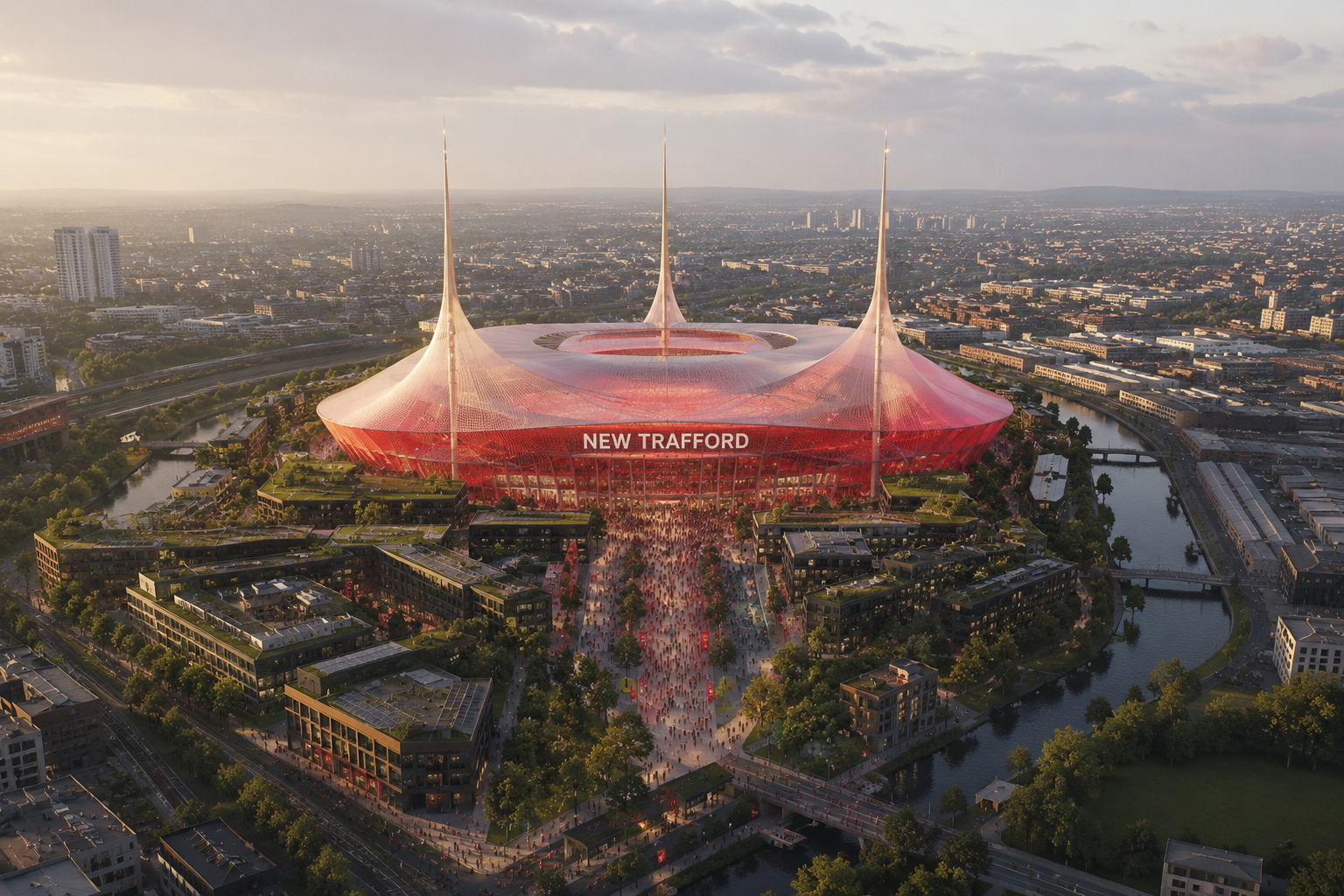
Manchester United has secured most of the land needed for a proposed 100,000-seat stadium, positioning the project around a 2035 Women’s World Cup target.
The club’s concept material refers to the scheme as “New Trafford”, and co-owner Sir Jim Ratcliffe has framed it as a northern counterpart to Wembley. If delivered at the stated size, it would overtake Wembley Stadium’s 90,000 capacity to become the UK’s largest football venue.
Land assembly moves the stadium proposal forward
Securing a majority of the required land is a key early milestone for any major stadium project, particularly in an established urban area. It can reduce uncertainty around site layout, access routes, construction logistics, and potential conflicts with adjacent uses.
Manchester United has not provided a detailed construction timetable in the available concept information, but the stated ambition is clear: a new stadium completed in time for the 2035 Women’s World Cup. That timing implies a multi-year development process that would typically include planning approvals, public consultation, financing arrangements, and procurement.
The working name “New Trafford” signals that the project would be linked to the club’s historic Old Trafford identity. Old Trafford is currently one of the biggest stadiums in England and has served as the club’s home for more than a century, making any replacement or major relocation a significant cultural and commercial shift.
Capacity would reshape the UK and European stadium rankings
At 100,000 seats, the proposed ground would set a new benchmark for domestic football capacity. Wembley, which regularly hosts England internationals and major cup finals, holds 90,000, so a United venue at the stated size would become the country’s largest football stadium by a wide margin.
In a European context, a 100,000-capacity stadium would place Manchester United among the continent’s largest venues. The club’s concept material notes it would be second only to Barcelona’s renovated Camp Nou, which is expected to reach about 105,000 seats after redevelopment.
For matchday operations, a jump to 100,000 would increase requirements for transport, policing, stewarding, and crowd management. It could also expand hospitality and non-matchday events capacity, both of which are increasingly central to top clubs’ revenue models.
2035 Women’s World Cup target sets the strategic frame
Linking the build to the 2035 Women’s World Cup provides a clear external deadline and a potential national-sporting rationale for infrastructure investment. Major international tournaments often act as catalysts for stadium delivery, bringing heightened scrutiny to timelines, compliance standards, and broader regeneration claims.
Ratcliffe’s “Wembley of the North” description places the proposal in a wider conversation about regional balance in elite sporting venues. If the project progresses, stakeholders will likely examine how frequently such a stadium could host non-club events, from international matches to concerts, and how that would interact with existing venues in Greater Manchester and beyond.
Key next steps typically include clearer disclosures on the full land footprint, planning pathways, and how construction would be phased relative to Old Trafford operations. The most immediate indicator of momentum will be whether the club can translate land control into formal planning submissions aligned with the 2035 target.