LG Group’s Nvidia ‘AI factory’ deal points GPU procurement toward Nvidia
Nvidia & LG Group to build an "AI factory" spanning robotics, autonomous driving, data centers & GPU cloud.
Edward Mullen ·
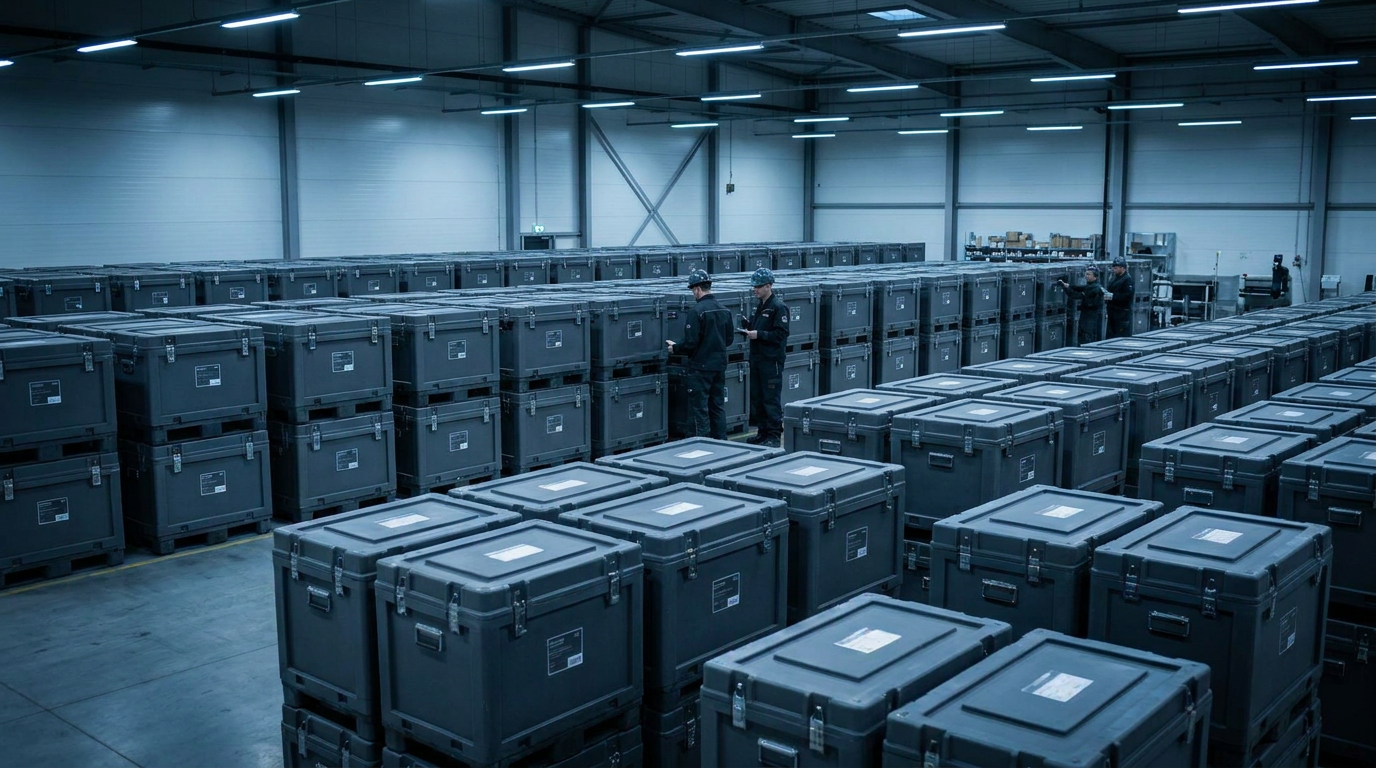
Nvidia and LG Group have gone public — in a vendor blog, not yet independently confirmed — with plans to build an “AI factory” to propel LG’s robotics, autonomous driving, data centers, and GPU cloud services. That framing sounds like R&D acceleration, but it forces a near-term procurement decision for LG’s operations leads: standardize on one integrated stack or accept longer timelines and higher integration costs to preserve a multi-vendor posture.
This is, so far, single-thread reporting from Nvidia’s blog; no one in the reported packet is on the record.
The “AI factory” bundles compute, data center, and mobility under one vendor Nvidia’s blog says the partnership will establish an “AI factory” to accelerate LG’s AI-driven expansion “across robotics, autonomous driving, data centers, and GPU cloud services.” The practical reading is not just about model training or demos; it is about industrializing a single vendor’s stack as the default runtime for LG’s physical-AI and mobility roadmaps. When a conglomerate aligns its robots, vehicles, and data centers on the same accelerator family, procurement centralizes — and so do certification and developer tooling.
The very idea of a factory implies repeatable, certified outputs. In this case that likely means standardized build-and-deploy pipelines tuned to Nvidia GPUs and the surrounding software. Once those pipelines power robots on a line and autonomy stacks in vehicles, any deviation to a different accelerator becomes a governed exception with engineering, validation, and safety paperwork attached. The procurement center of gravity shifts to the vendor that owns the factory’s assumptions.
Why the R&D-partnership read misses the purchasing hook
The circulating take will call this a marketing-and-research collaboration. That misses how a vertically integrated “factory” pattern creates switching costs upstream of any individual product team.
Shared model repositories, inference services, and runtime policies tend to assume one accelerator’s semantics; rebuilding them for an alternative backend becomes a cross-divisional tax. Operational telemetry, incident response, and capacity planning normalize around the GPUs you buy most.
The blog’s inclusion of “GPU cloud services” is a tell: cloud-facing contracts often lock in pricing and tooling that later define what is considered “supported” on-prem.
Volume logic matters, too. If LG’s robots, vehicles, and data centers all lean on the same accelerators, procurement is positioned to seek fleet-wide pricing and service commitments from a single GPU vendor.
In safety-relevant domains like mobility, validation and certification trails become attached to that stack; bringing in a second accelerator family can mean duplicating tests and re-qualifications. Even if the paper numbers are comparable, the non-recurring engineering and compliance costs are not.
The result is a factory that not only builds models but also manufactures a preferred-vendor pathway.
What the blog does not say — and why it matters for buyers Nvidia’s post does not detail procurement terms: no volume discount structures, no exclusivity or preferred-vendor clauses, no certification or integration commitments, no supplier contract contours. For a CFO or head of supply chain, that omission is not cosmetic.
Without those specifics, you cannot price the total cost of ownership for lock-in versus a staged multi-vendor approach — especially when manufacturing, mobility, and cloud workloads are being yoked to the same accelerator family. The risk is that operational inertia, not an explicit board decision, sets a default you live with for years.
There is a second-order effect the blog also leaves unaddressed: how Tier‑1 and Tier‑2 suppliers will respond. If LG’s internal factory process expects Nvidia-first validation artifacts, external suppliers building subsystems for robots or vehicles will migrate their own development benches and test suites to mirror that path.
Over time, alternative accelerators risk becoming “second-class citizens” in the LG ecosystem, not because of raw performance gaps but because they fall outside the factory’s certification gradient. That procurement gravity then propagates down the supply chain.
The skeptic’s case: LG can still run multi-vendor Skeptics will argue LG is too large — spanning robotics and mobility alongside cloud operations — to accept single-vendor dependence. They will point out that modular design and standardized interfaces can insulate applications from specific accelerators, preserving bargaining power and supply resilience.
They may also note that the blog’s framing leaves room for selective adoption, and that LG could demand open certification pathways for non-Nvidia hardware. Those are plausible countermeasures; the decisive evidence will be in future RFP language, supplier guidance, and whether LG publishes a formal multi-vendor certification track instead of an implicit single-stack default.
Operational stakes for LG’s robotics and vehicle leaders
For LG’s heads of robotics and mobility, the factory model promises faster integration if teams ride the standardized stack — common build pipelines, shared support, one set of tools. But it also concentrates risk: pricing exposure to a single GPU family, potential bottlenecks tied to that vendor’s supply cycles, and a narrower hiring funnel if teams over-index on one ecosystem’s skills.
Supplier selection will begin to favor partners that can show “factory-ready” artifacts aligned to Nvidia’s patterns. Expect internal governance to push GPU purchasing and certification decisions into a centralized function that arbitrates exceptions rather than letting each product group decide ad hoc.
What would prove this wrong — and the signals to watch Three concrete signals would falsify the lock-in read. First, if procurement or supplier disclosures show LG’s robotics and vehicle divisions buying a majority of non‑Nvidia accelerators in deployed hardware, the factory is not dictating the stack.
Second, if LG announces a formal multi‑vendor accelerator certification program — or issues RFPs that explicitly require accelerator openness — then the factory is being used as a process scaffold, not a vendor funnel. Third, if major LG Tier‑1 suppliers publicly sign multi‑year deals oriented around non‑Nvidia or mixed fleets for LG deliveries, the supply chain is resisting gravitational pull.
Short of those, watch product spec sheets naming accelerators, cloud contracts that codify “GPU cloud services” around Nvidia fleets, and internal job postings that reveal which ecosystem the factory is built to serve.