U.S. troop surge fuels congressional debate over potential ground operations against Iran assets
U.S. troop surge and Pentagon contingency planning for Iran fuel a split in Congress over goals, authorization, and escalation risks.
Lauren Collins ·
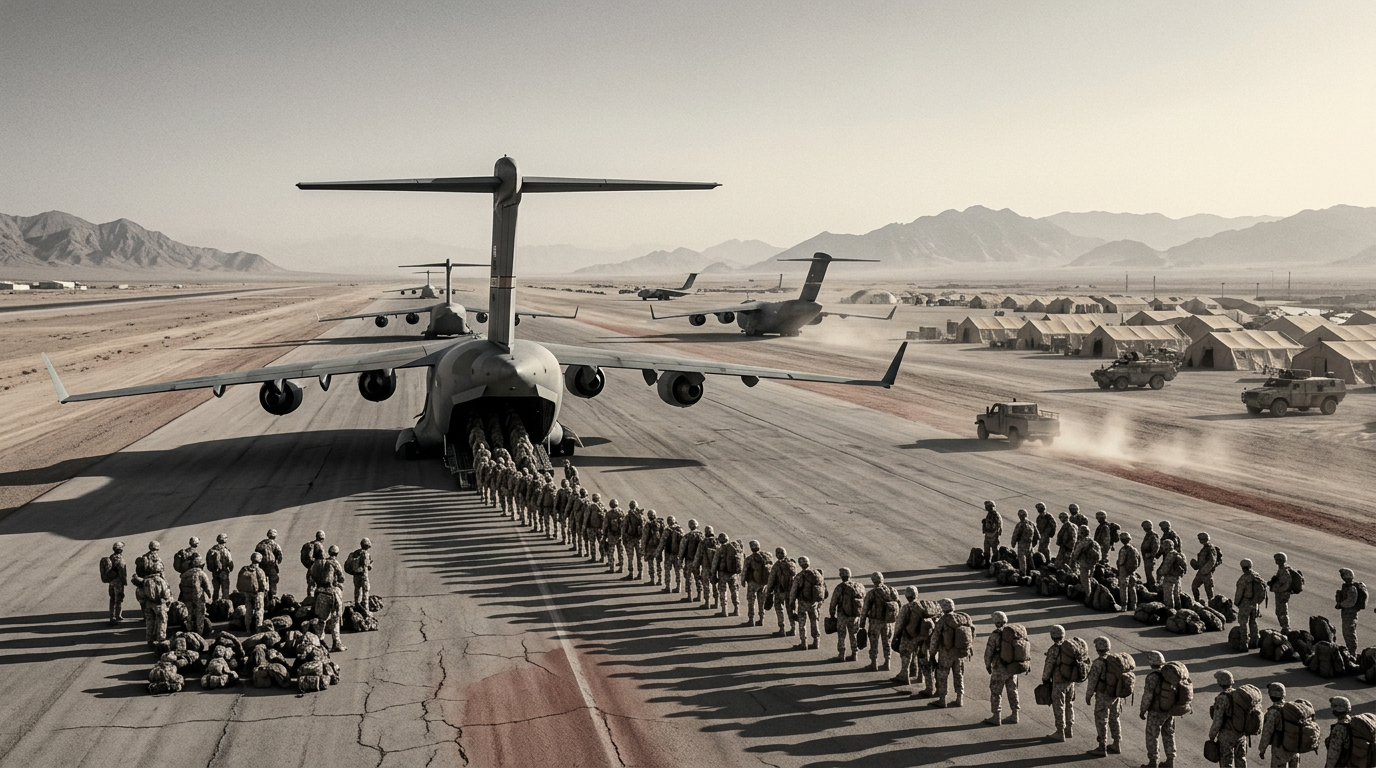
The Pentagon is preparing contingency options that could include U.S. ground action inside Iran, as Washington increases its military footprint in the Middle East.
The planning has triggered a fresh debate in the U.S. Congress over objectives, legal authorization, and the risk that any operation could widen into a broader regional conflict.
What changed in the U.S. posture
An additional 3,500 U.S. troops arrived in the region on Sunday, adding to a U.S. presence that is typically about 50,000 personnel across the Middle East.
The newly arrived soldiers and marines are tied to a unit operating under the leadership of the USS Tripoli, reinforcing U.S. forces as tensions rise.
Contingency planning and what is known
Officials have described a spectrum of possible actions, ranging from limited Special Operations raids to larger infantry deployments.
The White House has said the work is intended to provide the president with multiple options and should not be read as a decision to launch ground operations.
Potential objectives under discussion
Among the goals discussed by officials are securing the Strait of Hormuz, attempting to seize Iranian highly enriched uranium, or striking Iranian oil facilities.
However, the available information does not indicate that any specific objective has been selected, and it does not provide timelines or rules of engagement.
Why the debate is intensifying now
The heightened posture follows escalating tensions that included the loss of a major U.S. surveillance aircraft in Saudi Arabia.
An E-3 Sentry, valued at about $300 million, was lost at Prince Sultan Air Base after an Iranian missile strike, underscoring the exposure of high-value assets and fixed installations if hostilities expand.
Congress weighs mission clarity and authorization
Senator James Lankford, a Republican, said he could support the use of U.S. ground forces if the mission is clearly defined, drawing a line between short-duration special operations and a long-term occupation.
Senator Cory Booker, a Democrat, criticized the administration over the prospect of entering conflict without congressional approval, arguing that strategy and authorization remain unclear as troop levels rise.
Market and geopolitical stakes
Each potential objective carries distinct economic and security consequences, particularly for energy markets and global trade routes.
The Strait of Hormuz is a critical chokepoint for global energy flows, while any action involving nuclear materials or oil infrastructure could reshape regional security dynamics and transmit volatility into global oil pricing.
Key uncertainties
It remains unknown whether the administration will seek explicit congressional authorization, how it would define success, or what conditions would govern a withdrawal.
White House Press Secretary Karoline Leavitt reiterated that Pentagon preparations are meant to broaden the Commander-in-Chief’s choices, not signal a final decision.